


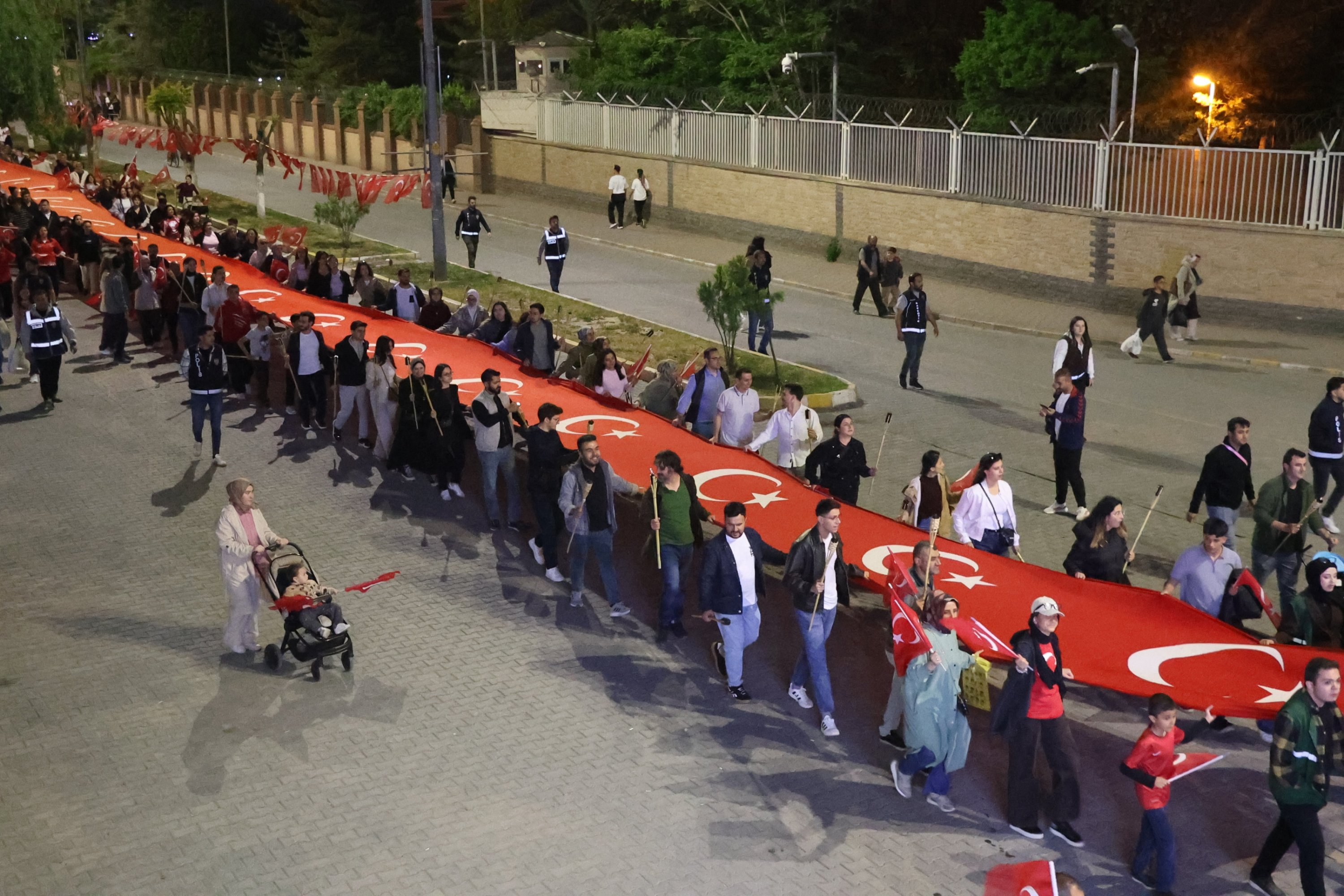
Türkiye is set to mark Tuesday the 107th anniversary of Mustafa Kemal Atatürk’s arrival in Samsun on May 19, 1919, the historic journey that launched the National Struggle and eventually led to the founding of the Republic. The anniversary, commemorated each year as Commemoration of Atatürk, Youth and Sports Day, remembers the beginning of the independence movement led by Atatürk at a time when much of the country was under occupation following World War I.
After the Armistice of Mudros was signed on Oct. 30, 1918, several regions across Anatolia came under foreign occupation. Greek forces occupied İzmir, French forces occupied Adana, while Italian troops entered Antalya and Konya. British troops landed in Urfa, Antep, Maraş, Merzifon, and Samsun, while the British navy anchored off Istanbul on Nov. 13, 1918. Atatürk, who had spent years defending the homeland on various fronts during World War I, returned to Istanbul on Nov. 3, 1918, and began taking steps toward national liberation.
Supported by British troops that landed in Samsun on March 17-18, 1919, armed Greek groups in the region carried out raids and stirred unrest in an effort to open the area to occupation by Allied powers under Article 7 of the Armistice of Mudros. Turkish residents organized to defend themselves and protect their lives and property, and the British High Commission and the Black Sea Army Command expressed concern over developments in the region and submitted a note to the Ottoman government on April 21, 1919, demanding that tensions be reduced and alleged attacks against Greeks be prevented.
Atatürk was then appointed inspector of the 9th Army to restore order in the region. One day after the occupation of İzmir on May 15, 1-9, he departed from Istanbul aboard the Bandırma ferry. He and his companions first stepped onto Samsun soil on May 19 via the Reji Pier. During World War I, Russian forces had bombed all of the city’s piers except the French-owned Reji Pier, also known as the Tobacco Pier because of a French cigarette factory operating in the city at the time.
Following concerns among British authorities over his arrival in Samsun, Atatürk remained in the city for six days before moving to Havza on May 25. The first rally of the National Struggle was held in Havza under Atatürk’s instructions, where participants protested the occupation of İzmir. Havza became Atatürk’s second stop on the road toward liberation, where he spent 18 days carrying out critical work for the National Struggle before heading to Amasya. After British pressure over the growing movement in Havza led to his dismissal as inspector of the 9th Army, Atatürk bid farewell to the people of Havza as a civilian.
The torch of liberation lit by Atatürk and his comrades in Samsun later spread to Amasya, Erzurum, and Sivas before expanding across the country. Following the success of the National Struggle, the Republic of Türkiye was founded on Oct. 29, 1923, and is marking its 103rd anniversary this year. Prof. Dr. Kaya Tuncer Çağlayan of Ondokuz Mayıs University described the National Struggle as one of the most important periods in Turkish history.
Atatürk's legacy is as relevant today as it was a century ago. How do you think his principles have shaped modern Turkey? Let's debate!