


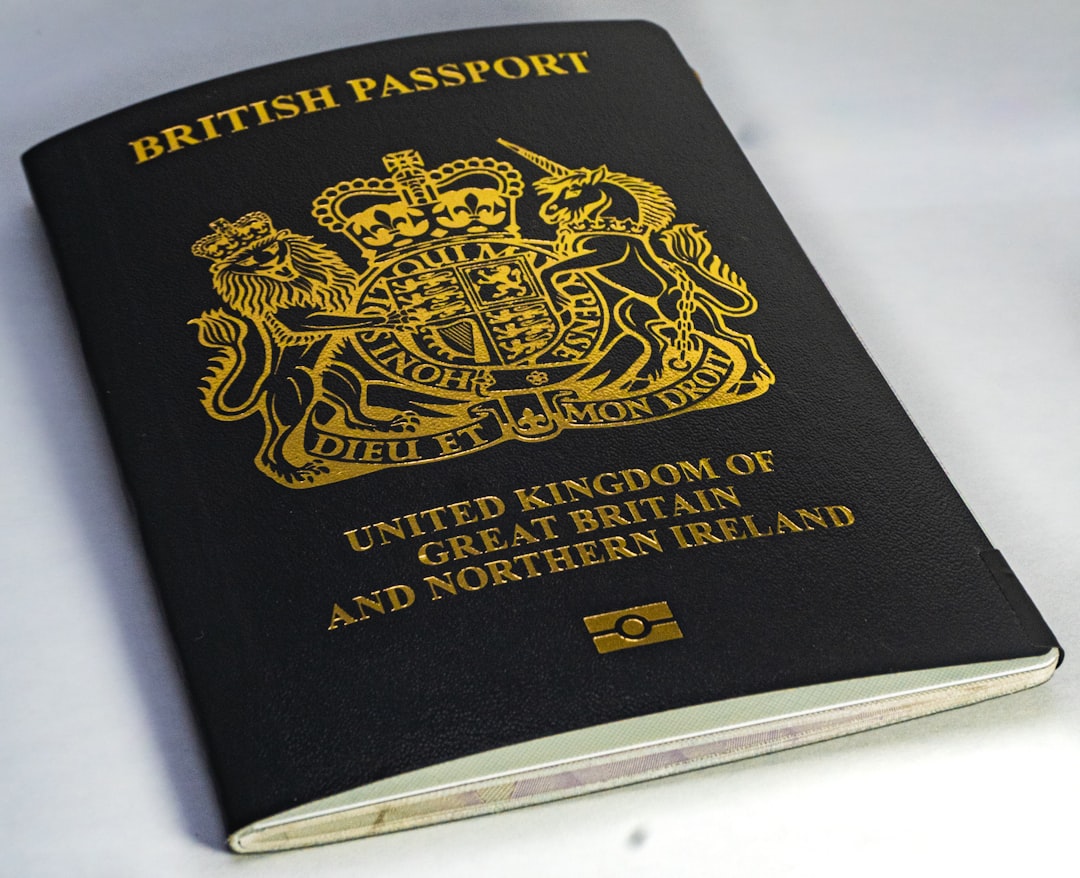
The smell of stale coffee and diesel fumes is the perfume of the Balkan border. I am sitting on a plastic chair that has seen more regimes than I have had hot dinners, clutching a passport that feels like a lead weight in my hand. The line to the customs booth at the Serbian-Hungarian border stretches back into the fog, a serpentine queue of exhausted travelers, truck drivers, and backpackers who all share the same look: a mix of determination and the creeping suspicion that they have forgotten something vital. A customs officer, chewing a cigarette with the nonchalance of a man who holds the keys to freedom, waves me forward. He doesn't ask for my visa. He doesn't ask for my return ticket. He just stares at my face, then stamps my passport with a thud that echoes like a gavel. Entry granted. But as I step onto the other side, I realize that the Balkans are not just a region; they are a bureaucratic labyrinth where the rules change faster than the weather, and one wrong assumption can leave you stranded in a no-man's-land of paperwork.
Navigating the visa waiver rules for the Balkans is less about understanding a legal framework and more about decoding a shifting mosaic of political alliances, temporary agreements, and national pride. For many travelers from the US, Canada, Australia, and other Western nations, the Balkans offer a visa-free honeymoon period. But for others, the rules are a minefield of "90 days in a 180-day period" calculations, Schengen zone loopholes, and sudden policy reversals. I have seen tourists weep at the Tabanovtsi Border Crossing because they didn't understand that time spent in Greece counted toward their Balkan limit. I have seen backpackers celebrate when they learned that a quick dash through North Macedonia reset their clock. This is not just travel advice; it is survival.
The Schengen Loophole and the 90/180 Rule
The most critical concept to grasp is the difference between Schengen and non-Schengen Balkan states. Currently, Croatia, Slovenia, and Romania are part of the Schengen Area (with Romania fully integrated as of 2024, though some land border checks may remain temporarily). This means that time spent in these countries counts toward the standard Schengen 90/180-day rule. However, Serbia, Bosnia and Herzegovina, Montenegro, Albania, and North Macedonia are not. For many passport holders, this creates a complex "reset" mechanism. If you exhaust your 90 days in Schengen countries, you can often enter non-Schengen Balkan nations without a visa, effectively extending your stay in Europe. But here is the catch: the clock never stops ticking. Every day you spend in a non-Schengen Balkan country may still count toward your overall visa-free allowance in the Schengen zone if you plan to re-enter.
For US citizens, the situation is relatively straightforward but requires vigilance. You can stay in Serbia for up to 90 days, Bosnia for 90 days, and Montenegro for 90 days, all without a visa. However, if you are from a country that requires a Schengen visa, the rules are much stricter. You cannot use the Balkans as a backdoor into Europe. Many travelers mistakenly believe that entering Belgrade allows them to bypass Schengen requirements. It does not. Border agents are trained to spot this, and a simple question about your travel plans can lead to a denial of entry. Always carry proof of onward travel and sufficient funds, even if a visa is not required.
The "90/180 rule" is the golden standard. It means you can stay for a maximum of 90 days within any rolling 180-day period. This is not a calendar year; it is a moving window. If you spend 90 days in Croatia, you must wait 90 days before re-entering the Schengen zone. But if you spend those 90 days in Serbia, the Schengen clock does not reset, but your Serbian clock does. This is where the confusion lies. I have seen travelers calculate their days on a napkin, only to be told by a stern officer in Podgorica that they have overstayed by three days. The penalty is not just a fine; it is a ban from re-entering the Schengen zone for years. Do not gamble with the math.
The Hidden Traps: Transit, Third-Country Nationals, and Return Tickets
One of the most overlooked aspects of Balkan travel is the concept of "transit." Many travelers believe that if they are just passing through a country to get to another, they do not need to worry about visa rules. This is a dangerous misconception. In Albania and North Macedonia, for example, you must enter the country legally, even if you are just driving through. If you are a third-country national (not from the EU, US, or other visa-exempt countries), you may need a visa even for a one-night stopover. The border guards are not interested in your itinerary; they are interested in your legal status at that exact moment.
Another hidden trap is the requirement for a return or onward ticket. Even if you are visa-exempt, border agents in Montenegro and Albania frequently ask for proof that you will leave the country before your visa-free period expires. I have been stopped at the Ulqin border, where an agent demanded to see my bus ticket to Sarajevo. When I showed him a printed email confirmation, he stamped my passport with a smirk. But I have seen others turned away because they could not produce a physical ticket. In the Balkans, digital confirmations are not always accepted. Print everything. Carry everything. Assume the worst.
For citizens of countries like India, China, and Brazil, the rules are even more complex. Some Balkan nations offer e-visas or visa-on-arrival options, but these are not guaranteed. Serbia offers a free visa for many nationalities if you first visit the US, Canada, or a Schengen country. This is known as the "Serbia visa waiver." But you must have a valid multiple-entry visa from one of those countries in your passport. If your Schengen visa is expired, you are not eligible. This rule is often misunderstood, and I have seen travelers assume that an old Schengen visa is sufficient. It is not. The visa must be valid at the time of entry into Serbia. Check the official government websites before you travel. Do not rely on travel blogs or anecdotal advice.
Practical Survival: What to Carry and How to Behave
When you are standing in line at a Balkan border, your behavior matters as much as your paperwork. Border agents are human, and they respond to respect and clarity. Never argue. Never raise your voice. If an agent asks a question, answer it directly and honestly. If you do not understand, ask them to repeat it. Do not try to bluff your way through. I have seen travelers try to charm their way past customs with jokes or flattery. It rarely works. The agents are tired, underpaid, and overworked. They want to get through the line, not entertain you.
Always carry your passport, your visa (if required), your return ticket, and proof of accommodation. Keep these documents in a folder, easily accessible. Do not dig through your backpack while the person behind you is tapping their foot. Have your documents ready before you reach the booth. If you are driving, keep your vehicle registration and insurance papers in the glove compartment. In Albania, for example, you need a "Green Card" insurance document to drive legally. If you do not have it, you will be fined or your car will be impounded. This is not a suggestion; it is the law.
Money is another critical factor. Many border agents will ask how much money you have for your stay. This is not a polite inquiry; it is a legal requirement. In Montenegro, for example, you must show proof of at least 50 EUR per day of stay. If you cannot produce this amount in cash or credit card, you may be denied entry. Do not rely on your bank statement from six months ago. Bring recent statements or enough cash to cover your stay. The exchange rates in the Balkans can be volatile, so it is wise to carry a mix of EUR and local currency. But remember, the border agent cares only about the EUR equivalent.
Getting There & What to Expect
Reaching the Balkans is easy, but navigating the internal borders is the challenge. Most travelers fly into major hubs like Belgrade Nikola Tesla Airport, Sarajevo International Airport, or Tivat Airport. From there, buses and trains connect the region. Bus tickets can be purchased online or at the station, but always have a printed copy. Train travel is slower but offers a more authentic experience. In Serbia and Croatia, the rail network is extensive, but in Albania and Kosovo, buses are the primary mode of transport.
Accommodation prices vary widely. In Bosnia and Serbia, you can find hostels for 10-15 EUR per night and mid-range hotels for 30-50 EUR. In Montenegro and Croatia, prices are higher, especially in tourist seasons. Expect to pay 20-30 EUR for a hostel bed and 60-100 EUR for a hotel room. Always book in advance during the summer months. For budget travelers, camping is an option in some countries, but check the local laws first. In Albania, wild camping is generally tolerated, but in Slovenia, it is strictly prohibited outside designated areas.
The best time to visit the Balkans is from April to June and September to October. The summer months of July and August are hot, crowded, and expensive. The winter months are cold, especially in the mountains, and some roads may be closed. If you are traveling on a tight budget, the shoulder seasons offer the best balance of weather and price. But remember, the visa rules do not change with the seasons. Whether it is spring or winter, the 90/180 rule applies. Plan your trip carefully, and do not let the beauty of the Balkans distract you from the bureaucracy.
Search accommodation in Belgrade, Serbia on Booking.com →
The Final Stamp: A Gonzo Reflection
As I walked away from the border booth, the weight in my hand lifted. The stamp in my passport was not just ink; it was permission. Permission to explore the ancient streets of Ohrid, to hike the rugged trails of Durmitor, to drink rakija in a village square in Bosnia. But the experience left me with a lingering unease. The Balkans are a region of contradictions. They are open and welcoming, yet guarded and suspicious. They are free and chaotic, yet rigid and bureaucratic. To travel here is to accept that you are always an outsider, always subject to the whims of a man with a stamp.
I sat on a bench outside the border crossing, watching the buses rumble past. A group of young travelers laughed as they unloaded their bags, oblivious to the complexity of the rules that had allowed them to enter. I wanted to warn them, to tell them about the hidden traps, the return tickets, the money checks. But I said nothing. Instead, I took out my phone and checked the visa requirements for the next country on my list. The Balkans do not forgive ignorance. They demand preparation. And in the end, that is the only visa that truly matters: the visa of knowledge.
Comments