


The water here tastes like old coins and melted glacier. I sat on the cracked stone steps of the old port in Ohrid, watching a fisherman mend his net with hands that looked like twisted oak roots. He didn't speak to me. He just pointed at the lake, a vast, turquoise eye staring up at the Balkan sky, and muttered something about the Ohridan whitefish disappearing. The air smelled of woodsmoke and grilled trout, thick enough to chew. This isn't a postcard. It's a living, breathing contradiction: a place where Orthodox monks chant in centuries-old monasteries while backpackers in faded band tees stumble past street vendors selling boza and cheap rakija. I came for the history; I stayed because the silence of the water feels like a judgment on the noise of the modern world.
You can't walk ten meters in this town without kicking up dust that has settled since the 4th century BC. It's overwhelming, sure, but it's also electric. The lake doesn't just sit there; it dominates. It's the oldest lake in Europe, maybe the world, a biological time capsule holding species that vanished everywhere else. But let's cut through the UNESCO plaque gloss. The real story isn't just the water. It's the people clinging to its edges, trying to monetize magic without selling their soul. And honestly? They're mostly failing, but trying anyway. And that struggle is the most interesting thing here.
History & Identity
Ohrid isn't just old; it's aggressively historical. Founded by the Illyrians in the 4th century BC, it became a crucial Byzantine stronghold. But its real identity was forged in the 10th century when it became the center of the First Bulgarian Empire's cultural renaissance. This is where Cyril and Methodius's disciples, Clement and Naum, established the Ohrid Literary School. They created the Glagolitic alphabet, the precursor to Cyrillic, and translated the Bible into Slavic languages. For over a century, this lakeside town was the intellectual capital of the Slavic world. When you walk past the Church of St. Sophia, you're not just seeing a building; you're standing in the shadow of the script that defines Eastern Europe.
The Ottomans took over in the 14th century, leaving their mark with mosques and baths, but the Orthodox soul remained intact. In the 19th and 20th centuries, Ohrid became a symbol of Macedonian national identity. During the Yugoslav era, it was a major tourist hub, preserved but somewhat sanitized. Today, it's a UNESCO World Heritage site, a label that brings money but also crowds. The tension between preserving its fragile ecosystem and feeding the tourism machine is palpable. The city wears its history like a heavy coat — sometimes comforting, sometimes suffocating.
Where to Go
Samuil's Fortress — Perched on the hill above the town, this 10th-century fortress offers the only panoramic view that makes you forget the traffic below. It's named after Samuil of Bulgaria, who made Ohrid his capital. The climb is steep, but the stone ramparts are well-preserved. You can wander through the ruins of the palace and the church of St. John at Kaneo. Entry is , but the view is free. Go at sunset. The light hitting the lake from the west is aggressive, almost violent in its gold. Bring water. There's nothing up there but stones and tourists.

Church of St. Sophia — This is the heart of Ohrid's medieval identity. Built in the 11th century, it's a masterpiece of Byzantine architecture with stunning frescoes and mosaics. The interior is dim, cool, and smells of incense. The frescoes are faded but powerful, depicting saints with eyes that seem to follow you. It's a museum now, not a functioning church, which feels appropriate. Entry is . Don't rush. Sit on the floor for five minutes. Listen to the echoes. You'll hear the whispers of monks who copied manuscripts here a thousand years ago.

Plaošnik Archaeological Site — Just below the fortress, this site was the center of the Ohrid Literary School. You'll see the foundations of the original St. Sophia Church, destroyed by an earthquake in 1915, and the remains of the school buildings. It's less visually dramatic than the fortress, but historically, it's the real deal. This is where the Cyrillic alphabet was born. The site is well-marked, with information boards in English. It's open to the public for free. Spend at least an hour here. The scale of the foundations is humbling.

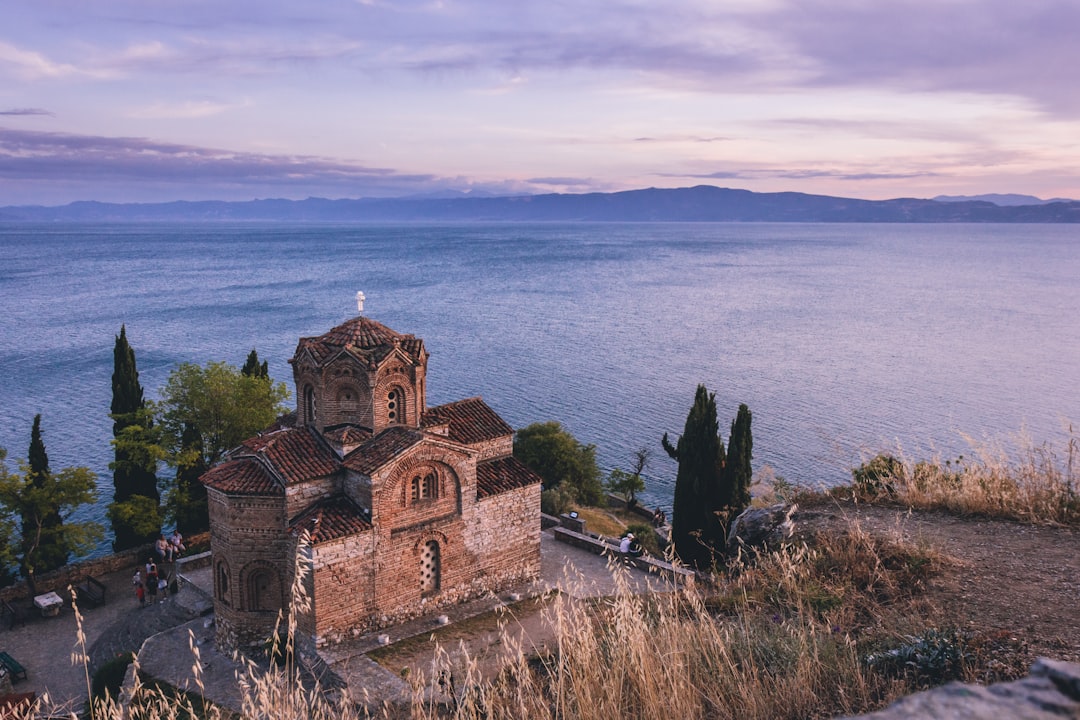
St. John at Kaneo — A small, isolated church on a rocky peninsula at the southern end of the lake. It's dedicated to St. John of Kaneo, a 10th-century hermit. The church is tiny, but the surrounding rock formations and the water lapping against them are striking. It's a popular spot for photographers. The walk to get there from the town is long, so take a taxi or a boat. The view from the church, looking back at the town, is serene and slightly melancholic.

Old Bazaar — The Ottoman heart of Ohrid. Narrow, cobblestone streets lined with wooden houses, shops selling leather, ceramics, and rakija. It's crowded, noisy, and smells of spices and sweat. It's not as grand as the Old Bazaar in Skopje, but it feels more authentic. Haggle for souvenirs. Try the local sladko (fruit preserve). The architecture is a mix of Ottoman and Byzantine influences. It's a maze. Get lost on purpose.

What to Eat & Drink
Eating in Ohrid is a study in contrasts. You can pay 15-25 EUR for a lakeside dinner with a view of the fortress, or you can eat like a local for 3-5 EUR. The key is the lake. Ohridan whitefish (Skadar) is the star. It's small, bony, but incredibly fresh. Traditionally, it's grilled whole with salt and pepper. If you can't handle the bones, ask for plava macka (blue mackerel), another local lake fish. It's cheaper and meatier. Pair it with makarni, a local pasta dish made with minced meat and cheese. It's heavy, comforting, and cheap.
For breakfast, find a pekara (bakery). Get a banitsa (cheese pastry) for 1-2 EUR and a cup of turkish coffee for 1 EUR. It's the fuel of the region. For lunch, šopska salata (tomato, cucumber, onion, pepper, and sirene cheese) is ubiquitous. It's fresh, crisp, and costs 2-3 EUR. Avoid the restaurants with picture menus on the sidewalk. They're tourist traps. Look for places with Macedonians inside. The Kale Street area has some good, cheap options. For a drink, try Vranec wine, a local red that's bold and tannic. It's cheap and pairs well with grilled meat.
Budget breakdown: Street food/take-away is 2-5 EUR per meal. A sit-down local restaurant meal is 8-15 EUR per person. Mid-range restaurants with a view are 20-30 EUR. The Old Bazaar has plenty of cheap eats, but be careful with the water. Bottled water is 0.50-1 EUR.


Nightlife
Ohrid's nightlife is surprisingly vibrant for a town of its size. The main action is along the lakefront promenade and in the Old Bazaar. Bars are open-air, with tables spilling onto the cobblestones. The music is a mix of Macedonian pop, Balkan brass, and electronic beats. It's not a clubbing destination like Thessaloniki, but it's lively. Bar Kale is a popular spot for drinks with a view of the fortress. It's crowded, noisy, and expensive (3-5 EUR per drink). Old Town Bar in the bazaar has a more bohemian vibe, with live folk music on weekends. It's cheaper and more authentic. For a quieter night, find a rakija bar in the side streets. The Šljivovica (plum brandy) is strong and cheap (1-2 EUR per shot). Don't mix it with beer. You'll regret it.
Summer is the peak season. The promenade is packed until midnight. Winter is quiet, but the bars are still open. The Ohrid Summer Festival in July and August brings concerts and performances to the St. John at Kaneo amphitheater. It's a highlight. Tickets are 5-15 EUR. The atmosphere is magical. The lake reflects the stage lights. It's the closest you'll get to a Byzantine dream.


Getting There & What to Expect
The nearest airport is Ohrid Airport (OHD), with seasonal flights from European hubs. It's small and efficient. From Skopje, the capital, it's a 3-hour bus ride (5-10 EUR) or a 2.5-hour drive. Buses run frequently. From Tirana, Albania, it's a 4-hour drive. The road is scenic but winding. From Bitola, it's a 1-hour bus ride. The town is walkable, but the hills are steep. Rent a bike or use the local minibuses (marshrutka). Accommodation ranges from 20-40 EUR for a budget hostel to 80-150 EUR for a mid-range hotel with a lake view. Luxury hotels are . Book in advance for July and August. The best months to visit are May, June, September, and October. The weather is warm, the crowds are smaller, and the prices are lower.
Search accommodation in Ohrid on Booking.com →
Expect heat in summer. The lake water is warm (). The sun is intense. Wear sunscreen. Expect tourists everywhere in July and August. It can be overwhelming. The infrastructure is strained. Trash is an issue. But the beauty is undeniable. The history is real. The people are resilient. It's a place that demands respect, not just a selfie.
The Water Remembers
I left Ohrid with sand in my shoes and a headache from the sun. The fisherman was still there, mending his net. He didn't look up. The lake didn't care about me. It has seen empires rise and fall. It has seen alphabets invented and religions clash. It will outlast us all. That's the thing about ancient places. They don't need your approval. They just are. And in a world that's constantly changing, that permanence is a rare and precious thing. I drank from the lake again. It still tasted like old coins. But this time, I understood. It wasn't just the water. It was the weight of time. And it was heavy.

Comments