


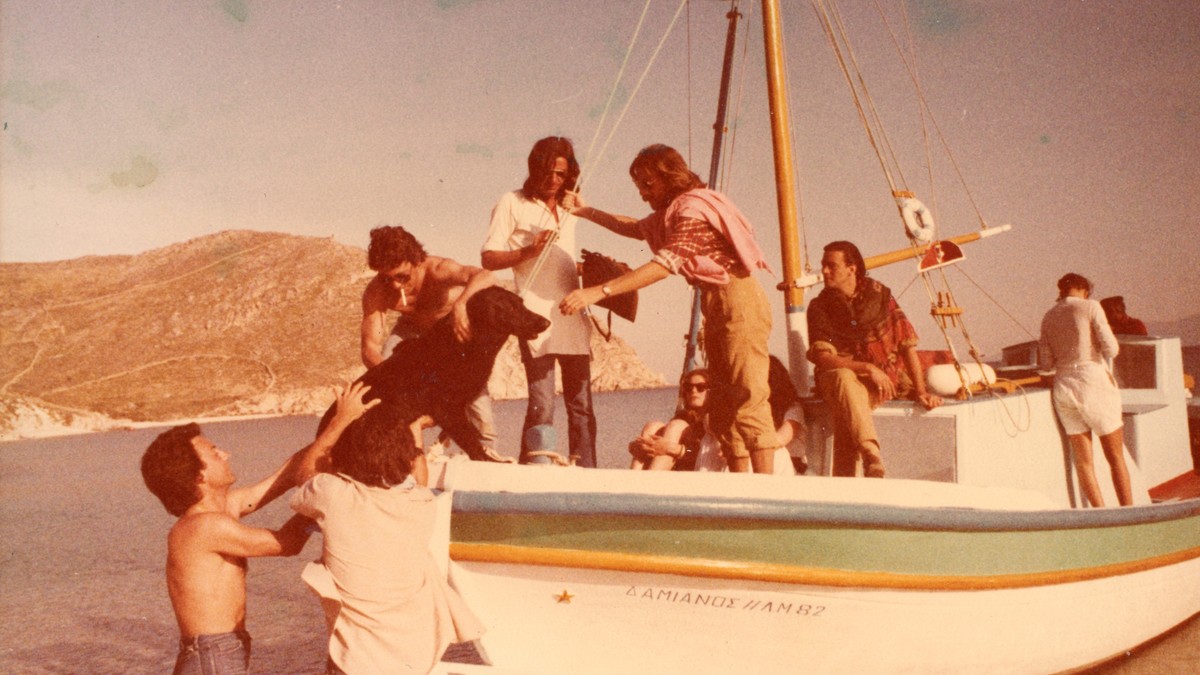
"Journey to Paradise" („Super Paradise“), a German-Greek co-production by director and screenwriter Steve Krikris, will be screened at Beldocs on May 25 at 8 PM at Cineplexx Ušće. This documentary captures the evolution of Mikonos over seven decades, from a nearly isolated island to a global symbol of luxury, good living, and hedonism.
Krikris spent part of his childhood in Greece, including several years on Mikonos. In an interview with "Blic," he shared his memories and experiences from that period and how they influenced the creation of the film.
- The island never truly leaves you. In the 1970s and 1980s, Mikonos still had a raw, spontaneous, and human feel. You could see fishermen sharing coffee with artists, aristocrats dancing next to bakers, while locals watched this new world develop around them with curiosity and a touch of skepticism. There was an unusual innocence within that sensuality. It was not about performance but rather a connection with simplicity, the sea, and the heat of the air. I was very young, and a completely new world opened up to me. This is the place where my life changed, and I believe it changed many others. It was then and there that I decided to become a filmmaker, meeting people who played a significant role in that decision. The film emerged from these fragments. Not out of nostalgic decoration, but a desire to capture a moment when people genuinely believed they could reinvent themselves. Mikonos became a crossroads where identities were freed from their constraints. Nationalities blended. Many of the people I met then are now protagonists in my film – Krikris explained.
Did you feel you were documenting the disappearance of a world while working on the film?
- Mikonos at that time existed in a fragile balance. It was cosmopolitan but not yet commercialized. People came in search of something undefined: freedom, love, anonymity, a new beginning, contentment, community. And since the island was still relatively untouched, everyone had to participate in creating its atmosphere. This gradually disappeared. Once "paradise" becomes internationally recognizable, it begins to play the role of itself. Spontaneity turns into an image. The image becomes an industry. In the end, people no longer come to discover freedom but to consume the fantasy of it. What struck me while working on the film was understanding how fleeting these human moments were and how fortunate I was to live in that era – an era of innocence.
In the film, numerous interviewees from different generations and life experiences appear. How open were the local residents to collaboration, and which interviewee surprised you the most with their perspective on the island?
- Most interviewees were very positive and willing to participate from the start. Others were initially more reserved towards the project and us, but after discussions and explanations of our ideas and goals, they agreed to talk. Their stories were vivid and insightful. In the end,...



This film captures the essence of Mikonos like no other. It's a must-see for any Balkan traveler or culture enthusiast. Will we ever see a place like Mikonos again?