


Greek Firm Proposes Armed Guards for Sea Drones Threat
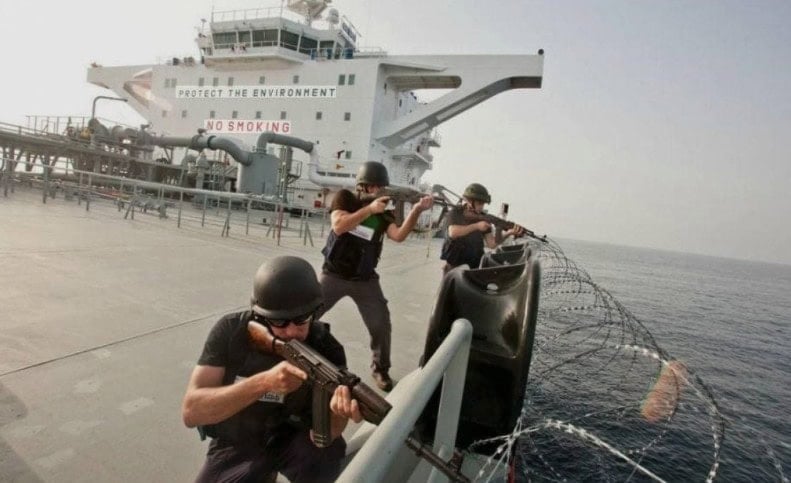
As the threat posed by surface sea drones grows, Greek maritime security company Diaplous Maritime Services has proposed deploying armed security teams on commercial vessels operating in high-risk areas, including the Black Sea. The company argues that current maritime surveillance systems struggle to detect small unmanned surface vessels effectively. Equipping vessels with armed personnel could identify and neutralize such threats at close range, reducing risks to the crew and the vessel.
The proposal has garnered support from a significant portion of the Greek shipping community, particularly those operating in volatile regions. This follows a recent incident in Lefkada, where an unmanned surface vessel reportedly carrying 100 kilograms of explosives was discovered by a fisherman. The incident highlighted the emerging security risks across the Aegean, Eastern Mediterranean, and Black Sea.
Diaplous Maritime Services stated that the Lefkada incident exposed the limitations of existing maritime surveillance systems, as small sea drones can operate close to the waterline with minimal radar visibility and without active identification systems. The company has proposed armed protection measures for Greek-owned vessels operating in the Black Sea, particularly tankers and bulk carriers transporting oil, grain, and other commodities.
Company representatives believe that armed guards on board could engage and neutralize the threat from a safe distance if a drone is detected in time, without endangering the vessel or its crew. The firm also noted that onboard security is increasingly being considered by the global maritime industry as a response to asymmetric threats at sea.
Diaplous has submitted a request to the Ministry of Maritime Affairs and Insular Policy, proposing Chios as a boarding point for armed security personnel on vessels sailing to high-risk regions. However, questions remain about the storage of weapons on the island. Reports suggest one proposal involves storing weapons at the Chios Port Authority facilities under a paid security arrangement, though no final decision has been made by the competent authorities.
Industry stakeholders described the Lefkada incident as a warning sign for maritime security, highlighting the increasing presence of unmanned maritime systems and their potential impact on commercial shipping, energy transport, and critical sea lanes. Despite the rising security risks, Greek-owned vessels continue to operate in the Black Sea, with data from Diaplous indicating that approximately 10 to 12 Greek-linked tankers operate weekly in the region, alongside 8 to 10 bulk carriers and container ships transporting energy products, raw materials, and grain.
The Ministry of Maritime Affairs has issued guidance urging heightened security measures for Greek-controlled vessels transiting toward the Black Sea.



This is a big deal — we can't just let these sea drones roam free! But what about the legal and logistical hurdles? This could get messy fast. What do you think, should we arm our ships or is there a better solution?