


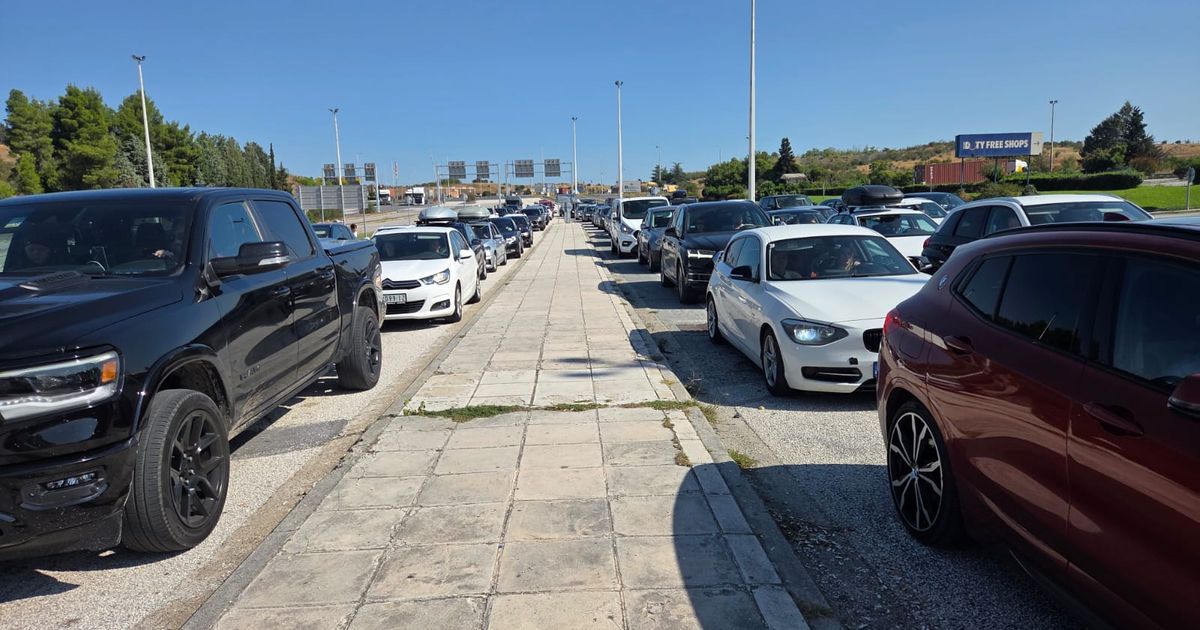
The start of the summer tourist season brought significant challenges to the Evzoni border crossing last weekend. Travelers heading from North Macedonia to Greece faced long lines, with queues of up to 70 tourist buses at peak times. Passengers endured hours of waiting under high temperatures, leading to widespread frustration among drivers and tourists alike.
Technical Failures and Organizational Issues
Aleksandar Seničić, director of the National Association of Travel Agencies of Serbia, confirmed that the congestion was expected due to religious holidays and a surge in travelers heading to Greek resorts. However, the situation worsened due to unexpected technical problems.
At the beginning of the weekend, the operational system at the border checkpoints failed several times due to power outages. This technical glitch caused delays far exceeding initial projections. Seničić highlighted that the organization of work at the crossing itself was also problematic.
Initially, there was only one lane available for buses and two lanes for cars entering the country. This bottleneck significantly slowed down the flow of traffic. Fortunately, authorities responded quickly. By the following day, tourist buses were moving after waiting no longer than one to one and a half hours.
Safety Concerns and Alternative Routes
While Athens maintains its policy on the Entry/Exit System for the Schengen area, officials will temporarily suspend the system during periods of extreme congestion to speed up passenger flow and avoid multi-hour waits.
Saša Zdravković from the Traffic Safety Agency warns that such long waits directly impact road safety. Increased driver stress and fatigue lead to reduced concentration. Many drivers, eager to reach their destinations after crossing, tend to speed up rather than take a rest break.
Zdravković reminds travelers that at 100 km/h, a vehicle covers about 28 meters per second. Any moment of inattention can have serious consequences. He emphasizes that "gas instead of a break" is a dangerous solution for tired drivers.
To avoid these delays, Seničić recommends using alternative border crossings for those traveling by car. Crossings like Dojran and Medžitlija experienced much lighter traffic last weekend, with waits rarely exceeding 30 to 40 minutes. For the upcoming peak months of July and August, the focus will be on ensuring maximum lane availability at all times, rather than relying solely on system suspensions.


evo opet ista priča svake godine... sistem pali, ljudi jure, nervoza na putu... fenerbahce navijači su sigurno stigli bez problema ali ostali... ko zna kako će biti u julu, nadam se da će otvoriti još šaltera jer čekanje od 3 sata je previše