


Serbian President Aleksandar Vucic has made a startling declaration that he will submit his resignation in the near future, marking a potential turning point for the country’s political landscape. During a recent address, Vucic stated, "I am soon submitting my resignation; I have started packing books in the Presidency," signaling an abrupt end to his decade-long tenure. This announcement has sent shockwaves through Belgrade and across the Balkans, where Vucic has been the dominant political figure since the early 2010s. The move comes amidst mounting domestic pressure, widespread protests, and escalating tensions regarding Serbia’s foreign policy alignment.
The significance of this development cannot be overstated. Vucic, leader of the Socialist Party of Serbia (SNS), has consolidated power through a series of electoral victories and institutional reforms that critics argue have eroded democratic checks and balances. His potential departure raises immediate questions about the succession plan, the stability of the SNS, and Serbia’s trajectory toward European Union membership. For a regional audience, this shift could alter the geopolitical dynamics of the Western Balkans, influencing relations with neighboring countries, Turkey, and global powers.
Context of the Political Crisis
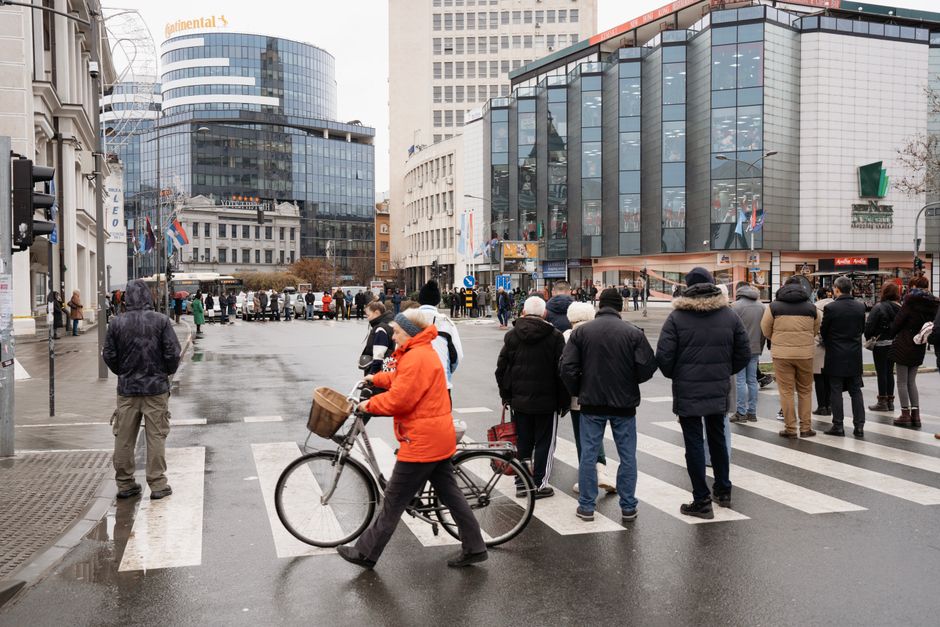
The announcement follows months of intense social unrest in Serbia. Large-scale protests, often referred to as "Serbia Against Violence", erupted in response to several mass shootings and perceived government inaction on security issues. Demonstrators have also voiced concerns about judicial independence, media freedom, and the fairness of recent elections. The 2023 Serbian parliamentary election was marred by allegations of irregularities and the sudden disqualification of several opposition candidates, which the opposition claims were orchestrated by the ruling party to secure a supermajority.
Internationally, the European Union has expressed deep concern over the democratic backsliding in Serbia. EU officials have repeatedly called for a level playing field for all political actors and have linked further integration steps to concrete reforms. The Venice Commission, the Council of Europe's advisory body on constitutional matters, has also issued recommendations urging Serbia to strengthen its rule of law. Vucic’s statement about resigning appears to be a direct response to this mounting pressure, though it is unclear whether it is a genuine step toward political renewal or a tactical maneuver to retain influence behind the scenes.
Analysts suggest that the political climate in Serbia has reached a boiling point. The opposition has united under a common platform demanding early elections and the establishment of an independent electoral commission. Meanwhile, civil society organizations have played a pivotal role in mobilizing public support for democratic reforms. The potential resignation of the president could either de-escalate the tension or trigger a power struggle within the ruling party, depending on how the transition is managed.

Impact on Regional Stability and Foreign Policy
Aleksandar Vucic’s foreign policy has been characterized by a delicate balancing act between Belgrade, Brussels, Moscow, and Beijing. Serbia has maintained strong economic and political ties with Russia and China while pursuing a path toward EU membership. This multi-vector approach has allowed Serbia to secure significant investment and diplomatic support but has also drawn criticism from Western partners who view these ties as inconsistent with EU values.
The potential change in leadership could recalibrate Serbia’s foreign relations. A new president might adopt a more pro-European stance, aligning closer with EU policies and potentially improving relations with neighboring countries such as Kosovo. The normalization of relations between Serbia and Kosovo, mediated by the US and EU, has been a contentious issue under Vucic’s leadership. His departure could open new avenues for dialogue, although it might also introduce uncertainty if the successor holds different views on the region’s most sensitive political issue.
For the broader Balkans, Serbia’s political stability is interconnected with regional cooperation. The Berlin Process, an EU-led initiative to support Western Balkans integration, relies on stable governance in member states. Any turbulence in Serbia could ripple through the region, affecting joint infrastructure projects, energy security, and migration management. Countries like Croatia, Bosnia and Herzegovina, and Montenegro are watching closely, as shifts in Belgrade’s political direction could influence their own domestic and foreign policy calculations.

The Succession Question and Future Outlook
As Vucic prepares to leave office, the question of who will succeed him looms large. The Socialist Party of Serbia has not yet officially named a successor, leading to speculation about potential candidates. Some observers point to Ivica Dacic, the Prime Minister, as a likely contender, while others suggest that Vucic might attempt to remain influential through party leadership even after stepping down from the presidency. The internal dynamics of the SNS will be critical in determining the outcome, as the party faces challenges from both within and without.
The opposition has called for free and fair elections to determine the next leader, emphasizing the need for transparency and international observation. If Vucic’s resignation leads to early elections, it could provide a clear mandate for a new direction. However, if the transition is managed internally by the ruling party without genuine democratic contest, it may fail to address the root causes of public discontent. The role of the Central Election Commission will be scrutinized heavily in the coming weeks.
For the international community, the focus will be on ensuring that Serbia’s political transition upholds democratic standards. The EU, US, and other partners are likely to engage in diplomatic efforts to support a stable and legitimate government. The coming months will be crucial in determining whether Serbia can overcome its current crisis and move forward on its path to European integration. Citizens across the Balkans are watching closely, aware that the outcome will have far-reaching implications for the region’s future.


Comments