


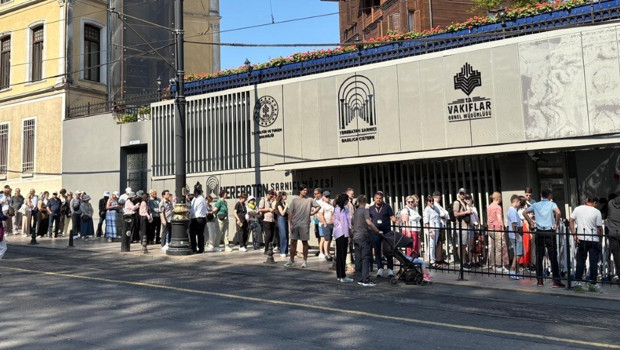
The iconic Basilica Cistern in Istanbul has officially reopened its doors to visitors. The ancient underground reservoir, one of the city's most significant cultural heritage sites, resumed operations on June 6, 2026, at 09:00. The reopening follows the completion of urgent maintenance and repair works, as well as a major administrative shift in the structure's legal ownership.
Legal Transfer to the General Directorate of Foundations
The restoration of public access coincides with the finalization of a complex legal process under Article 30 of the Foundations Law No. 5737. The General Directorate of Foundations (GDF) announced that the cistern has been formally registered under the authority of established charitable endowments, known as waqfs. Following this registration, the site was evacuated from its previous administrative management and handed over to the GDF.
Levent Çetin, Deputy Regional Director of the GDF, emphasized that every step of the process was conducted strictly within the framework of relevant legislation. He highlighted that historical archives and expert reports were crucial in determining the cistern's place within the Ottoman waqf system.
“Our research, including 1921 Imperial Endowments Ministry circulars and cadastral records from 1926-1928, clearly shows that the Basilica Cistern was an integral part of the waqf water system and charity network,” Çetin explained. “It served foundations established by Mehmed the Conqueror and Suleiman the Magnificent. Therefore, in accordance with the law, the cistern has been registered to its rightful waqf owners and was fully handed over to us on June 2, 2026.”
Addressing Historical and Legal Debates
The legal transfer has sparked discussion regarding the cistern's origins. Critics have argued that because the structure dates back to the Byzantine Empire, it should not fall under Islamic waqf law. However, the GDF clarified that the law applies not only to structures built as waqfs but also to those constructed, repaired, or significantly altered using waqf resources.
Çetin noted that after the conquest of Istanbul, many iconic cultural assets inherited from antiquity and the Byzantine era were protected and maintained through Ottoman foundations. “The management and preservation of these historic structures were handled by the waqf system for centuries,” he added. “The law explicitly states that if a property was built or repaired with waqf funds, it is considered to have originated through the waqf path.”
Free Entry for Turkish Citizens
Technical inspections conducted after the evacuation revealed necessary maintenance needs, which were addressed swiftly to ensure visitor safety and comfort. The GDF stated that preserving the structure and ensuring uninterrupted access for future generations remains their top priority.
In a move to celebrate the reopening, the authority announced special visiting conditions. Turkish citizens can visit the Basilica Cistern free of charge until the end of June. After this period, local visitors will be able to continue exploring the site through the Museum Card (MüzeKart) application, which provides access to numerous cultural sites across the country. International tourists will continue to pay standard admission fees.



yerebatan sarnıcı vakıflara geçti diye haber yapılmış ama aslında yıllardır öyle olmalıydı tbh. bizans mirası diyenler de var ama kanunen doğru yapılmış. fenerbahçe taraftarı olarak bile bu tarihi yapıya saygı duyuyorum. umarım bakım kalitesi düşmez şimdiden.