


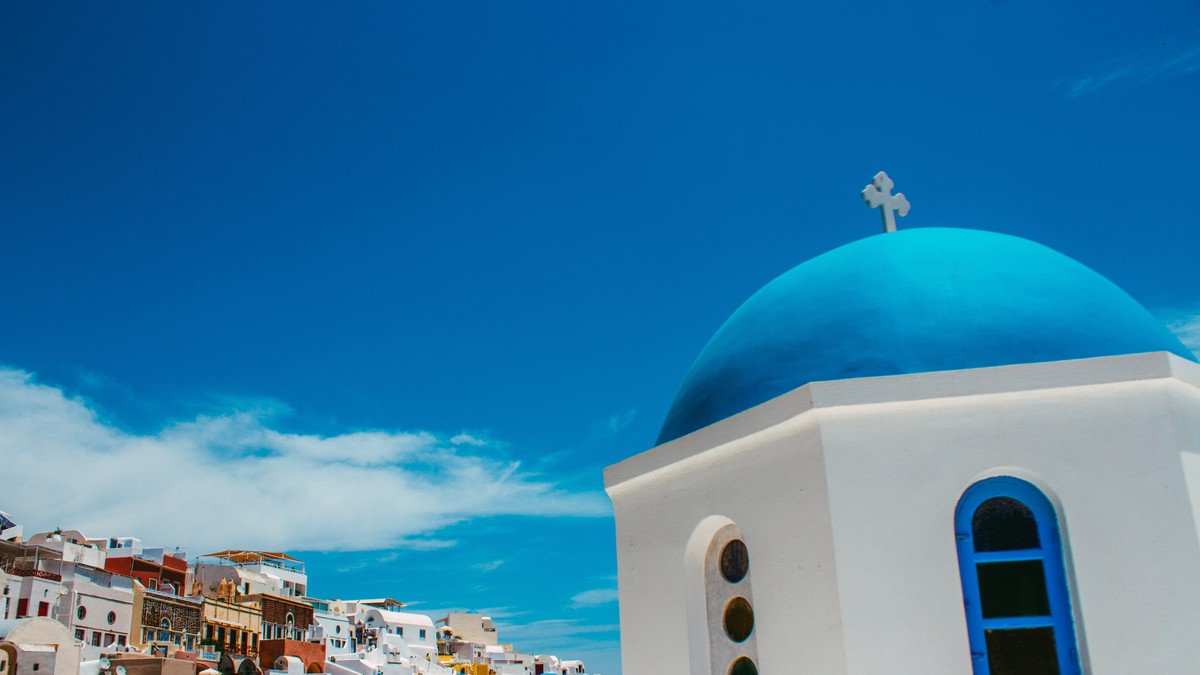
The iconic blue and white houses on Greek islands like Santorini and Mykonos have become a symbol of Greek tourism and a staple in influencer travel photos. While many believe these colors represent the sea, sky, or Greek flag, the history reveals a more practical and health-driven reason for this architectural style.
Thermal Insulation from the Past: How They Cooled Stone Houses
Most houses on the Cyclades were originally built from stone because wood was scarce on the dry Aegean islands.
However, dark stone absorbed sunlight during hot summers, making interiors unbearably hot. Residents began whitewashing their stone structures to cool their interiors. This proved successful, resulting in much cooler and fresher homes during the summer months.
White Paint as a Mandatory Disinfectant
In 1938, a national order was issued to whitewash houses due to a cholera epidemic during the dictatorship of Ioannis Metaxas. To curb the spread of the disease, residents were ordered to whitewash their homes because whitewash was a powerful disinfectant.
At the time, there were few other disinfectants available, and whitewashing served as a means of sanitizing spaces and reducing the spread of the disease.
Why Blue? The Answer Lies in Cost and Fishermen's Buckets
While doors and windows are predominantly blue today, other colors like red, green, and brown were used in the past. However, bright blue became dominant primarily due to economic reasons.
Fishermen and sailors used leftover paint from their buckets to paint their windows and caps, and blue was the cheapest available color. Blue paint was made by mixing whitewash with a cleaning substance called "loulaki," which was a type of blue talc that every household had access to, making it very easy and cheap to produce.
From War Dictatorship to a Touristic Brand Worth Millions
This color combination became mandatory during the 1967 military dictatorship, as the regime believed it would foster patriotism and reflect Greek nationalism.
In 1974, a law formalized this rule for houses on the islands.
While regulations have relaxed today, blue and white remain dominant due to their appeal to tourists worldwide. Many islanders continue to paint their homes in these colors, combining tradition, practical reasons, and clear business logic that brings in substantial revenue for Greece.



This unique color scheme is not just a pretty picture; it's a blend of history, practicality, and marketing genius. But does it still serve its original purpose, or is it just a tourist trap now? Let me know your thoughts!