


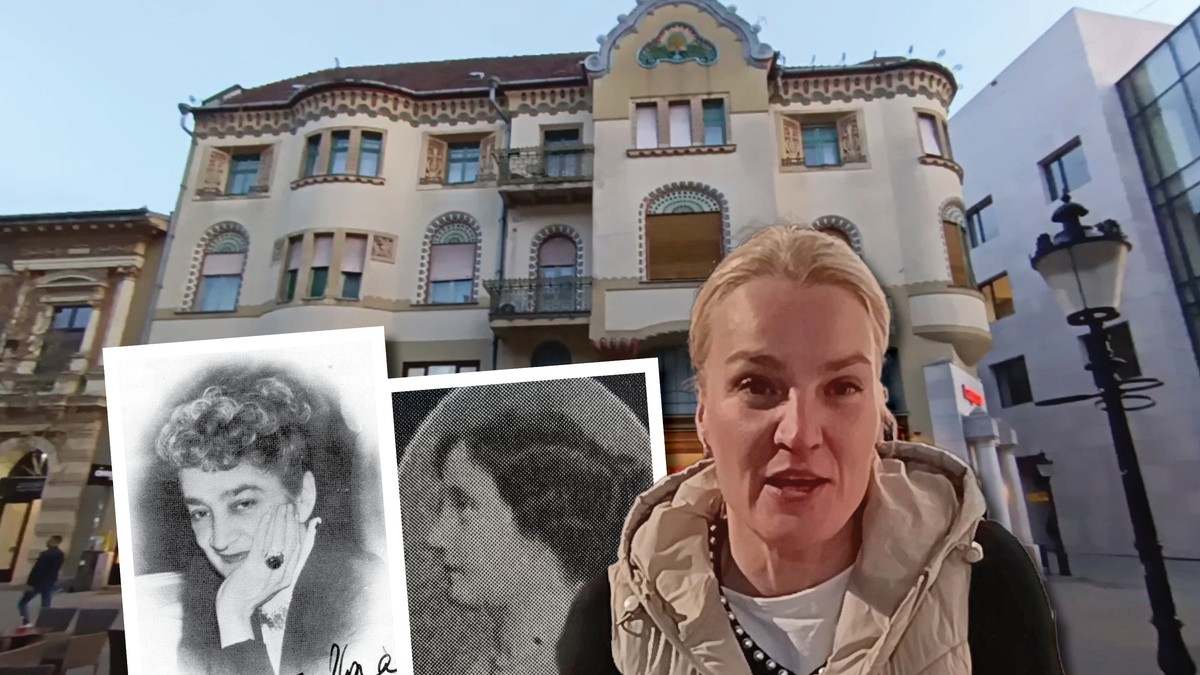
Subotica, a city renowned for its beautiful architecture and multiculturalism, is also home to strong, educated, and brave women whose contributions were long overlooked. Behind the city's picturesque facade lies a hidden truth about the invaluable contributions of women who built the city but whose names have remained unseen. As you walk through the city center, you might not realize that the buildings you pass were once home to visionaries who led banks in a male-dominated world, wrote Hollywood screenplays, and defied fascism.
Memory Revolution
The initiative to correct historical injustice is led by Dr. Margareta Bašaragin, who completed her doctorate in gender studies at the University of Novi Sad. As the coordinator of the Women’s Studies and Research Association, which recently established its base in Subotica, she continues the work that Professor Svenka Savić began in 1997.
- My enduring mission is to research, document, and preserve the memory of notable women from Subotica, says Dr. Bašaragin.
She emphasizes a focus on those considered outsiders, including women from national communities, older women, Roma women, and women with disabilities. The association aims to affirm the memory of deserving women from the past and present through projects such as "Famous Women" and "Women's Life Stories," leaving their contributions as a legacy for future generations.
Lenka Kraus – Pioneer of Feminism and Banking
The name Lenka Kraus surfaced during research into archival materials and old news articles, initially known only as the director of a bank between the two world wars. However, further research revealed her much more significant role in the city's social life. Margareta Bašaragin points out that her entry in the book now reads that she was a "feminist, peacemaker, philanthropist, and only then the bank director."
Data confirms that Lenka Kraus was the president of the first feminist association in Subotica, founded in 1917. She fought for basic human and political rights for women: the right to vote, education, work, and equal pay. Despite her success as a professional woman in an era when this was uncommon, her life tragically ended. She and her husband were taken from their home in Korzo Street, in the city center, to Auschwitz, where she perished.
Ilona Filep – From Subotica Journalism to Hollywood
Another notable Subotican, Ilona Filep, is recognized as the city's first professional journalist. She left a valuable written record of the connection between Subotica's feminists and global movements. She wrote an article about the visit of a group of 50 women from around the world who, after a large conference in Budapest in 1925, stopped in Subotica.



This is a long overdue recognition for these incredible women. It's about time their stories are told and their contributions acknowledged. What can we do to keep their legacy alive in Subotica and beyond?