


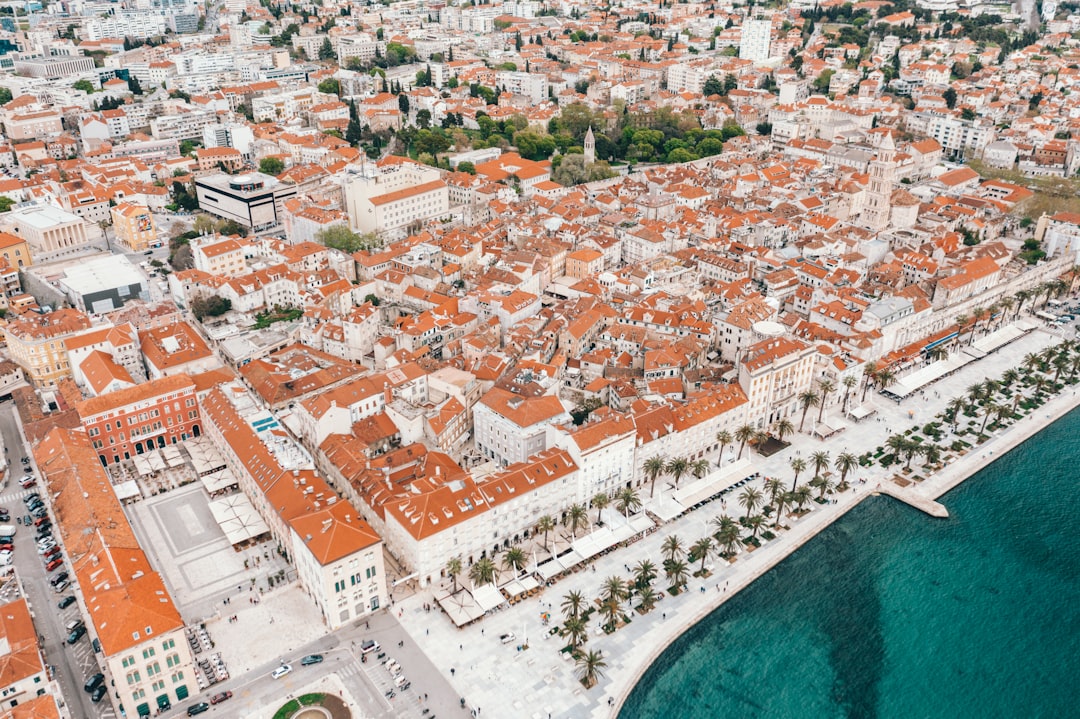
The concrete dust of a cargo ship horn still vibrates in my ribs as I stand on the marble steps of the Cathedral of Saint Domnius, staring down at a crowd of tourists chewing on ice cream sticks. It is noon in Split, and the heat radiating off the limestone is enough to cook an egg on the pavement. I am not in a museum. I am not looking at ruins behind velvet ropes. I am standing inside the floor plan of a Roman emperor's final resting place, watching a local grandmother in a floral headscarf haggle with a fishmonger over the price of brancin (red mullet) in a market that has operated on this exact coordinate for sixteen hundred years.
This is the thing about Diocletian's Palace that guidebooks fail to capture with their sterile floor plans: it did not die. It didn't crumble into a picturesque ruin for the Romans to mourn. It was swallowed, whole, by the living, breathing, chaotic organism of a city. The walls that once kept the barbarians out now keep the AC units in. The imperial mausoleum is a Catholic cathedral. The underground cisterns are a summer concert venue. Walking through Split's Old Town is not a historical reenactment; it is a collision of timelines where the Roman Empire and modern Dalmatian life share the same sweaty, sun-bleached space.
History & Identity
The story begins not with glory, but with retirement. In 295 AD, Emperor Diocletian, the man who had stabilized the crumbling Roman Empire through sheer administrative force and brutal persecution of Christians, decided he was done. He built a massive fortified palace on the coast of Dalmatia, intending it to be his final sanctuary. It was a city-within-a-city, complete with temples, baths, and a mausoleum, designed to be impenetrable. But when Diocletian died in 313 AD, the palace didn't become a mausoleum for the living. It became a shelter.
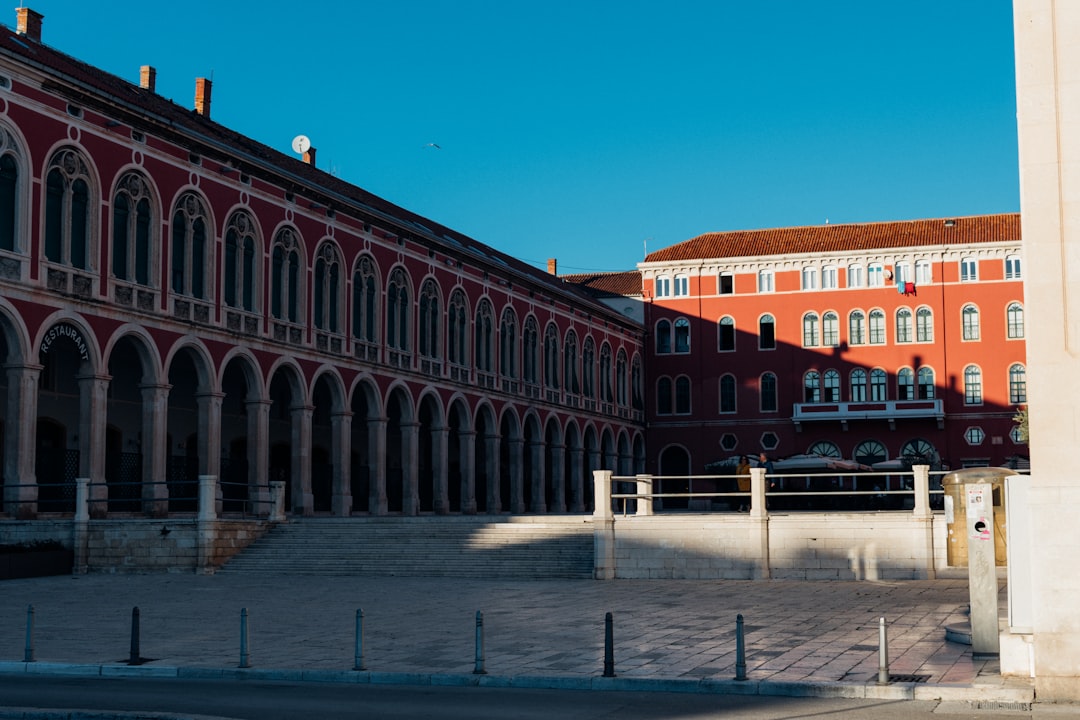
As the Roman Empire fractured and the Slavs pushed southward, refugees from the surrounding countryside fled into the palace walls for protection. They didn't just squat in the ruins; they built new lives on top of the old ones. They added Gothic arches to Roman vaults, Baroque facades to imperial gates, and medieval houses inside the courtyard of the emperor's private quarters. This organic, un-planned urban evolution created Split. The city didn't grow around the palace; the city *is* the palace. The identity of Split is defined by this layering. There is no clear line between the ancient and the modern because they are structurally fused. The marble you step on was quarried in the Roman era, but the coffee shop built into the archway is serving espresso brewed yesterday.
This history makes Split one of the most unique urban environments in the Balkans. You are not visiting a preserved artifact; you are walking through a living fossil. The atmosphere is thick with the weight of centuries, but it's a weight that feels comfortable, worn in like a favorite pair of shoes. The locals don't treat the palace as a sacred museum; they treat it as their home. This creates a friction between the tourist gaze, which seeks pristine antiquity, and the local reality, which seeks convenience and community. It's a friction that makes the city vibrant, loud, and utterly compelling.
Where to Go
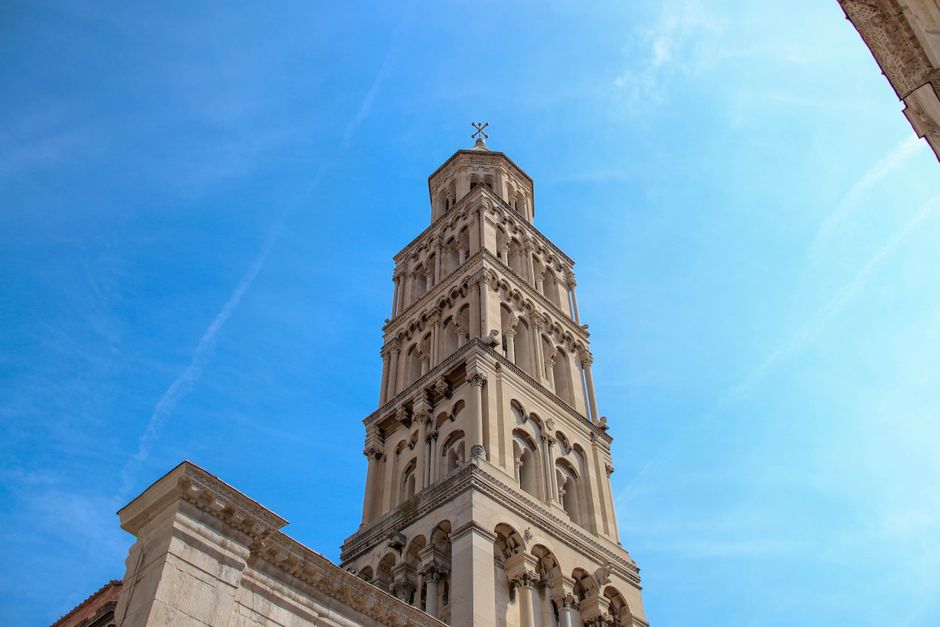
Cathedral of Saint Domnius — Originally built as the mausoleum of Emperor Diocletian, this is the spiritual and architectural heart of the palace. The transition from pagan tomb to Christian cathedral is seamless, with the original Roman columns and vaults remaining intact while the exterior has been adorned with Gothic and Baroque elements. The bell tower offers a panoramic view of the Adriatic and the surrounding mountains. Entry is free, but a small donation is expected. Climb the tower for the best vantage point of the city's layered history.
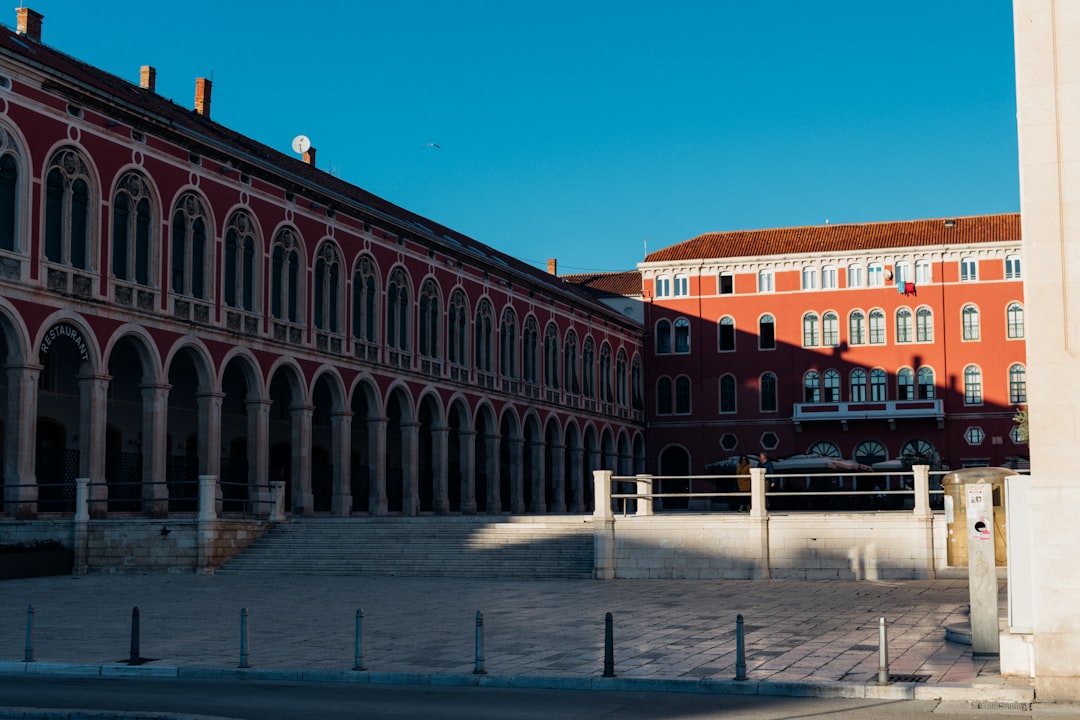
The Peristyle — This was the central courtyard of Diocletian's Palace, the public square where the emperor would appear to his subjects. Today, it is the beating heart of Split's social life. Surrounded by cafes, bars, and souvenir shops, it is always crowded, always noisy. In the center stands the Mausoleum (now the Cathedral), and the columns are lined with statues of Roman emperors. It is the best place to people-watch and absorb the chaotic energy of the city. Visit in the early evening when the sun hits the marble and the locals spill out for their pre-dinner drinks.
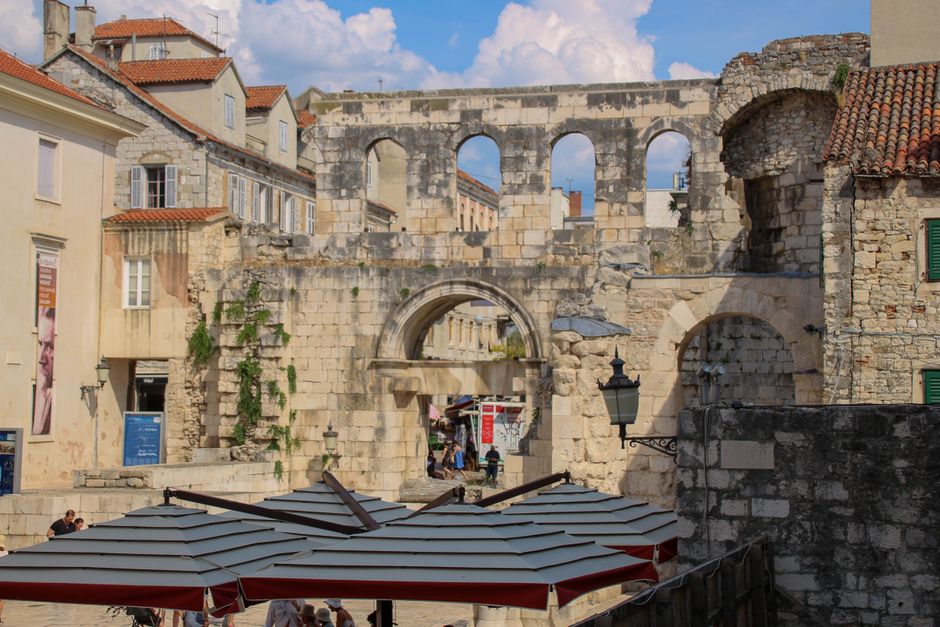
Golden Gate (Zlatna Vrata) — This was the main entrance to the palace for ordinary citizens, while the Silver Gate was reserved for the emperor. Today, it is one of the most photographed spots in Split. The archway is adorned with intricate carvings and statues, and the view through the gate frames the street leading to the Riva waterfront. It is a perfect spot to start or end your exploration of the palace, marking the boundary between the old town and the modern city.
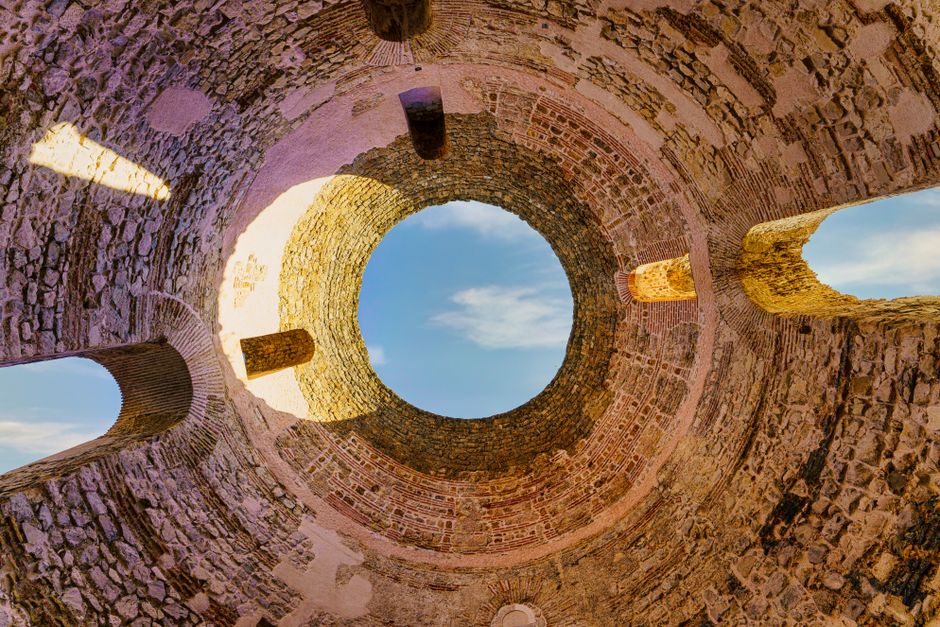
Cellar of the Palace (Podrum) — Located near the Peristyle, this underground cellar was once used for storing wine and goods. Today, it hosts a rotating series of art exhibitions and cultural events. The cool, dimly lit space provides a stark contrast to the bright, busy streets above. It is a quiet refuge from the heat and the crowds, offering a glimpse into the functional aspects of palace life. Check the schedule for current exhibitions, as entry fees vary.
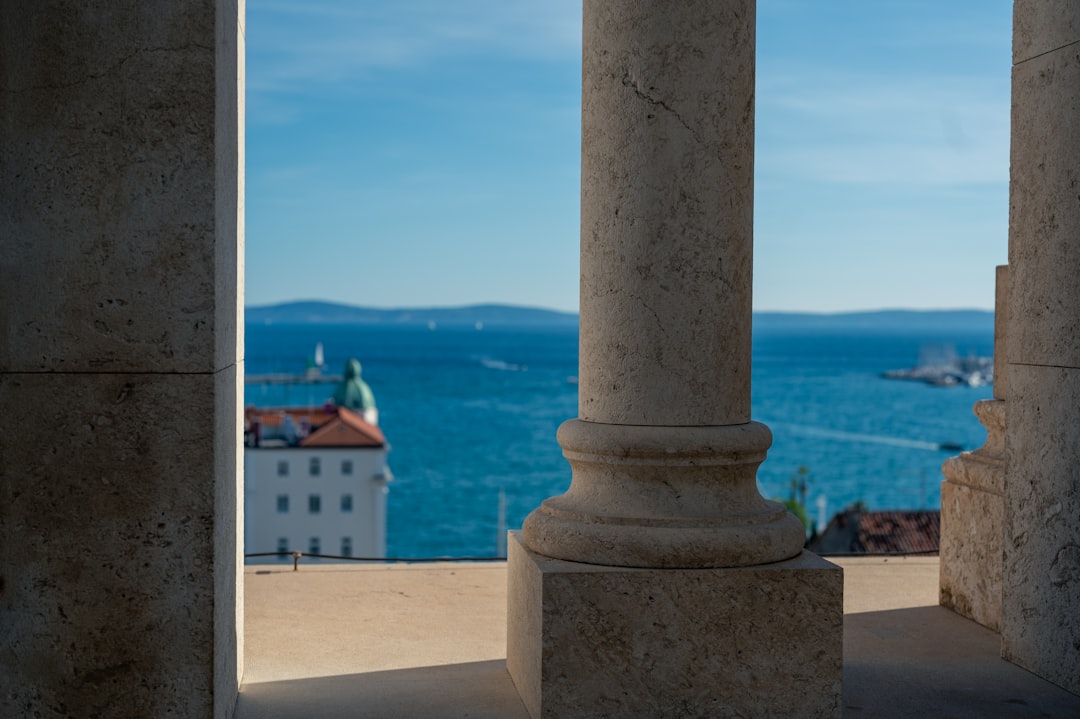
Temple of Jupiter — Located near the Cathedral, this small temple is one of the best-preserved Roman structures in the palace. The columns are still standing, and the interior is cool and shaded. It is a quiet spot for reflection, offering a direct connection to the religious life of the Roman Empire. Entry is free, and it is often overlooked by tourists rushing to the more famous landmarks.
What to Eat & Drink
Eating in Split's Old Town is an exercise in navigating the layers. You can find high-end restaurants with sea views and budget-friendly buregdzines tucked into Roman arches. The local cuisine is a blend of Mediterranean and Balkan influences, with a strong emphasis on fresh seafood, olive oil, and grilled meats.
- Ćevapi — Small, grilled minced meat sausages served with somun (flatbread) and onions. A staple of Balkan street food, available in nearly every take-away spot. Price: 4-6 EUR per serving.
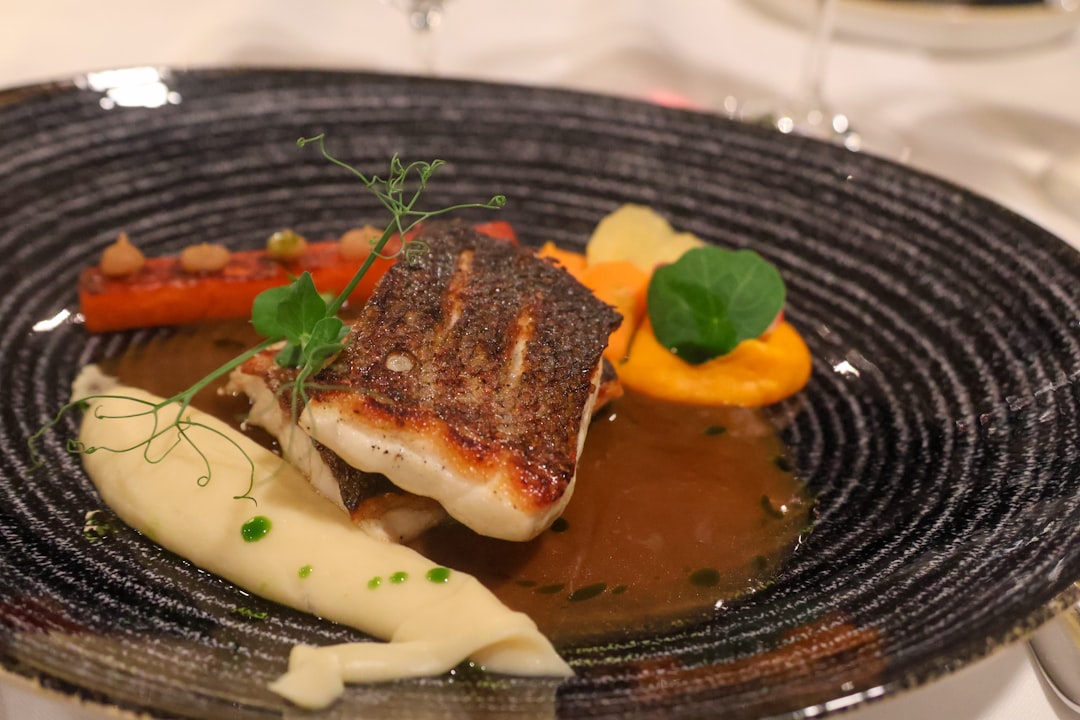
- Black Risotto (Crni Risotto) — A signature Dalmatian dish made with squid ink, giving it a striking black color and a briny, seafood flavor. Best enjoyed with grilled octopus. Price: 12-18 EUR per plate.
- Octopus on the Grill (Hobotnica) — Simply grilled octopus, often served with potatoes and olive oil. A must-try for seafood lovers. Price: 10-15 EUR per portion.
- Pašticada — A slow-cooked beef stew with vegetables, served with gnocchi or noodles. A hearty, traditional dish perfect for cooler evenings. Price: 14-20 EUR per plate.
For budget travelers, the Diocletian's Palace Market area is a goldmine for affordable eats. You can find fresh produce, cheese, and olives, as well as take-away burek and pita. The Riva waterfront is lined with cafes and ice cream shops, but prices here are higher. For a sit-down meal at a local restaurant, expect to pay 15-25 EUR per person for a main course and a drink. Mid-range restaurants with a view can cost 25-40 EUR per person.
One specific spot to note is the Stari Grad area just outside the palace walls, where you can find more affordable family-run restaurants. The Peristyle itself is expensive for dining, but great for a coffee or a beer. Look for places where locals are sitting, rather than those with menus in ten languages posted outside.
Nightlife
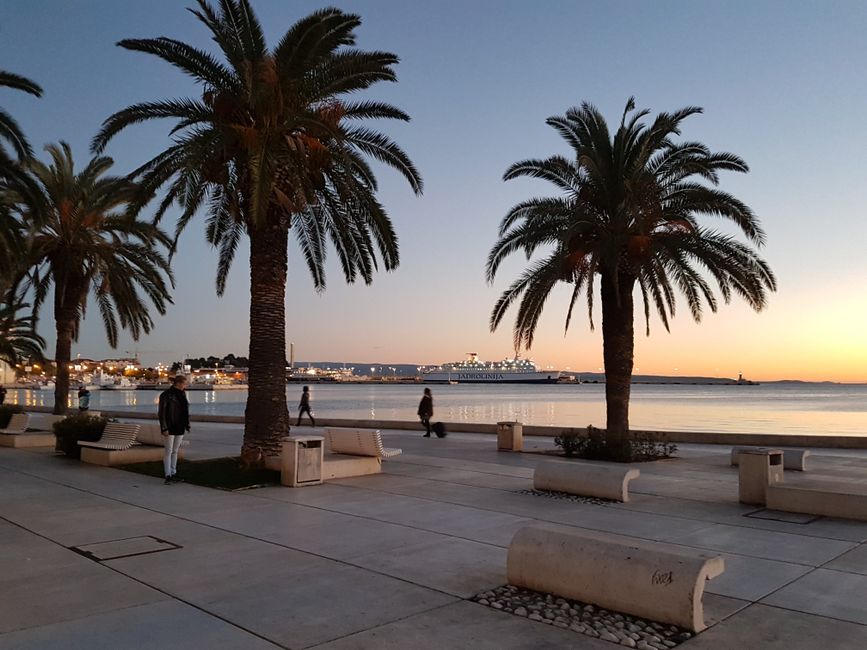
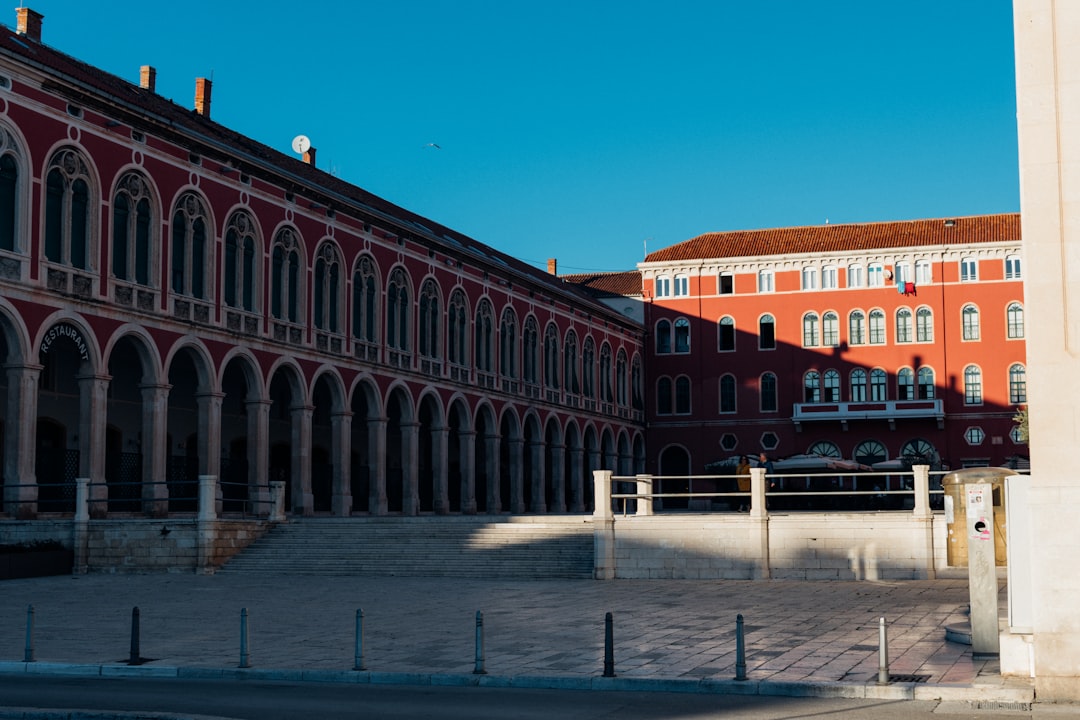
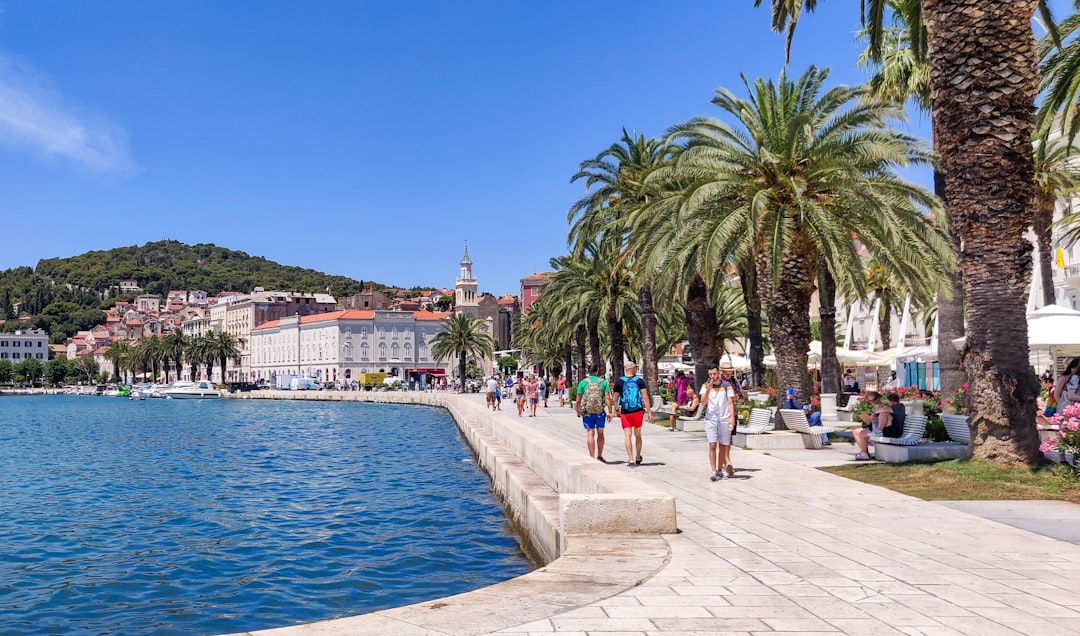
Nightlife in Split is centered around the Peristyle and the Riva waterfront. The Peristyle transforms after dark, with bars spilling out onto the marble floor. The atmosphere is lively, with a mix of tourists and locals enjoying drinks and live music. The Riva is more relaxed, with cafes and bars offering views of the sea and the islands.
For clubs, head to the Diocletian's Palace cellars, where the Palace Cellar hosts electronic and indie music events. The Old Town is also home to several smaller bars and lounges, offering a more intimate atmosphere. The Golden Gate area is a hub for late-night bars, with a mix of cocktail lounges and beer gardens. Cover charges are generally low, around 3-5 EUR, but drinks can be pricey, especially in tourist-heavy areas.
Getting There & What to Expect
The nearest airport is Split Airport (SPU), located about 20 km north of the city. Buses run regularly from the airport to the city center, taking about 30 minutes and costing around 5-7 EUR. Taxis are more expensive, around 20-30 EUR. Split is well-connected by bus and train to other major Balkan cities, including Zagreb, Budapest, and Belgrade. Bus journeys from Zagreb take about 4-5 hours, while trains can take longer but offer scenic views.
Accommodation in Split ranges from budget hostels to luxury hotels. Hostels in the Old Town cost around 20-40 EUR per night for a dorm bed. Mid-range hotels cost 80-150 EUR per night, while luxury hotels can exceed 200 EUR. The best time to visit is from May to June or September to October, when the weather is warm but the crowds are thinner. July and August are peak season, with high prices and large crowds.
Expect to walk a lot. The Old Town is compact, but the streets are uneven and steep in places. Wear comfortable shoes. Also, be prepared for the heat. The marble reflects the sun, and it can get very hot. Bring water and sunscreen. Finally, respect the locals. This is their home, not just a tourist attraction. Be polite, speak softly, and enjoy the unique experience of living inside history.
Search accommodation in Split on Booking.com →
The Emperor's Shadow
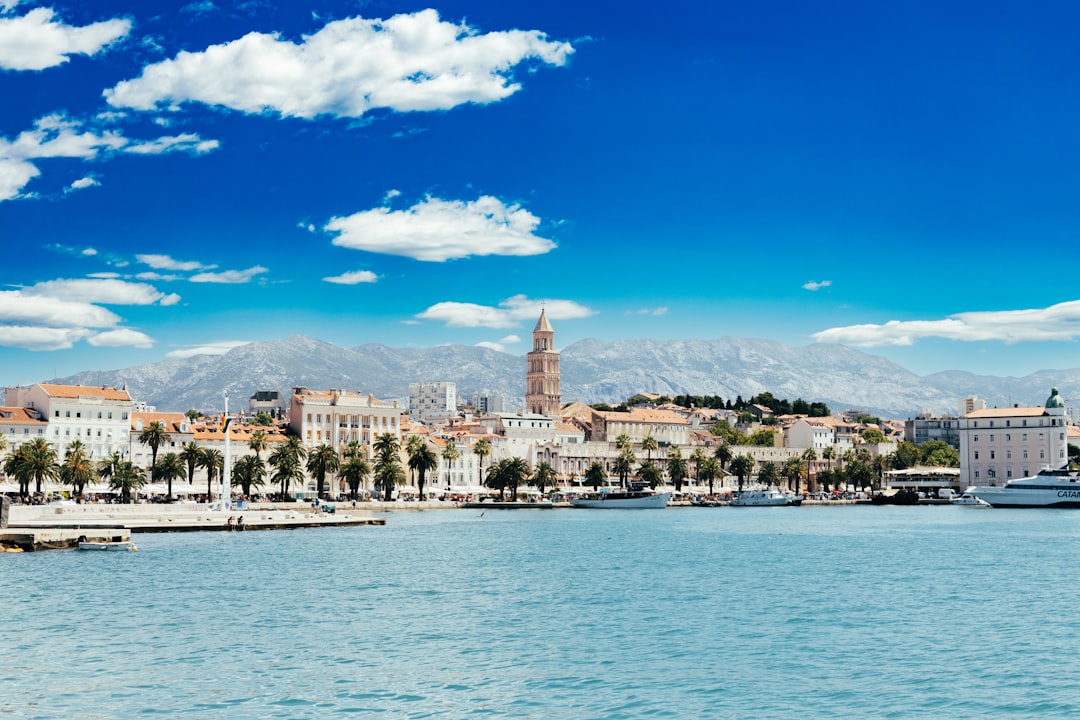
As the sun sets, the marble of Diocletian's Palace turns a deep, warm gold. The crowds thin out, and the city exhales. I sit on the steps of the Cathedral of Saint Domnius, watching the locals walk by with their groceries and their dogs. The fishmonger is packing up his stall, the cafes are closing, and the silence of the ancient stones begins to return. It is a moment of clarity, a reminder that this city is not just a museum of the past, but a living, breathing entity. The emperor is dead, but his city lives on, unchanged in its essence, yet constantly evolving. It is a place where history is not just remembered, but lived. And that is a rare thing indeed.
Comments