


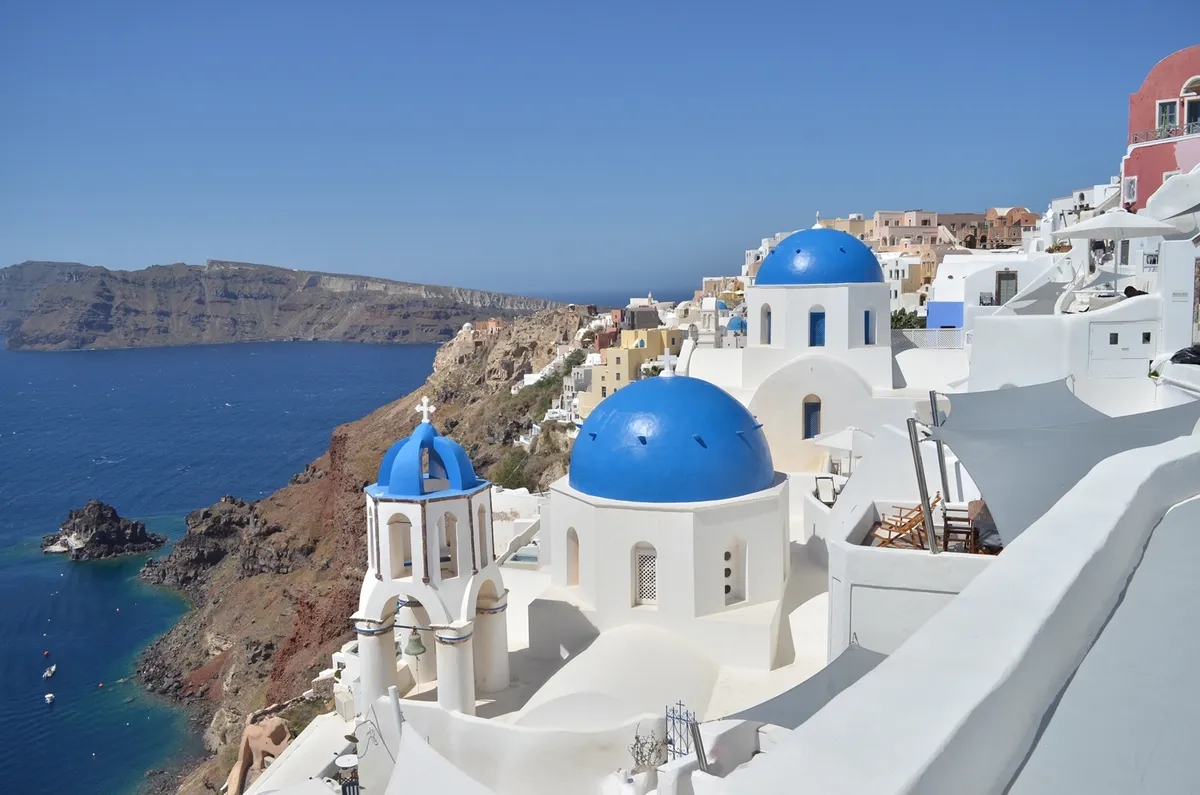
There are places on Earth that look so surreal they feel detached from reality. Santorini is precisely such a place. It is an island where whitewashed houses cling to volcanic cliffs, where the sea shifts color hourly, and where sunsets play out like cinematic scenes. The wind here carries the scent of salt, wine, and millennia of history.
Santorini is more than just Greece’s most famous island. It is a symbol of the Mediterranean, one of the most photographed locations on the planet, and a destination synonymous with romance and luxury. But behind the perfect postcards lies a deeper narrative. This is a story of a catastrophe that created paradise—a volcano that destroyed one world to birth another.
Few places on Earth were born from an explosion and ended up as one of the most beautiful spots on the globe. That is why Santorini looks so dramatic, so unique, and so utterly unreal today.
An Island Born from Fire
To truly understand Santorini, one must start with its catastrophic beginning. Over 3,500 years ago, one of the largest volcanic eruptions in human history occurred here. The blast was so powerful it permanently altered the island's shape and likely contributed to the decline of the Minoan civilization on Crete. A huge portion of the land vanished in the explosion, and the sea rushed in to fill the central crater, creating the caldera—the massive marine crater that defines the island’s iconic view today.
This geological violence explains why the island looks different from other Greek isles. The cliffs dropping vertically into the sea are not accidental; they are the walls of the ancient volcano. The white houses clinging to the rocks were built on the edge of one of the planet’s greatest natural explosions. This combination of volcanic drama and Mediterranean elegance makes the destination irresistible. Some even believe Santorini inspired the legend of Atlantis, the lost city swallowed by the sea. Standing on the caldera’s edge, watching the sun dip behind the volcanic islets, it is easy to see why such myths were born.
From Fishing Village to Global Icon
Today, Santorini feels like a place that has always been about luxury travel and perfect photos. However, tourism here is a relatively recent phenomenon. Until the mid-20th century, the island survived primarily on fishing, wine production, and agriculture. People farmed the land under harsh winds and rugged volcanic soil. Homes were simple, many carved directly into the rock to shield residents from the heat.
A massive earthquake in 1956 nearly destroyed the island. Many inhabitants left, and villages stood half-empty. Yet, this tragedy sparked a new era. In the 1970s, photographers and travelers discovered the island’s breathtaking beauty, driven by the archaeological site of Akrotiri and its unique Cycladic architecture. White houses with blue domes began appearing on magazine covers worldwide. Santorini became the symbol of a Greek summer and eventually one of the planet’s most desired destinations.
Millions of tourists visit annually, yet the island has not lost its magic. It remains a place that still looks like a dream.
Fira: The Heart That Never Sleeps
If Santorini is the stage, Fira is its main scene. The island’s capital sits high above the sea, on the caldera’s edge, appearing as a labyrinth of white streets, terraces, restaurants, and small hotels with breathtaking views.
Fira is alive at all hours. Mornings smell of coffee and fresh pastries, afternoons of sea and sun, and nights of wine, music, and summer energy. The streets are filled with people from every corner of the globe, yet despite the crowds, the town retains a distinct charm that keeps visitors returning.


fenerbahce style vibes on santorini rn lol. honestly the caldera views are next level, no cap. but tbh the crowds are getting out of hand. wonder if it loses its charm eventually or just stays magical...