


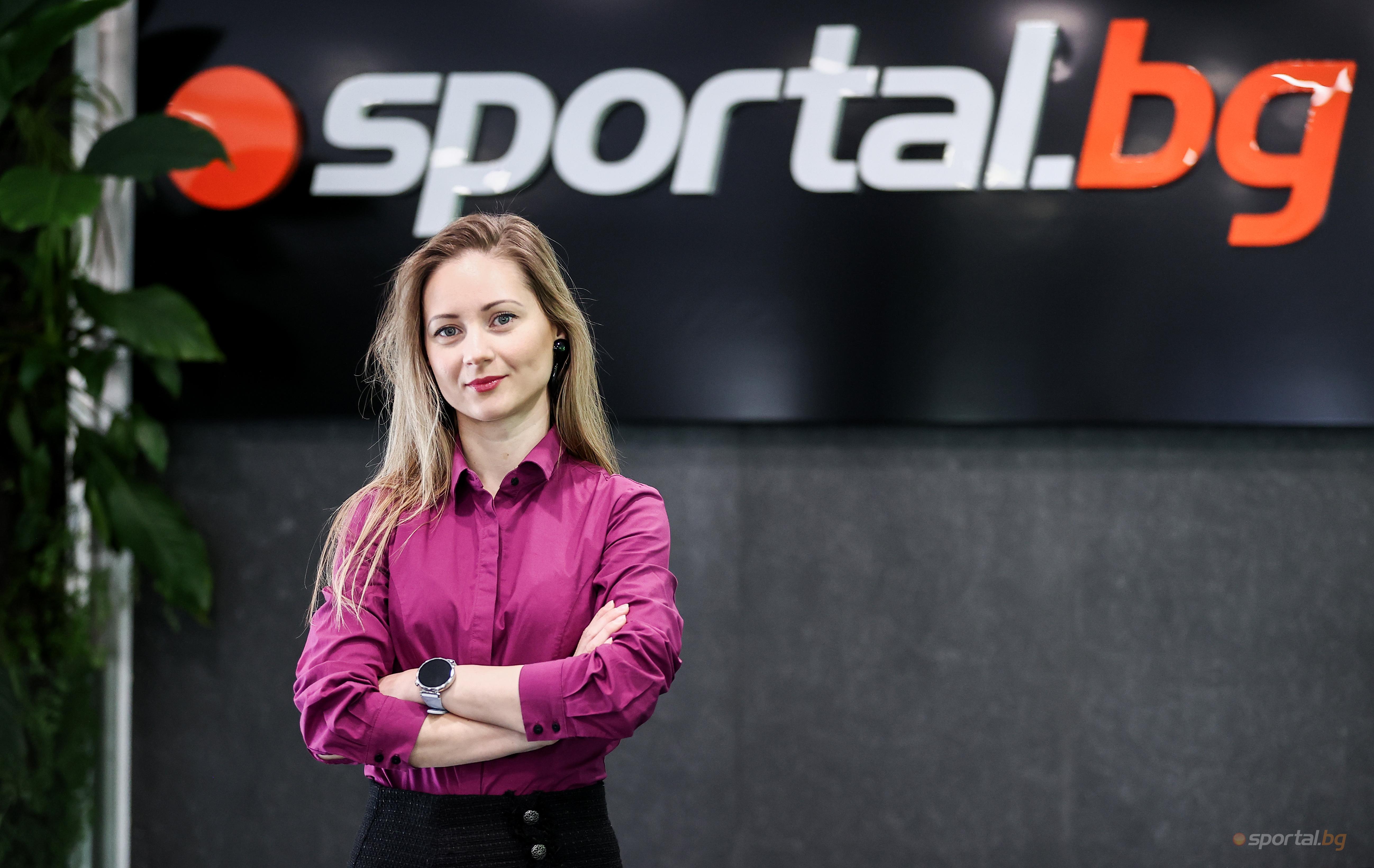
Proletina Velichkova Discusses Refereeing Ronnie O'Sullivan in World Snooker Final
Proletina Velichkova, one of the best snooker referees in the world, was the star of an Sportal.bg interview with Daniel Lubomirov. She shared her experiences from refereeing the World Seniors Championship in "Cruisbill," won by Ronnie O'Sullivan.
This was Velichkova's second consecutive year refereeing the final, and she discussed the unique emotions during the dramatic tournament, which often overshadows the World Championship qualifying rounds in Sheffield.
Velichkova addressed questions from viewers at the end of the interview, which can be seen in the video above.
“I think the World Seniors went quite well, at least from my perspective — as a referee,” Velichkova began in the Sportal.bg studio. "You could feel the difference. In previous years, players ranked within the top 64 were not allowed to participate. This year, they had the right to. The criteria are: amateurs over 40 and professionals over 45. The tournament is held in ‘Cruisbill.’ Most sessions were full. I was surprised last year when some afternoon sessions during the week were full. Especially for matches involving Jimmy White. Interest in him is still huge, even though he is 60 years old. People still love him, still want to watch him. But yes, this year there was definitely an additional charge in the audience.
Until last year, the tournament featured 16 competitors. This year, there were 24. There's always a number of qualifiers who often lose in the first round. Sometimes they manage a win. But for them, it's an exceptional experience. Viewers don't see this, but for them, it's an exceptional experience. These are people who have played amateur snooker all their lives at a very amateur level. Often, they have never stepped into ‘Cruisbill,’ never been to the UK. And suddenly, they are at the World Seniors Championship playing against players they have watched for years. They manage to play against them, sometimes even win. It's an incredible emotion for these people.
For players who have not been particularly successful in their careers, they are there to give their best. This is a once-in-a-lifetime chance. For those old-timers we know, it's a matter of honor to perform well, to prove to themselves that they can still do it. So, there is a competitive element, but there is also a strong element of demonstration snooker.
Ronnie, I think, still took the tournament seriously. He came for the win. He came with his family and friends. He had support, they cheered for him throughout. He didn't let up. I think from a purely psychological standpoint, it was important for him to take a win after more than two years without a tournament victory. I suppose it's important for boosting confidence. This was a significant win for him.
For me, it was a precious experience but also a great training ground. I think viewers don't realize how many matches are played off-camera. They're not broadcast on television. I often work off-camera — in qualifying rounds or in main schedule matches that are not on TV. Yes, it was a super pleasant training ground — many matches one after another in the TV phase to referee.
We, snooker referees, aren't that busy. We have maybe around 50 to 70 working days a year as referees. For the rest of the time, something else needs to be done. Personally, I work in web design, which allows me to combine snooker time very well and decide when I can and want to travel. For many years, I worked from 9 to 5 in an office and was constantly in a situation where I had to ask for unpaid leave, negotiate with managers to let me go to a tournament, negotiate with colleagues about who would take their vacation when, which was extremely exhausting. For years, this burdened me. Now I am glad that I am at least not in such a situation.
On the other hand, the financial motivation is not significant. It's more something that allows you to cover some expenses, but you can't live solely on snooker. The system is set up so that our work is divided relatively evenly among all of us. Consequently, none of us work full-time as a referee. Our earnings from refereeing aren't that substantial. One thing that is always important to me is to develop and always strive to be a little better at what I do. Ultimately, I do it for myself, but also my work is to facilitate the players' performance and life.
I think viewers don't realize that we have to work as a team. We need to be a good collective. Despite always having one referee on the table, we are dependent on each other in our work. We help each other even during the match, even before the match. We work together. It's very important to know how to do it and to enjoy it together.
Because in football, VAR has been around for a few years as the most popular sport, especially in Europe, many people have started to understand what VAR is. This has been around in snooker for a long time, even with TV replays sometimes being attempted. There's work for a referee to guide their colleague on the table in such a way. So this is also team work. And it's constant during the match. You can't let up at any moment.
The World Championship qualifiers remain overshadowed. For me, this is the tournament of the year that is my hidden favorite for the most interesting thing that happens during the year. Players not only strive to qualify for the World Championship, for ‘Cruisbill.’ Many of them also struggle to maintain their professional status. So, there is a lot of drama in the qualifiers. There are people who fight tooth and nail to stay in the tour. As we saw this year with Anthony Kowalski, who needed to win 4 matches to stay in the tour and he managed to do it. Although I don't think anyone gave him much of a chance,” Velichkova said in the Sportal.bg studio. In the video, you can see how she answered viewers' questions.

Comments