


Champions League Glory Turns to Chaos
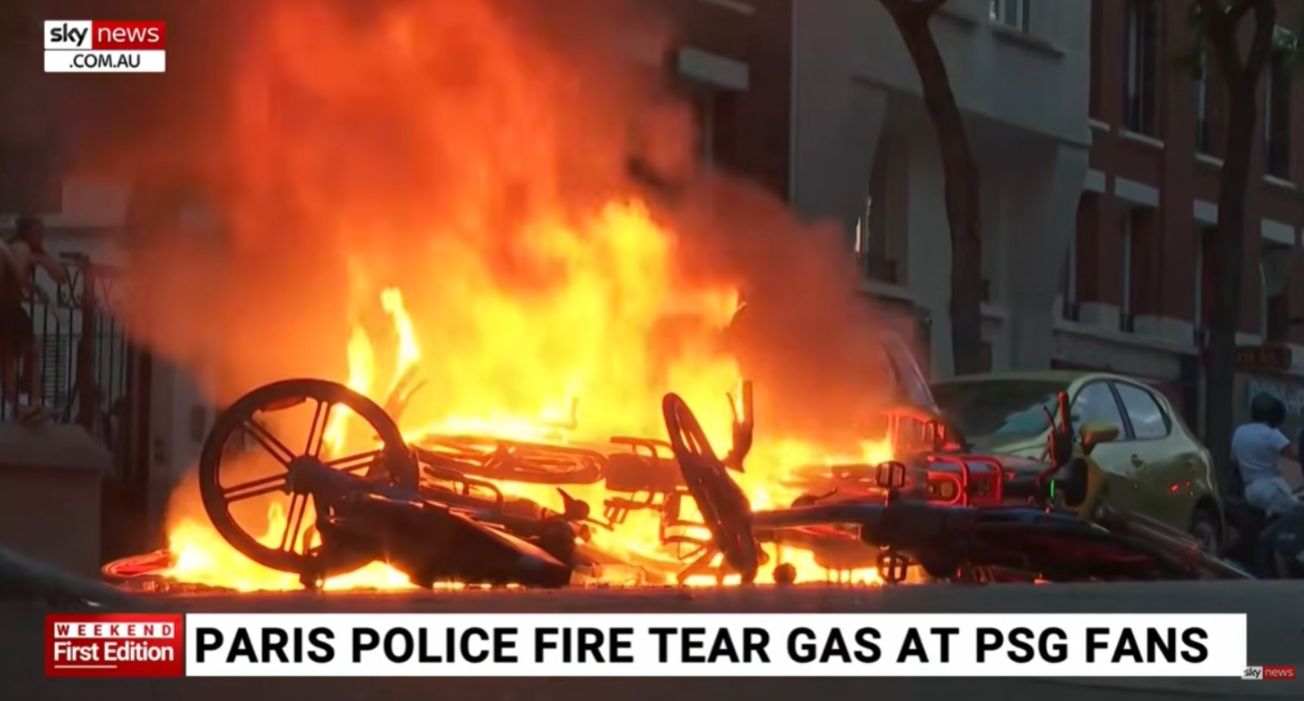
The euphoria of Paris Saint-Germain securing their second consecutive Champions League title quickly curdled into widespread disorder across France. What began as a celebration of sporting excellence devolved into scenes of urban violence, with hundreds of arrests and significant infrastructure damage reported in Paris and surrounding regions. While the club celebrated a historic European double, the capital city found itself grappling with a severe public safety crisis.
French authorities reported that 416 individuals were taken into custody overnight, with 283 of those arrests occurring within the capital alone. The scale of the police response was massive, with 22,000 officers deployed nationwide to manage the crowds, including 8,000 stationed specifically in Paris. Despite this heavy presence, organized groups of vandals managed to ignite vehicles, erect barricades, and launch attacks on storefronts. The Champs-Élysées became a flashpoint for direct confrontations between rioters and security forces, who utilized tear gas to regain control of the thoroughfares.
A Pattern of Urban Unrest
Interior Minister Laurent Nuñez condemned the violence as "absolutely unacceptable," emphasizing that sporting triumphs cannot justify the destruction of public or private property. However, the incident has reignited a broader national debate regarding the recurring nature of civil disorder in France. Observers note that nearly every major event, whether a sports victory, political protest, or social demonstration, increasingly risks spiraling into street-level violence.
This pattern extends beyond French borders. Analysts point to a growing trend of radicalization across Europe, where fringe groups from both the far-left and far-right, along with various activist movements, increasingly employ tactics of property destruction and police confrontation. Similar scenes of unrest have been documented in Germany, the Netherlands, and Belgium in recent years. Experts warn that the issue is not merely isolated incidents, but a shifting social climate where violence is increasingly normalized as a form of political or social expression.
Costs Paid by Citizens
Ultimately, the burden of this chaos falls on ordinary citizens. Shop owners, residents of affected neighborhoods, and tourists are left to deal with the aftermath of broken windows, burned vehicles, and a pervasive sense of insecurity. The contrast between the intended joy of a sports victory and the reality of the riots highlights a troubling disconnect. As PSG lifts the trophy, France is once again forced to confront a persistent question: why does a segment of society consistently transform moments of national celebration into opportunities for vandalism? Without addressing the root causes, future sporting events may continue to be shadowed by the threat of unrest.

psg navijači su opet napravili štetu veću nego što je vredna ta titula tbh. 416 uhapšenih? ozbiljno? mislio sam da će napokon malo da se smire ali evo opet isto priča. ko plati tu štetu?