


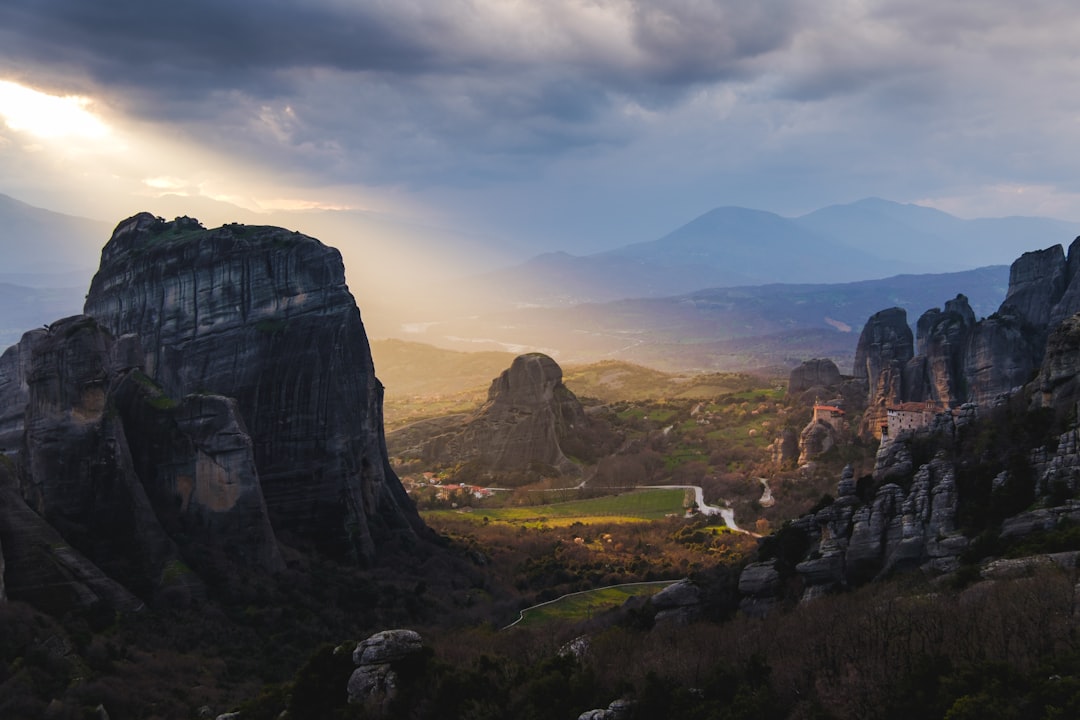
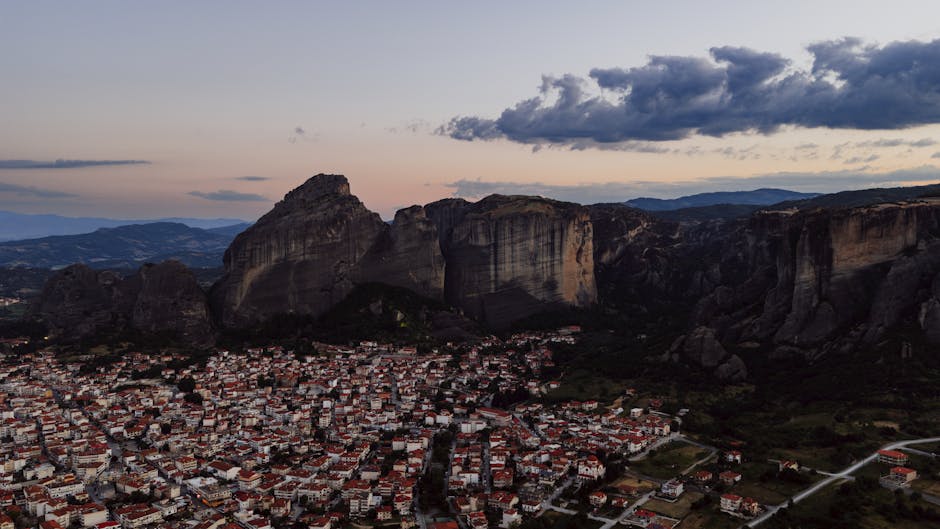
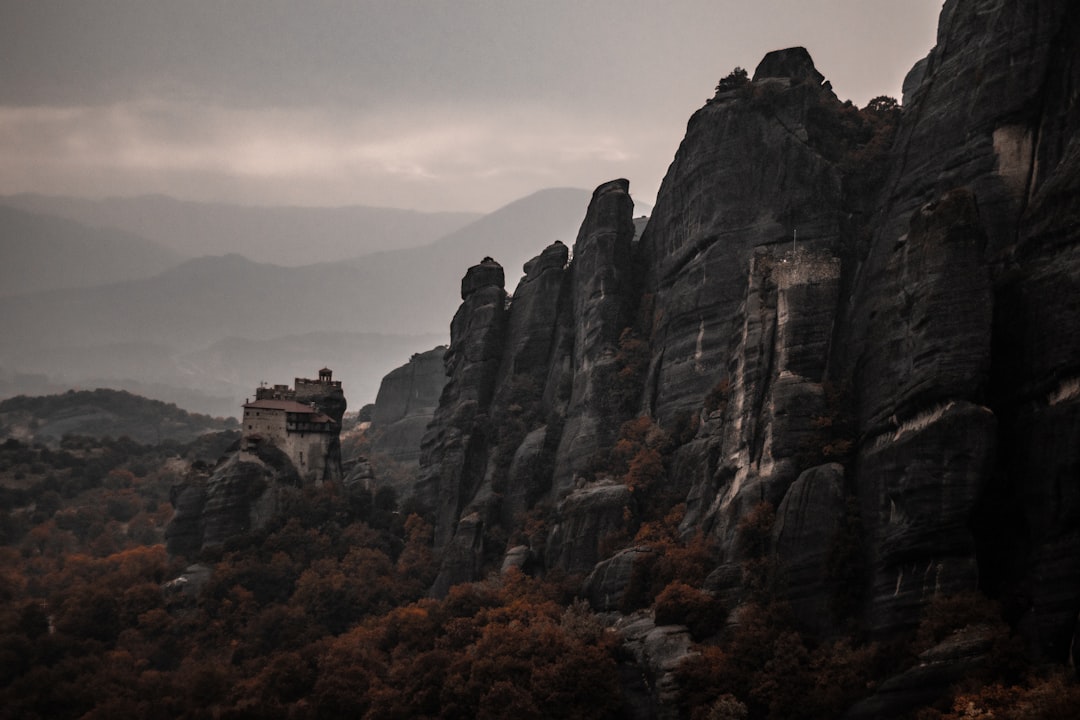
The air up here tastes like iron and old prayer. I am standing on a ledge of rock that defies every law of geology I ever learned, looking down at a valley floor that seems to have been swallowed by the earth. My fingers are still numb from the cold stone railing, and the wind is doing that thing where it doesn't just blow, it pushes. Below me, the monasteries of Meteora cling to the vertical faces of towering sandstone pillars like barnacles on the hull of a ship that has been stranded for a thousand years. I came for the Instagram photos, sure, but I stayed because this place feels less like a tourist destination and more like a spiritual fortress built by people who wanted to get as far away from the rest of humanity as physically possible. It is Greece, but it is not the Greece of sun-drenched beaches and plastic flip-flops. This is the Greece of ascetics, of ladders, of ropes, and of silence so heavy you can feel it in your teeth.
I met a local monk near the entrance to the main trail, a man with eyes the color of wet slate and a beard that looked like it had been carved from the same rock as the cliffs. He didn't smile. He just pointed upward, toward the highest monastery, and said, "You climb for the view. We climb for the soul." Then he walked away, leaving me with my camera, my windburn, and the sudden, crushing realization that I am completely out of my depth. This is not a place to be casual. This is a place to be humble, or at least to pretend to be.
History & Identity
The story of Meteora begins with the earth itself. Millions of years ago, this was a seabed. Tectonic forces pushed up massive blocks of sandstone, and erosion carved them into the surreal, needle-like formations we see today. The name comes from the Greek word meteoros, meaning "suspended in the air" or "lofty." For centuries, these pillars were inaccessible, their summits hidden in the clouds, their bases shrouded in mist. It was a landscape designed by nature to keep people out, and for a long time, it succeeded.
But in the 14th century, hermits began to climb. They were Orthodox Christian ascetics fleeing the political turmoil and Ottoman invasions of the Balkans. They sought isolation, silence, and a place where they could commune with God without the distractions of the world below. They used ropes, ladders, and sheer determination to haul themselves up the sheer cliffs, carving small caves into the rock faces and building the first hermitages. Over time, these humble shelters grew into the grand monasteries that dominate the skyline today. The largest of these, the Great Meteoron, was founded in the early 15th century and became the spiritual center of the region, a fortress of faith that withstood sieges, earthquakes, and the slow erosion of time.
The monasteries were not just places of worship; they were libraries, hospitals, and schools. They preserved knowledge, art, and culture during some of the darkest periods of Greek history. The walls are covered in frescoes that tell stories of saints, martyrs, and miracles, their colors still vivid after centuries. The architecture is a blend of Byzantine, Ottoman, and Western influences, reflecting the complex history of the region. Today, most of the monasteries are open to visitors, but they remain active religious communities, home to a small number of monks and nuns who continue the traditions of their predecessors. The air is still thick with incense, the silence is still profound, and the sense of being on the edge of the world is still palpable.
Where to Go
Great Meteoron Monastery — The largest and most important of the Meteora monasteries, perched atop the highest pillar. Founded in 1356, it houses a museum of icons, manuscripts, and liturgical objects, as well as a stunning chapel with frescoes depicting the Last Judgment. The climb up the 140 steps is steep, but the view from the top is worth every step. Entry is 5 EUR, and it is open from 9:00 to 15:00, closed on Thursdays. Dress modestly: no shorts, no sleeveless shirts, no short skirts.
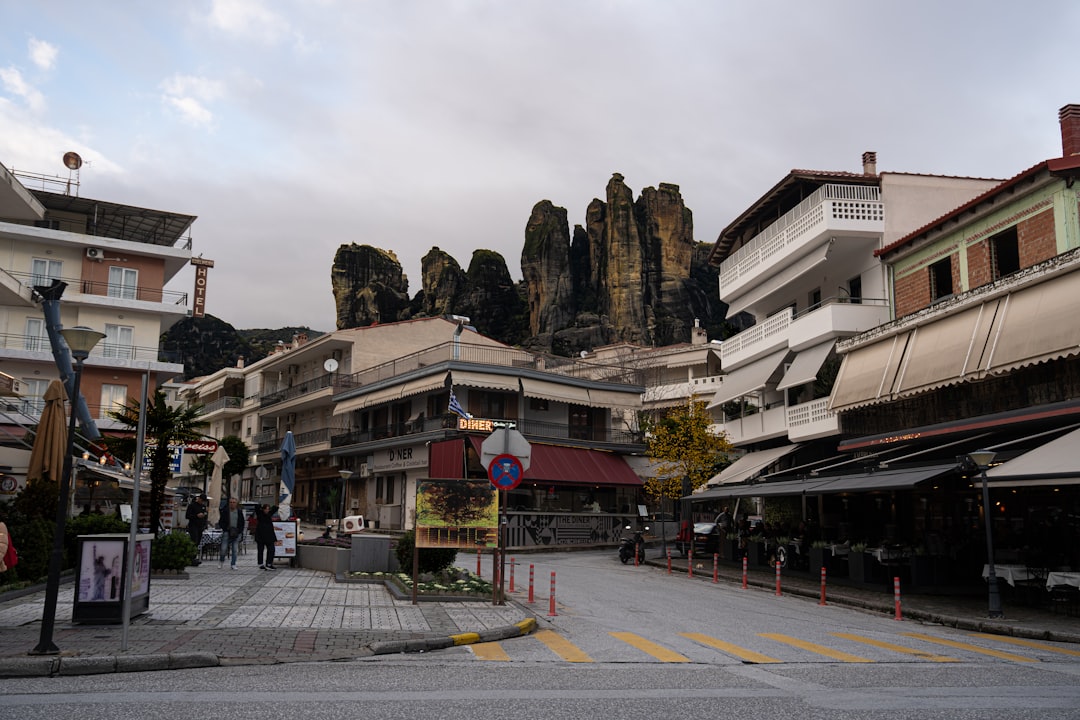
Varlaam Monastery — The second-largest monastery, known for its dramatic frescoes and its location on a pillar that leans precariously over the valley. The frescoes inside the chapel of St. Nicholas are particularly striking, with vivid colors and expressive faces that seem to follow you as you move through the room. The monastery also houses a small museum with archaeological finds from the area. Entry is 5 EUR, and it is open from 9:00 to 15:00, closed on Tuesdays.
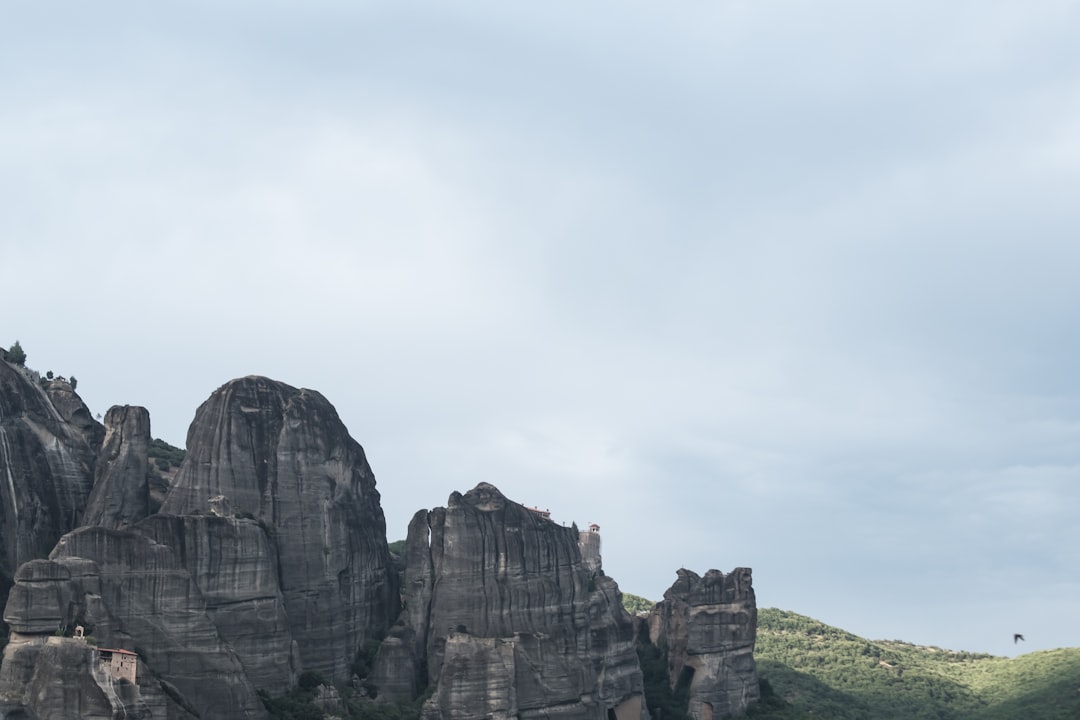
Agia Triada Monastery — The oldest monastery in Meteora, founded in 1389. It is perched on a narrow ledge of rock, accessible only by a steep path and a series of ladders. The interior is small but intimate, with frescoes that are simpler than those in the other monasteries but no less powerful. The view from the terrace is one of the best in the complex, offering a panoramic view of the valley and the other monasteries. Entry is 5 EUR, and it is open from 9:00 to 15:00, closed on Wednesdays.
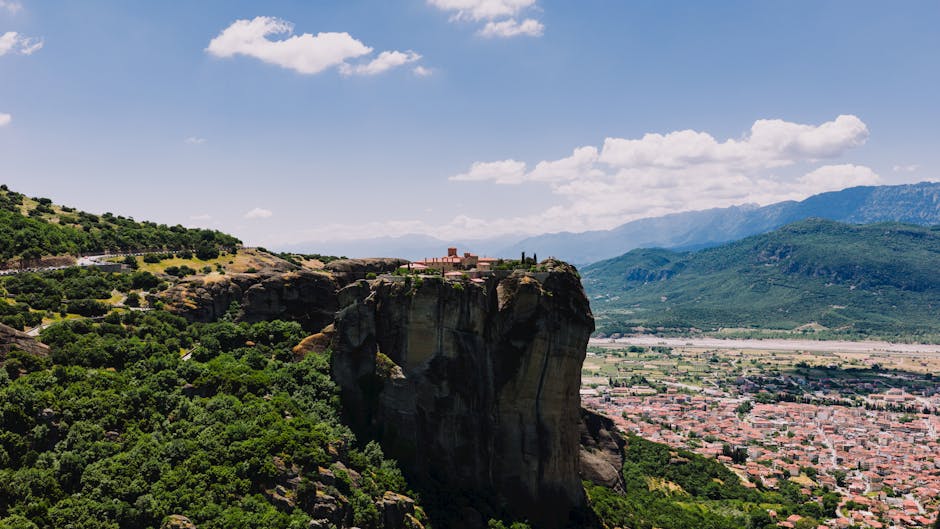
Stephanos Monastery — Now a nunnery, this monastery is known for its peaceful atmosphere and its beautiful garden, which offers a rare glimpse of greenery amidst the stone. The frescoes inside the chapel are well-preserved, and the view from the terrace is particularly striking at sunset, when the pillars are bathed in golden light. Entry is 5 EUR, and it is open from 9:00 to 15:00, closed on Mondays.
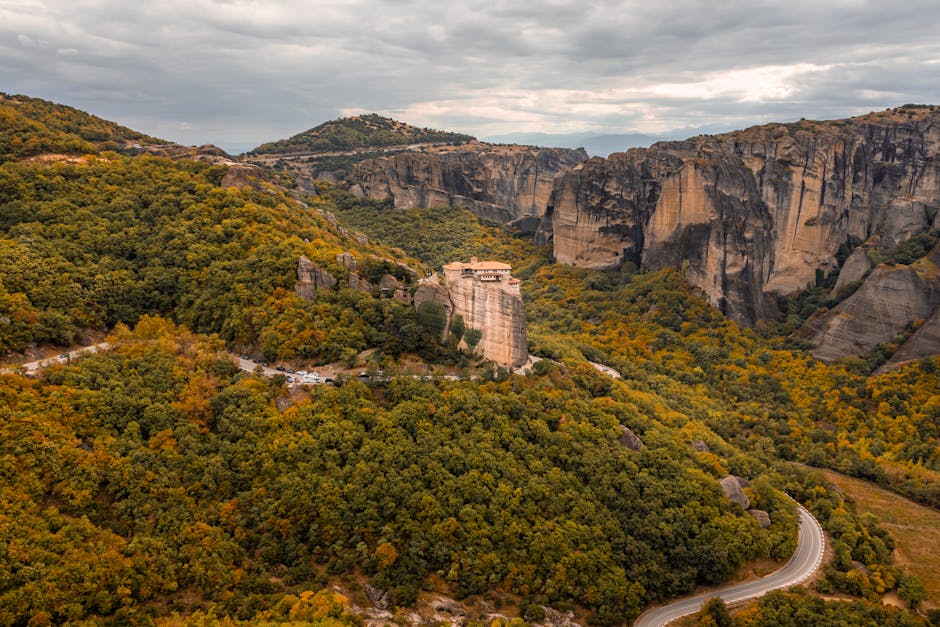
Roussanou Monastery — Also a nunnery, this is the most remote and least-visited of the main monasteries. It is perched on a small pillar, accessible only by a narrow path and a series of steps. The interior is small but charming, with frescoes that are simpler than those in the other monasteries but no less moving. The view from the terrace is one of the most intimate in the complex, offering a close-up view of the surrounding pillars. Entry is 5 EUR, and it is open from 9:00 to 15:00, closed on Fridays.
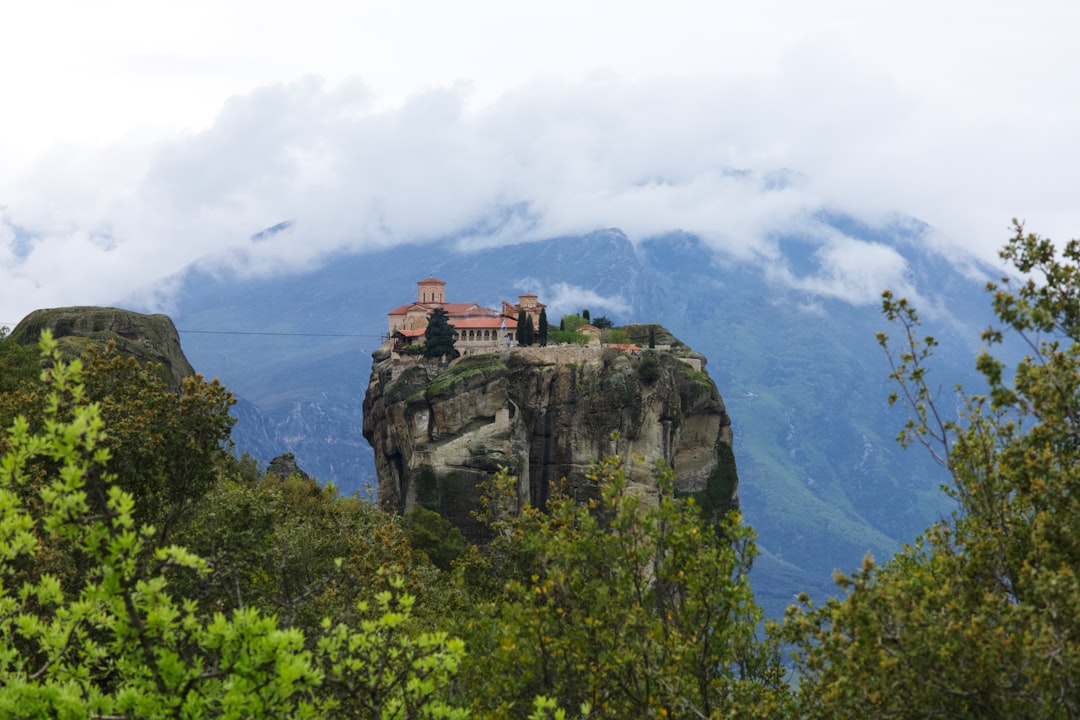
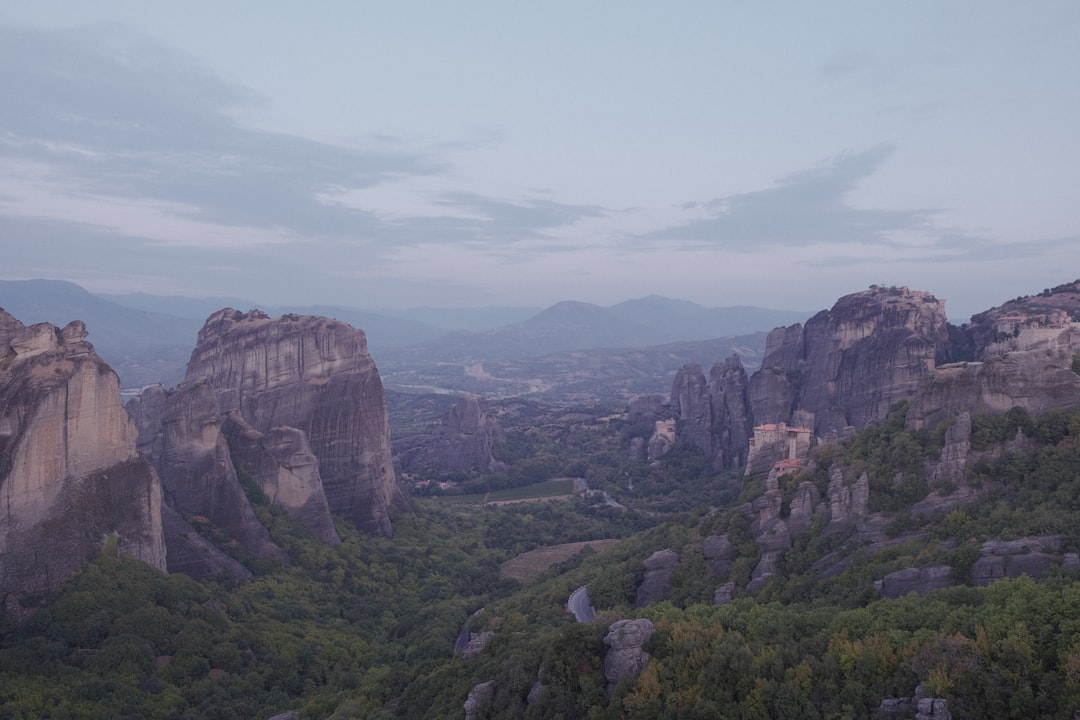
The Viewpoint at the Base — For those who don't want to climb the stairs or pay for entry, the viewpoint at the base of the pillars offers a stunning panoramic view of the entire complex. It is free, open 24/7, and particularly striking at sunrise or sunset, when the light changes the color of the stone.
What to Eat & Drink
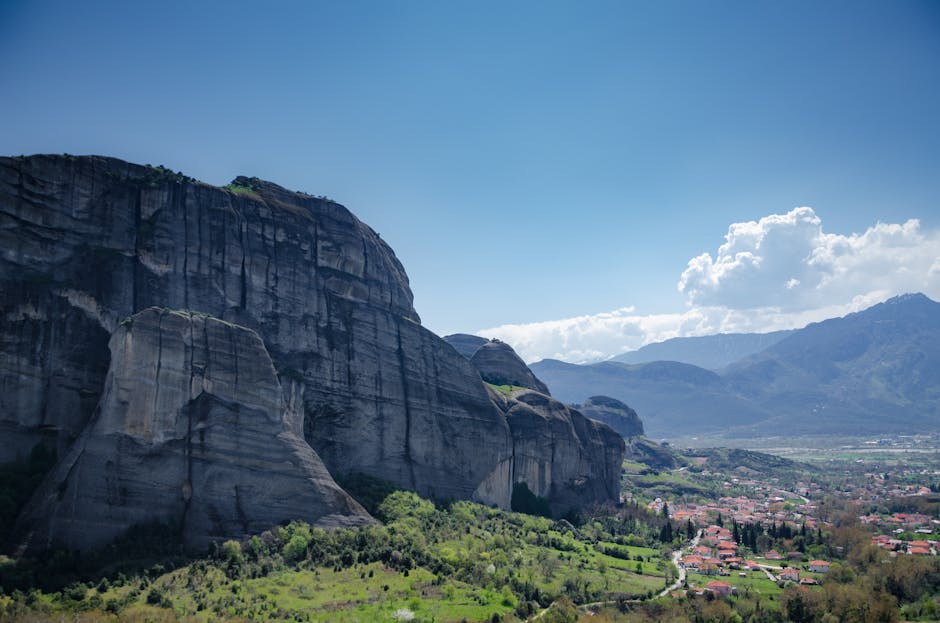
After a day of climbing and staring at rocks, you will be hungry. The village of Kastraki, nestled at the foot of the pillars, is the main hub for food and drink. It is a small place, but it has a surprising number of restaurants, cafes, and shops. The food is typical of Thessaly, the fertile plain that stretches out below the mountains. Expect plenty of meat, cheese, and vegetables, all prepared with simple, honest flavors. Stifado — a beef or lamb stew with onions and tomatoes — is a local specialty, as is pastourma, a spiced cured meat that is served in thin slices. For a lighter option, try salata with local feta cheese, or keftedes, small meatballs fried until golden. Prices are reasonable: a main course is 10-15 EUR, a drink is 3-5 EUR, and a coffee is 2-4 EUR.
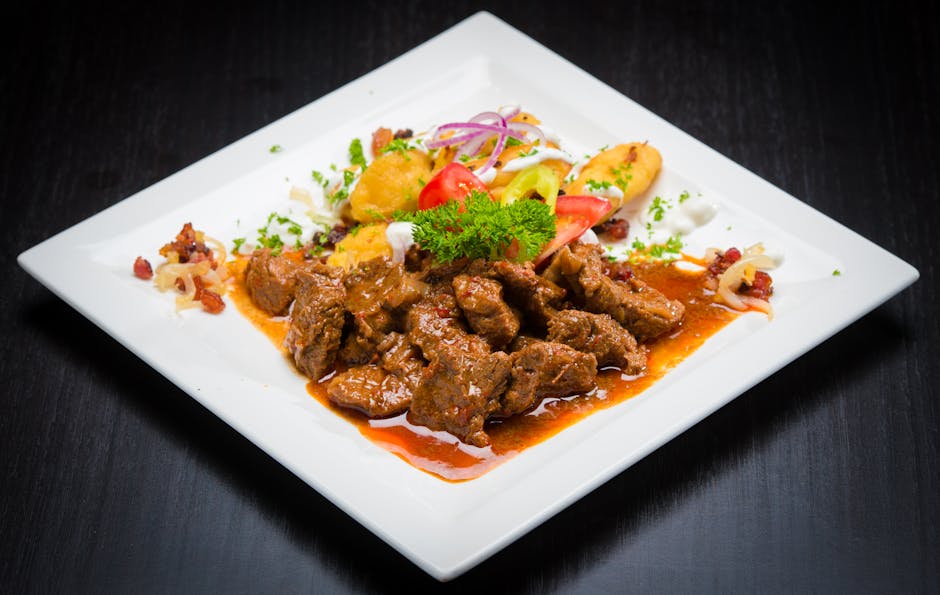
For a more budget-friendly option, there are several small shops in Kastraki that sell take-away food, including pita with meat or cheese, gyros, and souvlaki. A pita is 3-5 EUR, a gyros is 4-6 EUR, and a souvlaki is 3-5 EUR. There is also a small supermarket in the village where you can buy bread, cheese, and fruit for a picnic. For a more upscale experience, there are a few restaurants in Kastraki that offer gourmet versions of traditional dishes, with prices ranging from 20-30 EUR per person.
Search accommodation in Kalabaka on Booking.com →
Nightlife
Let's be clear: Meteora is not a party destination. The nightlife is limited, and for good reason. This is a place for reflection, not for revelry. However, there are a few bars and cafes in Kastraki where you can enjoy a drink and a conversation after a day of sightseeing. The atmosphere is relaxed, the music is low, and the views are spectacular. Bar Meteora is a popular spot, with a terrace that offers a view of the pillars. Cafe Kastraki is another option, with a cozy interior and a good selection of coffee and tea. Prices are reasonable: a beer is 3-5 EUR, a cocktail is 5-8 EUR, and a glass of wine is 4-6 EUR.
Getting There & What to Expect
The nearest town to Meteora is Kalabaka, a small city in the region of Thessaly. It is located about 300 km north of Athens, and about 200 km south of Thessaloniki. The easiest way to get there is by train, which runs regularly from both cities. The journey from Athens takes about 4-5 hours, and the journey from Thessaloniki takes about 3-4 hours. Train tickets cost 15-25 EUR one way. Alternatively, you can drive, which takes about 4 hours from Athens and 3 hours from Thessaloniki. The road is well-maintained, and the scenery is beautiful. There are also buses that run from both cities, but they are slower and less comfortable. Bus tickets cost 10-15 EUR one way.
Once you arrive in Kalabaka, you can take a taxi or a bus to Kastraki, which is about 5 km away. The journey takes about 10 minutes, and costs 5-10 EUR by taxi or 1-2 EUR by bus. From Kastraki, you can walk to the viewpoint and the monasteries, or take a shuttle bus, which runs regularly and costs 2-3 EUR per ride. The monasteries are open from 9:00 to 15:00, and closed on different days of the week, so check the schedule before you go. The best time to visit is in the spring or the autumn, when the weather is mild and the crowds are smaller. The summer can be hot and crowded, and the winter can be cold and windy. Accommodation in Kastraki is limited, but there are several hotels and guesthouses, with prices ranging from 50-100 EUR per night for a double room. Kalabaka Thessaly
Final Descent
I left Meteora as the sun was setting, casting long shadows across the valley and turning the stone pillars into shades of orange and gold. I felt lighter, somehow, as if the weight of the world had been lifted off my shoulders. It was a feeling I hadn't experienced in a long time, and it was unexpected. I had come for the photos, but I left with something else: a sense of perspective, a reminder that there are places in the world that are not just beautiful, but meaningful. The monks were still up there, praying in their stone cells, while I was back on the ground, back in the world. But I carried a piece of that silence with me, a fragment of that stillness, and it stayed with me long after I had left. It is a rare thing, to find a place that changes you, even a little. Meteora is that place. It is not just a destination; it is an experience, a challenge, and a reward. And if you are willing to climb, to sweat, to be humbled, it will give you something that you cannot buy, something that you cannot take with you, but something that you will never forget.
Comments