


The Aegean island of Lesvos has quietly become a working capital for the world's geoheritage community, hosting the UNESCO Global Geoparks Network and its flagship training course. Lesvos recently hosted the world's most significant gathering on geological heritage, with 70 scientists from 35 countries convening at the University of the Aegean for the annual meeting of the Global Geoparks Network. In parallel, more than 80 specialists from 27 nations have been on the island for the 2026 International Training Course for UNESCO Global Geoparks Managers, a programme run from May 16 to 25 at the same university and now in its fourteenth consecutive year on Lesvos.
The Network and Its Significance
The dual event places the Aegean island at the centre of a network that, following the most recent UNESCO Executive Board endorsements, encompasses 241 geoparks across 51 countries. It is also a quiet acknowledgement of the work led by Professor Nikolaos Zouros, who hosts the meetings as Secretary General of the Global Geoparks Network and head of the UNESCO Chair on Geoparks and the Sustainable Development of Island and Coastal Areas at the University of the Aegean. Zouros has been director of the Natural History Museum of the Lesvos Petrified Forest since its founding in the mid-1990s and was one of the founders of the European Geoparks Network in 2000.
This year's gathering brought Professor Artur Sá, the network's president, and Professor Setsuya Nakada, who chairs the 12-member council of UNESCO's Global Geoparks Programme, along with members of the network's 15-member executive committee. Discussions ranged across the sustainable management of geological heritage, funding for joint projects, protection of geosites from climate change and natural hazards, cooperation with the European Union, and initiatives to develop geoparks in Africa and other under-represented regions. The training course participants, drawn from Belgium, Vietnam, Brazil, the United Arab Emirates, Japan, Indonesia, China, Mexico, Morocco, Norway, Portugal, Türkiye, and elsewhere, include geopark managers, tourism officials, academics, and doctoral candidates working on the protection and promotion of geoheritage.
The Geological Richness of Lesvos
The reason Lesvos has become the natural home for this work is written into the island itself. The entire island carries UNESCO Global Geopark designation, and its Petrified Forest, formed when volcanic activity buried a subtropical landscape under ash and pyroclastic flows around 20 million years ago, is regarded as one of the most significant fossilised ecosystems in the world. Trunks reach up to 20 metres in length and root systems extend seven metres into the rock, with branches, fruits, and leaves preserved in the volcanic tuffs of the Sigri Formation. The island is also where the oldest known land mammal in Greece, Prodeinotherium bavaricum, was identified, dating back roughly 19 million years.
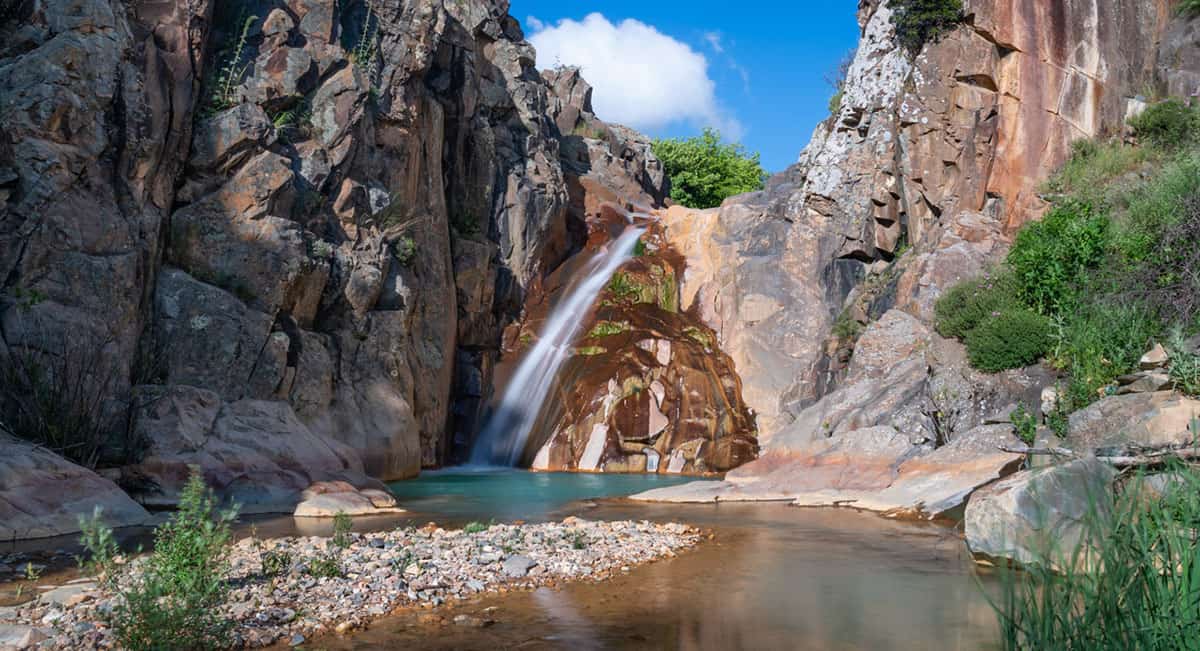
Beyond the petrified trees, Lesvos has the kind of geology that explains a great deal of its cultural and culinary character. Hot magma still sits relatively close to the surface, heating meteoric water that rises through the crust at the thermal springs of Polichnitos, Lisvori, Thermi, Eftalou, and Argenos. The island's climate and active tectonics have given it a hydrographic network of gorges, valleys, and waterfalls, including the Man'katsa falls near Mandamados, which cut through ignimbrite rocks of the Miocene.
Field visits during the training course follow the same logic, threading geology into everyday Lesvian life. Participants are taken through volcanic geosites, archaeological remains, monasteries, traditional settlements, and the women's agritourism cooperatives that have become a defining feature of the island's gastronomy. The cooperative at Petra, founded in 1983, was the first of its kind in Greece. Others, including...

Comments