


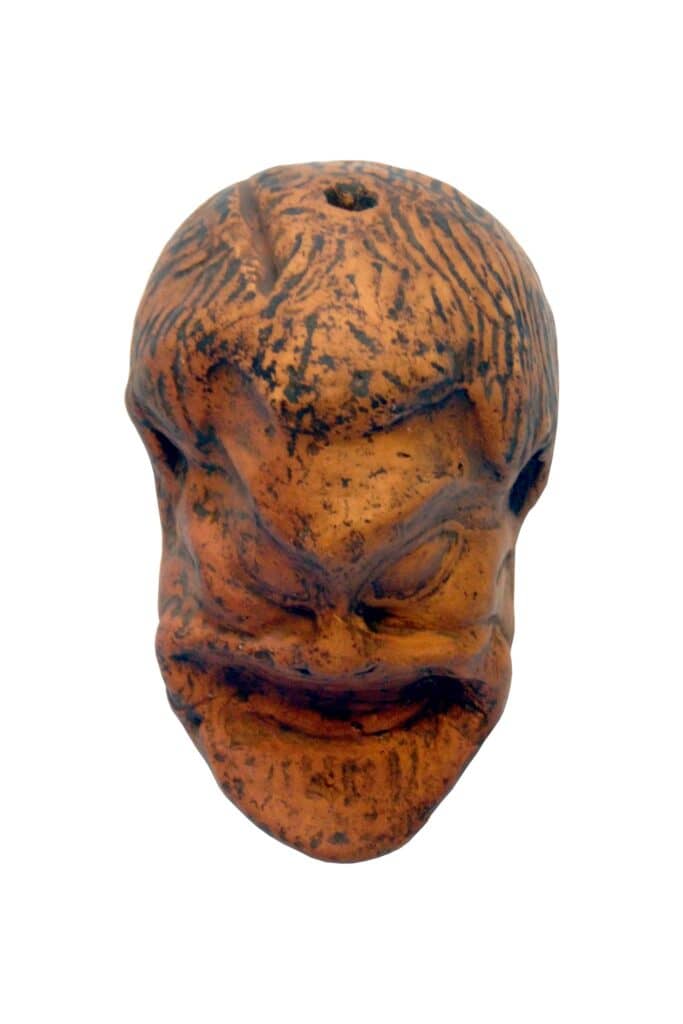
A 2,000-year-old terracotta mask linked to ancient Greek theatre traditions has been discovered in a cave on Croatia's Pelješac Peninsula, offering insights into the interactions between Greek and Illyrian civilizations. The remarkable find was made by archaeologists from the Dubrovnik Museums during excavations carried out between April 23 and May 4, 2026, inside the Crno Jezero cave.
Discovery and Significance
The hollow terracotta mask, dated between the 4th and 3rd centuries BC, features a small hole for hanging, suggesting it was once displayed on a wall. Experts believe the mask is linked to ancient Greek theatre traditions and the worship of Dionysus, the Greek god of wine, ritual, and dramatic performances.
Archaeologist Domagoj Perkić, head of the Archaeological Museum, noted that the cave might have served as a sanctuary dedicated to Dionysus or an Illyrian equivalent deity. "Can we connect Dionysus, or perhaps his Illyrian equivalent, with the wine vessels and this theatrical mask, and in doing so identify the deity for whom this cave served as a sanctuary? We can only speculate," Perkić said.
Historical Context and Further Discoveries
The cave was first used as a shelter or seasonal refuge during the Bronze Age, around the second millennium BC. Over time, it evolved into a burial site between approximately 1012 BC and 481 BC, serving as a necropolis for over 500 years. From the late 4th century BC until the middle of the 1st century BC, it transformed into an Illyrian sanctuary.
Excavations have uncovered numerous miniature vessels, including Greek amphorae, bowls, and drinking cups, alongside locally produced ceramics. These items were commonly left as votive offerings during religious rituals. Fragments of fine Greek pottery associated with wine storage and consumption, luxury objects that symbolized wealth and influence among local Illyrian communities, were also found.
Perkić emphasized the importance of the discovery in understanding Illyrian religion and its contact with Greek culture. "We are fortunate that the wider Dubrovnik region is currently home to three known Illyrian sanctuaries, allowing us to study Illyrian religion and its interaction with Greek culture and beliefs," he said.
Alongside Crno Jezero, archaeologists have identified two other important Illyrian sanctuary sites: the sanctuary at Spila in Nakovana and Vilina Cave above the Ombla spring. The Nakovana sanctuary existed during the same period as Crno Jezero, while Vilina Cave dated slightly earlier, from the late 5th to early 3rd century BC.



σίγουρα, τα ανακαλύματα αυτά δείχνουν τη σύγχρονη επαφή μεταξύ της ελληνικής και της Ιλλυρικής κουλτούρας. αλλά, ξεκινούμε πάλι με την ιστορία μας...