


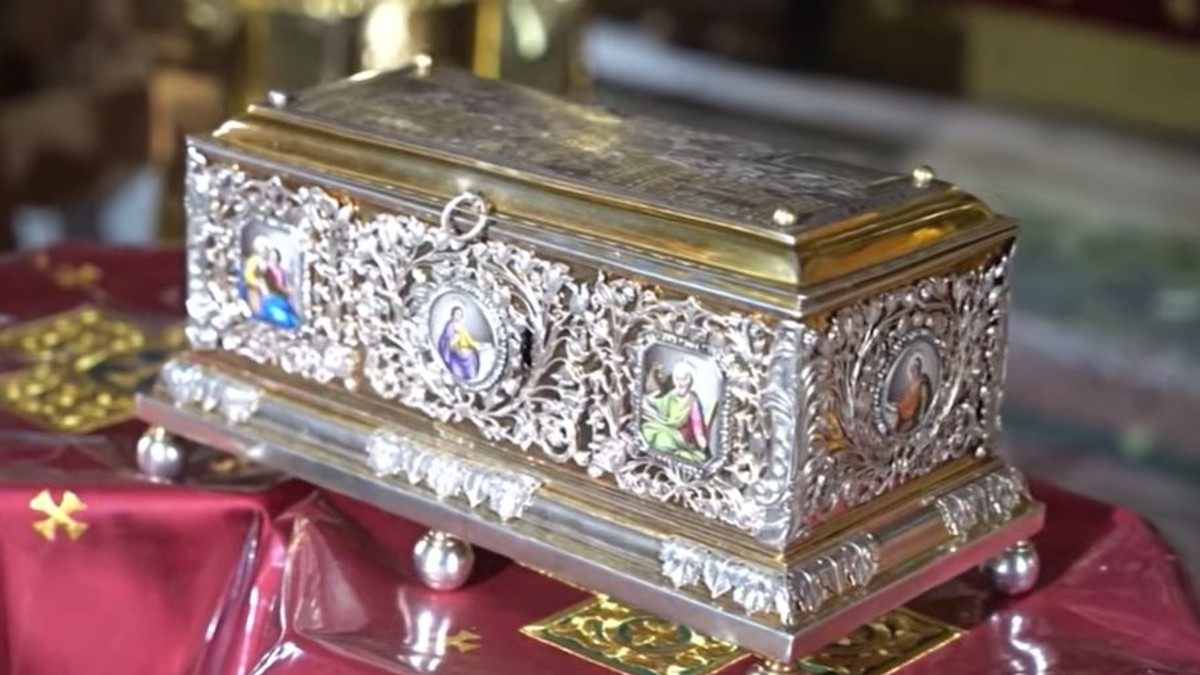
The Holy Girdle of the Virgin Mary, along with parts of the True Cross, the most significant relics in all of Christendom, will arrive in Belgrade on May 20th to coincide with the city's celebration of Ascension Day, the feast of Christ’s Ascension.
The girdle has a historical and spiritual connection with Serbia and Prince Lazar, who brought it from Hilandar in the 14th century. The relics will be brought to Belgrade by the abbot of the Vatopedi monastery on Mount Athos, Jefrem, accompanied by a brotherhood. The reception of the relics will take place in front of the Ascension Church at 5 PM, where Serbian Patriarch Porfirije will conduct the festive evening service.
The RTS team has prepared a documentary film about the Girdle of the Virgin Mary, which was aired on “Oko Magazin” yesterday. The editor and author of the program “The Girdle of the Virgin Mary from Mount Athos” is Dušan Ubović.
Why This Relic is the Most Important
- It is crucial to explain why the Holy Girdle of the Virgin Mary is the most important relic of Mount Athos. The entire Holy Mountain with its twenty monasteries houses numerous relics and sacred objects. This girdle, believed to be 2,000 years old, was supposedly made by the Virgin Mary herself. It is the only physical object from the life of the Virgin Mary and her son that has survived all this time. Many wonder how something that is 2,000 years old and essentially a piece of cloth could survive. According to tradition, the girdle was woven by the Virgin Mary herself from camel hair. The abbot explained that it was a custom among Jewish women to weave a girdle for their brides. Since the Virgin Mary had no husband, she kept the girdle with her all the time. It was with her when she received the good news of the birth of Jesus, and it remained with her when she passed away. Three days later, she handed it to Saint Thomas.
How the Girdle Survived for 2,000 Years
The abbot shared that Queen Zoe, who was gravely ill, was visited by the Virgin Mary, who offered to help her with her girdle. This girdle had never been displayed before, but it did help her recover. She then embroidered it with gold thread, and it is this girdle that is now coming to Serbia. Scientists claim that the girdle has survived due to the gold thread, as camel hair would not have lasted 2,000 years otherwise.
The girdle was last in Russia fifteen years ago and has also been in Greece. It is now making its way to Serbia.



Comments