


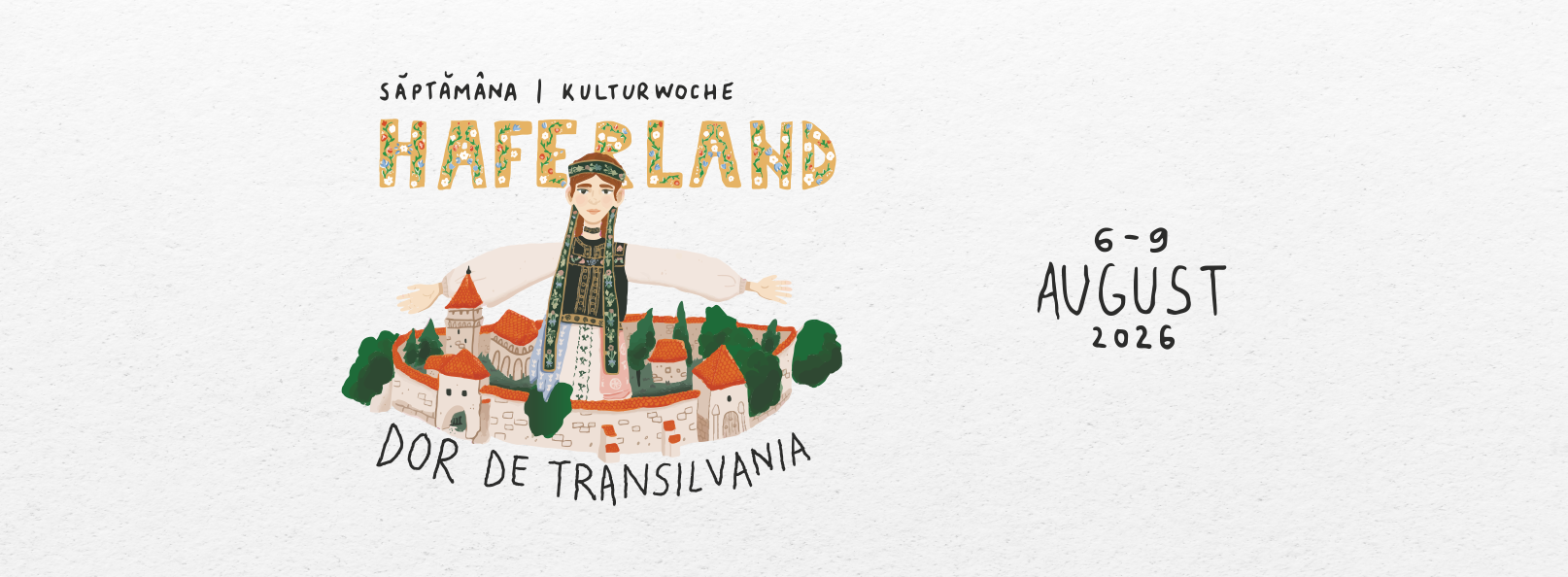
Haferland Week 2026: Celebrating Saxon Culture in Romania
The Haferland Week Festival is set to take place in Romania from August 6 to 9, 2026, celebrating the rich Saxon culture of Transylvania. This year, the event will revolve around the theme "Longing for Transylvania" and will be held across ten localities: Archita, Saschiz, Homorod, Rupea, Criț, Roadeș, Meșendorf, Cloașterf, Bunești, and Viscri.
Events and Activities
The festival will offer a wide array of activities for visitors, including concerts, theater performances, traditional dance shows, conferences, guided tours of historical landmarks, and craft workshops for both children and adults. The program will also feature traditional Saxon music performances, jazz concerts, and a special recital of Maria Tănase's work performed by Luisa Zan and Jazzpar Trio.
This year, the traditional Saxon ball will take place in Criț, with support from the Nuremberg-based Saxon music band Flamingo Sound. An exhibition titled "Agapi, Half a Century of Love," which explores the relationship between memory, identity, and family values, will also be hosted in Criț. This exhibition is curated by artist and actress Kira Hagi.
Youth Involvement and Cultural Significance
The festival will also host a new edition of Youth Haferland, which will include young participants from Romania, Bulgaria, and the Czech Republic for the first time. This year’s edition will be under the patronage of the president of the Romanian Senate, Mr. Mircea Abrudean, and former Olympic gymnast Nadia Comăneci.
"Haferland is not just a point on the map; it is a living memory, a bridge between the past and the future. What you are building here is more than a festival, it is a natural return to what Romania has most valuable," said Nadia Comăneci during a press conference at the Dimitrie Gusti Village Museum on May 20, 2026.
The founder of the festival, Michael Schmidt, donated a Saxon dowry chest from the year 1897 from the collection of the Schmidt Foundation. "Through this festival, we support local communities, protect traditional crafts, promote cultural tourism, and create economic opportunities for people in the area. Romania has demonstrated that diversity is a form of wealth, not a reason for separation. Intercultural dialogue has become a source of stability and development, and the German community in Romania represents a remarkable example of resilience, responsibility, and community spirit," he said.

This festival is a true celebration of cultural heritage! How can we ensure that such events continue to thrive and bring people together? Let's keep the cultural fire burning!