



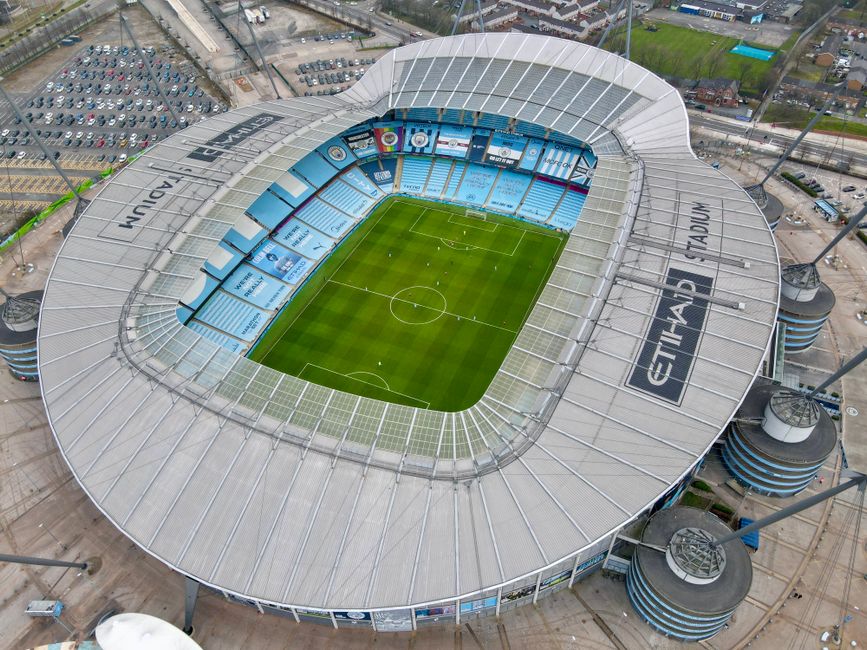
Erling Haaland continues to cement his status as one of the most lethal strikers in modern football history, with his relentless goal-scoring for Manchester City dominating global sports headlines. The Norwegian forward, whose transfer from Borussia Dortmund to the English giants in 2022, has shattered numerous records since arriving at the Etihad Stadium. His recent performances have reignited debates about his legacy compared to legends like Lionel Messi and Cristiano Ronaldo, while simultaneously keeping Manchester City at the forefront of the Premier League title race. For Balkan audiences, particularly in Serbia and Montenegro, Haaland’s rise mirrors the growing influence of Eastern European talent in Western European leagues, creating a shared narrative of athletic excellence crossing geographical boundaries.
The Machine Behind the Numbers
Haaland’s playing style is defined by a unique combination of raw power, exceptional speed, and clinical finishing. Standing at 1.95 meters, he possesses the physical attributes of a traditional target man, yet his agility allows him to operate in tight spaces typical of modern counter-pressing systems. This versatility makes him a nightmare for defenders across Europe. Analysts frequently point to his off-the-ball movement as his most underrated skill, allowing him to find pockets of space behind defensive lines. His partnership with Kevin De Bruyne has been instrumental in Manchester City’s tactical setup, creating a dynamic that has revolutionized how the club approaches attacking play.
The statistical output from the Norwegian star is nothing short of extraordinary. He holds the record for the most goals scored in a single 38-game Premier League season, netting 36 goals during his debut campaign. Since then, he has consistently maintained a goal-per-game ratio that defies conventional expectations for a full-season campaign. These numbers are not just isolated incidents but part of a sustained period of dominance. His ability to perform in high-pressure matches, including Champions League knockout stages, has drawn comparisons to Gerd Müller and Luís Figo, players known for their efficiency in front of goal. This consistency has made him the focal point of Manchester City’s identity under manager Pep Guardiola.

Impact on the Premier League and European Football
The presence of Erling Haaland has forced other Premier League clubs to adapt their defensive strategies. Teams now prioritize compact midfields and rapid transitions to neutralize the threat he poses. This tactical shift has elevated the overall standard of play in the league, as opponents can no longer rely on traditional defensive blocks. Furthermore, his success has increased the commercial value of Manchester City, with merchandise sales and broadcast rights seeing significant boosts. The club’s global brand has expanded, partly due to Haaland’s appeal to younger demographics who admire his modern, athletic approach to the game. His influence extends beyond the pitch, shaping how clubs scout and develop young strikers worldwide.
On the international stage, Haaland’s impact is equally profound. He leads the Norwegian national team with a clear mission: to qualify for major tournaments. Norway’s recent successes in qualifying campaigns have been largely driven by his goal contributions. His leadership has inspired a new generation of Norwegian players, many of whom are now emerging in top European leagues. This ripple effect is visible in the increased interest in Nordic football, with scouts from across Europe paying closer attention to leagues in Norway, Sweden, and Denmark. Haaland’s success has effectively put the Nordic region on the map as a breeding ground for elite talent.
The Balkan Connection and Regional Interest
While Haaland is Norwegian, his career trajectory resonates deeply with Balkan football fans. The region has a rich history of producing world-class players who have made their mark in Western Europe, from Davor Šuker to Luka Modrić. Haaland’s journey from Molde FK to Red Bull Salzburg, then to Borussia Dortmund, and finally to Manchester City, mirrors the classic path of many Balkan stars who leverage smaller leagues as stepping stones to the big time. This narrative is particularly relevant in Serbia, where young talents are constantly seeking similar opportunities to break into the Premier League. Fans in Belgrade and Zagreb closely follow his career, viewing him as a benchmark for what regional players can achieve.
Moreover, the tactical evolution seen in Manchester City’s play under Pep Guardiola has influenced coaching methodologies across the Balkans. Local academies in Croatia, Serbia, and Bosnia are increasingly adopting similar pressing and positional play concepts. This tactical alignment creates a sense of shared footballing culture between the Balkans and the Premier League. When Haaland scores, it is not just a victory for Manchester City but a validation of the modern footballing philosophy that many Balkan coaches aspire to implement. His success serves as a motivational tool for young players in the region, proving that discipline, physical conditioning, and tactical intelligence can lead to global stardom.
What Comes Next for the Norwegian Star
As the 2024-2025 season progresses, all eyes remain on Erling Haaland to see if he can maintain his unprecedented levels of performance. Manchester City faces stiff competition in both the Premier League and the Champions League, requiring Haaland to deliver in critical moments. His ability to stay fit and avoid injuries will be key to his continued success. Additionally, his role in Norway’s national team campaigns will be scrutinized, as fans expect him to lead his country to historic tournament qualifications. The next few months will define whether he can elevate his game from great to legendary, potentially surpassing the career records of the all-time greats.
For Balkan audiences, keeping an eye on Haaland offers more than just entertainment; it provides insights into the future of football. His career illustrates the importance of global scouting networks and the increasing interconnectedness of European football. As he continues to break records, he also sets a new standard for professionalism and athletic excellence. Whether he wins another Ballon d’Or or leads Manchester City to a historic treble, Haaland’s impact on the sport is undeniable. His story is not just about goals; it is about the evolution of football itself, a narrative that resonates with fans from Tirana to Thessaloniki, and from Bucharest to Istanbul.


Comments