


Greece has expanded its National Inventory of Intangible Cultural Heritage with the addition of ten new elements and one Good Practice. This brings the total number of registered entries to 174. The Ministry of Culture announced that the Directorate of Modern Cultural Heritage and the relevant National Scientific Committee completed the selection process under the framework of the UNESCO 2003 Convention, which Greece has been implementing since 2006.
Minister of Culture's Remarks
Minister of Culture Lina Mendoni emphasized that intangible cultural heritage represents the “living memory and identity” of the Greek people. She highlighted traditions, techniques, and values passed down through generations. Each new inscription reflects the diversity of Greek folk culture and the importance of preserving traditions as a living and evolving resource for future generations.
Newly Inscribed Cultural Elements
“Tis Babos i Mera” – Livadia, Serres
The custom “Tis Babos i Mera” in Livadia, Serres celebrates elderly women in the community. Locals honour the “babbo” through ritual practices followed by communal feasting and celebration.
“Good Weather” Custom – Alagonia, Messinia
The “Good Weather” custom in Alagonia marks the end of summer. The tradition includes fires, priestly blessings, and all-night communal gatherings.
“T’ Ai Gianniou” – Lefkopigi, Kozani
In Lefkopigi, Kozani, the “T’ Ai Gianniou” celebration combines religious and secular elements, with newly married couples playing a central role in local festivities.
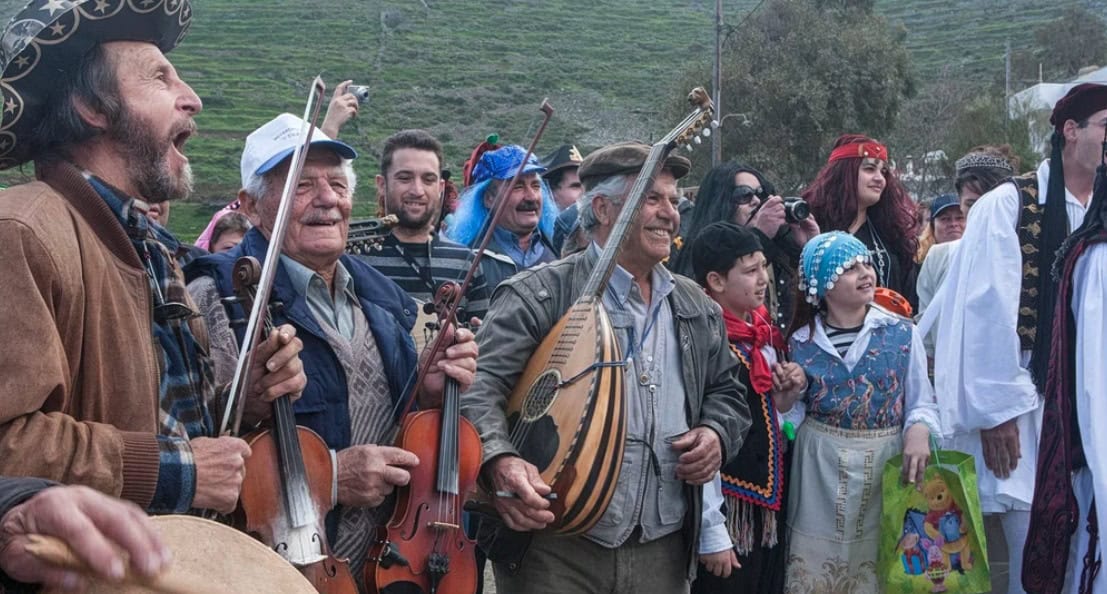
“Kapetanio” Carnival Tradition – Serifos
The “Kapetanio” tradition in Serifos involves two groups of young participants exchanging satirical verses and staging mock battles, concluding in communal celebration.
Tskonian Weaving – Leonidio, Tyros, Melana
Traditional Tskonian weaving continues on upright looms across Arcadia villages, with skills passed down through hands-on apprenticeship.
“Athanatodantela” Lace – Kefalonia
The “Athanatodantela” lace of Kefalonia is made from fibres of the Athanatos plant and is known for its intricate and demanding production technique.
“Kounia tis Lambri” – Kythnos
The Easter tradition “Kounia tis Lambri” in Chora, Kythnos features singing, traditional dress and widespread community participation in festive gatherings.
Lefkada Weaving Tradition
Lefkada’s weaving tradition continues on narrow looms, preserving distinctive designs used in clothing and household textiles.
Folktales of Archangelos – Rhodes
The folktales of Archangelos, Rhodes remain alive through oral storytelling in the local dialect, preserving regional narrative traditions.
“Trimmatos” Cheese – Kythnos
The traditional “Trimmatos” cheese of Kythnos, known since antiquity as “Kythnian cheese,” continues to be produced using historic methods.


This is amazing! Preserving these traditions is crucial for keeping Greek culture vibrant and alive. But what about integrating modern elements into them? Can tradition evolve without losing its essence? Let's discuss!