


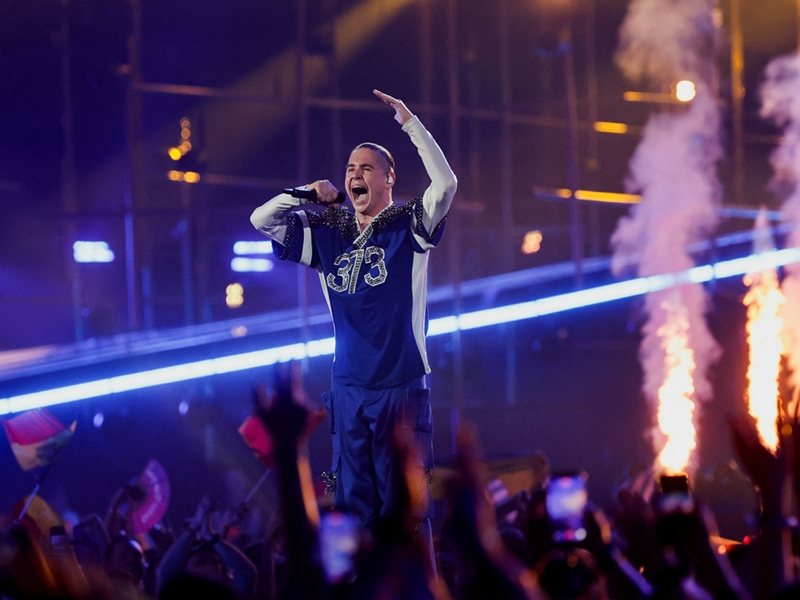
The recent Eurovision semi-final has sparked discussions about possible Bulgarian influences. Moldova's entry, "Viva, Moldova," performed by rapper Satoshi, has garnered significant attention for its resemblance to Bulgarian hits. The song, which secured Moldova's place in the finals, has a familiar ring to it, especially to those familiar with Bulgarian music.
The song's melody has drawn comparisons to "Цяло лято" ("All Summer"), a popular track by the group Иgra, featuring Криско and Лео Бианки. The similarities have led many to wonder if the Moldovan entry has borrowed from Bulgarian music. If this is indeed the case, it means that not one, but three Bulgarian songs will feature in this year's Eurovision: Dara's "Bangaranga," which will be performed in the second semi-final, and Christian Kostov's guest performance in the final, as a tribute to his memorable past participation.
Following the first semi-final on May 12th, ten countries advanced to the finals: Finland, Greece, and Moldova took the top three spots, followed by Belgium, Sweden, Israel, Serbia, Croatia, Lithuania, and Poland. Georgia, Estonia, Portugal, San Marino, and Montenegro did not advance. Moldova received 778 votes (28.2%) from the 3,000 public voters, making it a strong contender for the finals.
The resemblance to Bulgarian music has not gone unnoticed. Leo Bianki, the original artist of "Цяло лято," expressed his shock on social media, writing, "WTF Eurovision Song Contest," and suggesting that the Moldovan song sounds too familiar. Some social media users even suggested that Bianki should report the potential copyright infringement to the Eurovision organizers.
The second semi-final, which will feature Bulgaria, is scheduled for later this evening. Dara will perform her song "Bangaranga" first. The anticipation is high as Bulgaria hopes to follow in the footsteps of its successful predecessors at Eurovision.
This is getting wild! Three Bulgarian songs on Eurovision? And the plagiarism allegations are just heating things up. It's like Eurovision is becoming the ultimate Balkan showdown. What do you think about the Bulgarian influence at Eurovision?