


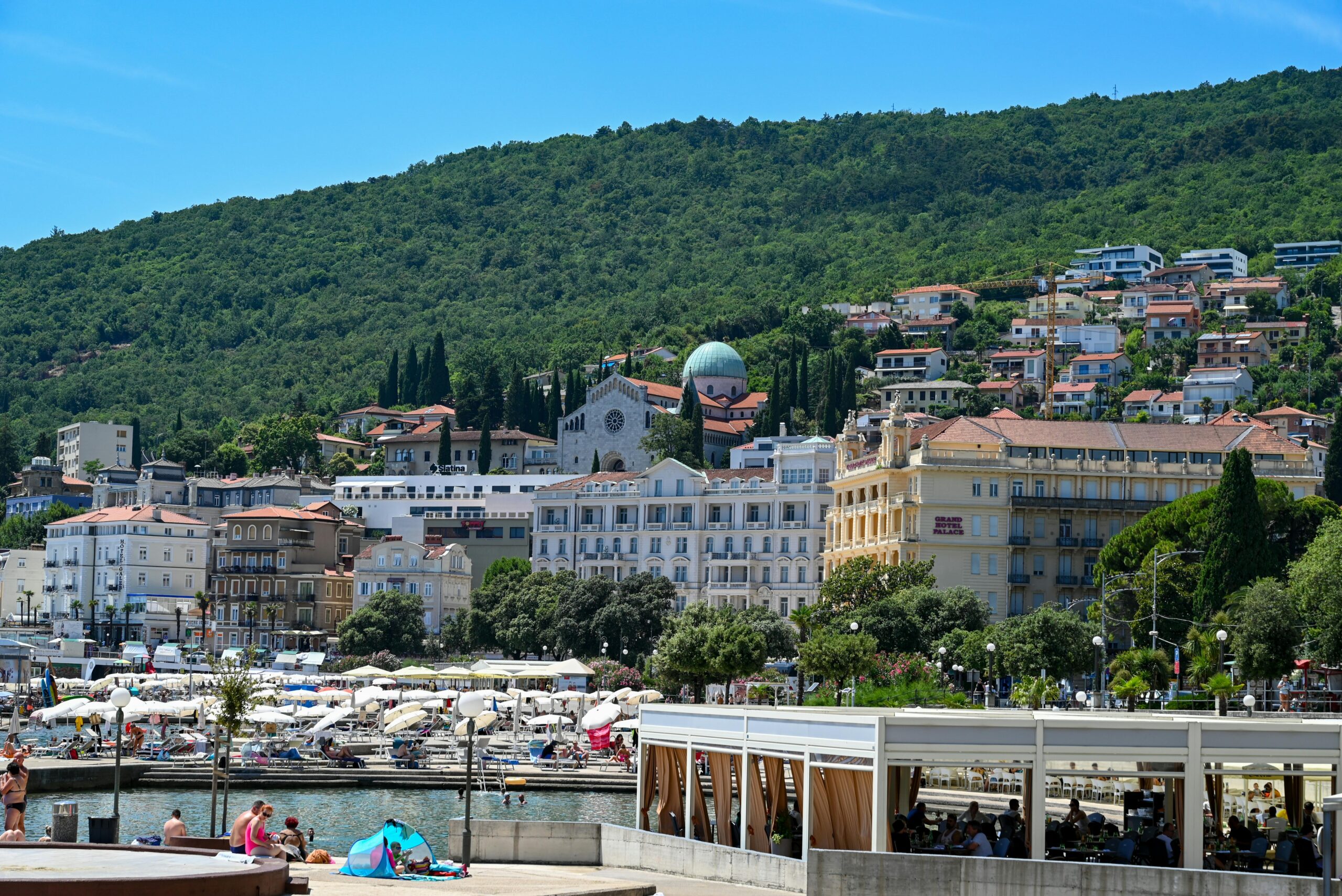
May 20th, 2026 – Croatia’s Opatija, a charming coastal town in the Kvarner region, is often referred to as “Vienna by the sea.” It is renowned as the birthplace of organized Adriatic tourism. Opatija is celebrated for its elegance and grandeur, featuring Austro-Hungarian villas, romantic seaside promenades, and historic hotels, as noted by Putni kofer.
The name “Opatija” originates from the Croatian word for “abbey,” reflecting its medieval religious roots. The town grew around a Benedictine monastery dedicated to Saint James, which is still a significant landmark today. For centuries, Opatija remained a small fishing village. However, in the mid-19th century, wealthy individuals from nearby Rijeka began constructing lavish summer residences, such as Villa Angiolina in 1844, marking the beginning of modern tourism.
The Southern Railway line’s connection to Vienna and Central Europe made Opatija more accessible, leading to the construction of grand hotels and infrastructure. In 1889, Opatija was officially declared a health resort, or Kurort, by Austro-Hungarian authorities, confirming its status as a fashionable seaside destination. The town attracted writers, aristocrats, and artists, contributing to the cultural phenomenon of seaside health tourism.
Despite the turbulent political changes of the 20th century, Opatija has retained much of its Austro-Hungarian heritage and continues to be a sophisticated retreat for tourists seeking a blend of history and natural beauty.



Comments