


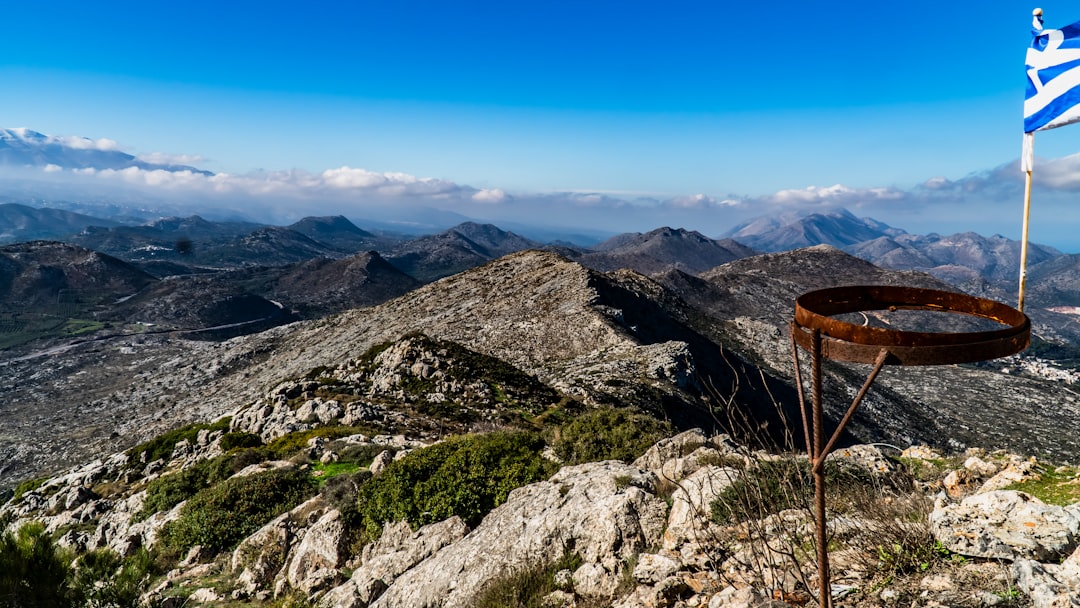
I woke up with mud in my teeth and the sound of my own heartbeat thumping against my ribs like a trapped bird. The air up here at 2,917 meters is thin, sharp, and tastes of pine resin and ancient stone. I had spent the last six hours crawling up scree slopes that wanted nothing to do with me, slipping backward for every two steps forward. My guide, a local from Litochoro with a face like weathered granite and a cigarette dangling from his lip, just laughed and pointed toward the jagged silhouette of Mytikas piercing the clouds. "The gods don't care if you're tired," he said, in English that sounded like it was carved out of rock. "They only care if you show up." This isn't a hike. It's an argument with gravity, and so far, gravity is winning.
Most tourists in Greece are sunbathing on Santorini or sipping ouzo in Mykonos. They think of Greece as white cubes and blue domes. They are wrong. Greece has bones. It has spine. And Mount Olympus is the vertebra that holds the whole country together. Reaching the top of Mytikas Peak is not a casual afternoon stroll. It is a technical, demanding, and utterly rewarding assault on the highest point in Greece. If you are reading this, you are already thinking about it. Let's talk about how to survive it.
The Myth and the Mountain
You cannot separate Mount Olympus from the mythology. This is where the Twelve Olympians held court. Zeus, Hera, Poseidon, Apollo — they didn't just hang out here; they lived here. The caves, the peaks, the valleys — every feature has a name, a story, a drama. When you stand in the Valley of the Muses, you aren't just looking at rocks; you are walking through a script written three thousand years ago. But forget the poetry for a second. The mountain itself is a geological beast. It rises abruptly from the plain of Thessaly, a chaotic jumble of limestone and marble that defies easy access. The last time I was there, the wind was howling at 80 km/h, whipping my jacket into a frenzy. The mountain does not give a damn about your itinerary.
The modern identity of Mount Olympus is tied to resilience. It has been a refuge for rebels, a hideout for partisans during WWII, and now, a playground for the obsessed. The Olympus National Park was established in 1938, making it one of the oldest protected areas in Greece. It covers 400 square kilometers of dense forest, alpine meadows, and sheer cliffs. The park service is strict. You need permits. You need to register. They don't want you wandering off and becoming another statistic on a rescue helicopter bill. Respect the rules, or don't come.
Where to Go: The Base Camps
Skolio Refuge — This is the gateway to the upper slopes. Located at 2,050 meters, it is the last place you can sleep before the final push to the summit. The conditions here are Spartan. Concrete bunks, shared bathrooms, and food that is hot but basic. You pay 30-40 EUR for a bed and a meal. Book months in advance. If you don't, you will be sleeping on a rock in the rain.
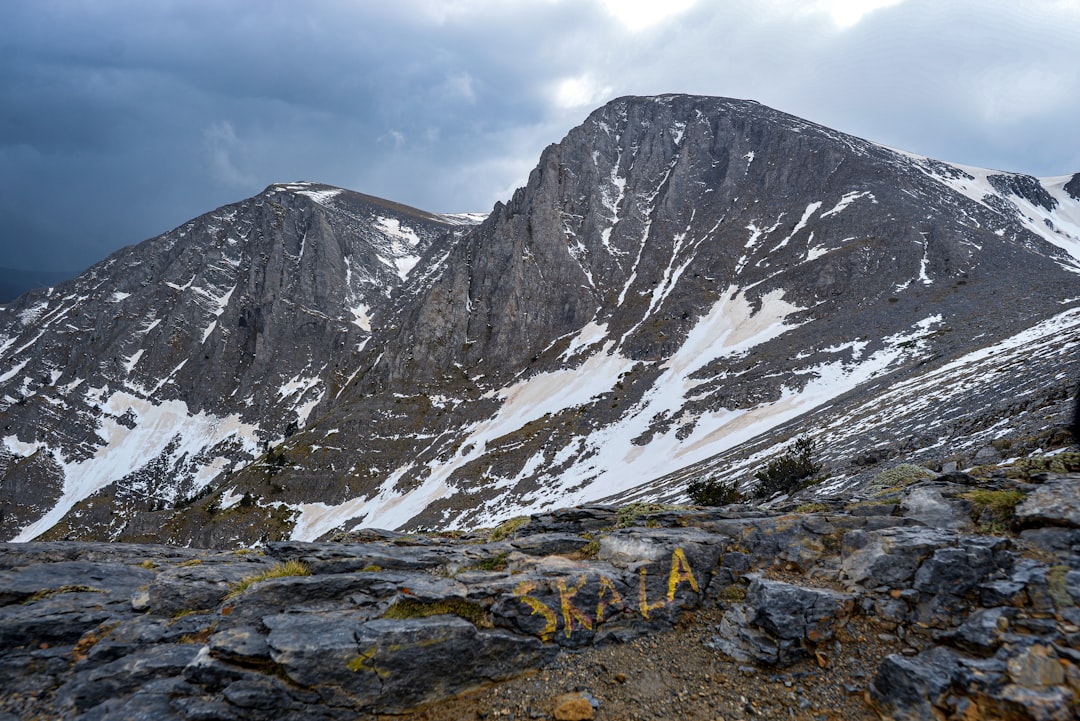
Spilios Agapitos Refuge — A newer, more comfortable option at 1,800 meters. It is lower down, meaning you have a longer hike to the summit, but it is less crowded and easier to reach. The views of the Valley of the Muses from the terrace are insane. You pay 25-35 EUR for a dorm bed. It is a good place to acclimatize before heading up to Skolio.
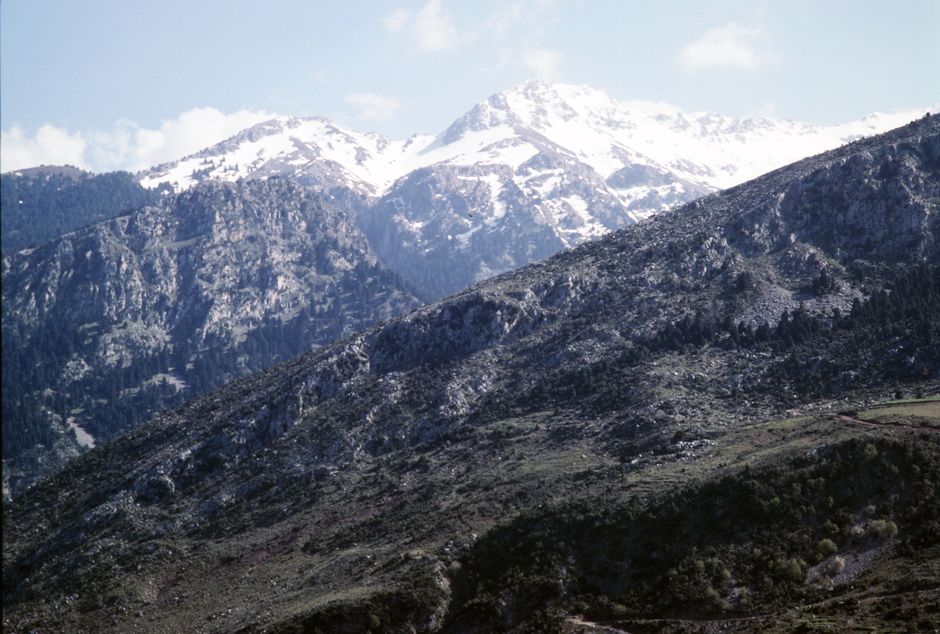
Valley of the Muses — This is where you start most hikes. It is a vast, open basin surrounded by towering peaks. The trailheads are well-marked. You can rent mules here to carry your gear if you are too stubborn to carry your own pack. The mules cost 50-70 EUR per day. They are stubborn too, but they know the way.
What to Eat & Drink
Eating on Mount Olympus is not a culinary experience. It is fuel. You will eat what you can carry, and what you can afford at the refuges. The staple is giros or souvlaki, wrapped in pita, eaten with your hands while standing on a rock. A plate at the refuge costs 10-15 EUR. It is greasy, salty, and exactly what you need. For breakfast, expect pitta (a simple flatbread) with kefalotyri cheese and olives. You will also drink tsipouro, the local anise-flavored spirit. It is strong, clear, and burns going down. One shot of tsipouro costs 2-3 EUR. It is not for taste; it is for warmth. The locals drink it to forget the cold. You will too.
If you are camping, bring your own food. There are no shops above 1,500 meters. You will find stamades (small mountain tavernas) in the villages below, like Litochoro or Lagkadia. Here, you can eat thyme honey, wild mushrooms, and lamb roasted over open fire. A meal in a village taverna costs 15-25 EUR. It is the best meal you will have all trip. Save your money for this.
Nightlife: The Mountain Doesn't Sleep
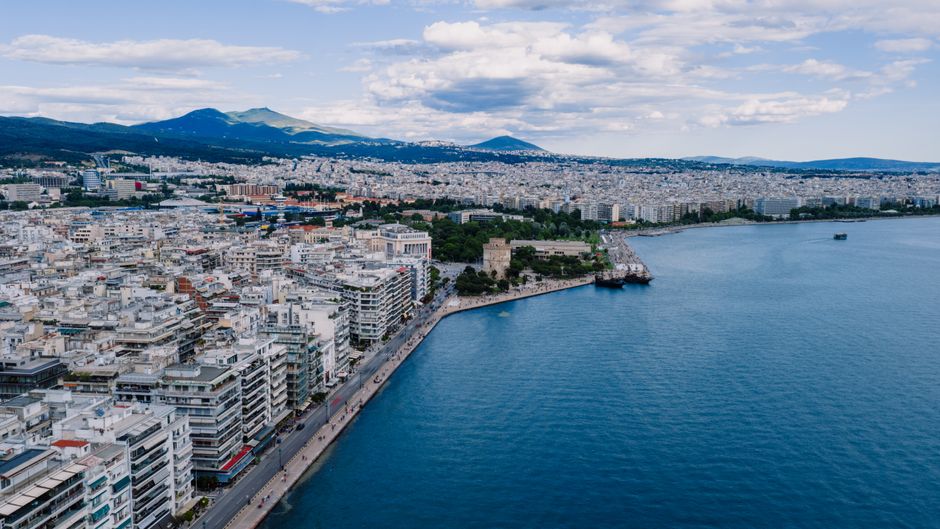
Let's be clear. There is no nightlife on Mount Olympus. There are no clubs. No bars. No DJs. The only music is the wind. The only dance is the shuffle you do to keep your feet warm at Skolio Refuge. The "nightlife" is the silence. It is the sound of your own breathing. It is the stars. When the weather is clear, the Milky Way looks like a spilled bucket of milk across the sky. You will lie on your bunk, staring up, feeling small. That is the point. That is why you come.
But if you want a party, go to Lykosoura or Agios Dimitrios, the villages on the other side of the mountain. There are tavernas there. There is music. There is tsipouro. The locals sing rebetika songs, loud and slow, until the early hours. It is rough, real, and unforgettable. But once the sun comes up, you are back on the mountain. The party is over. The climb begins.
Getting There & What to Expect
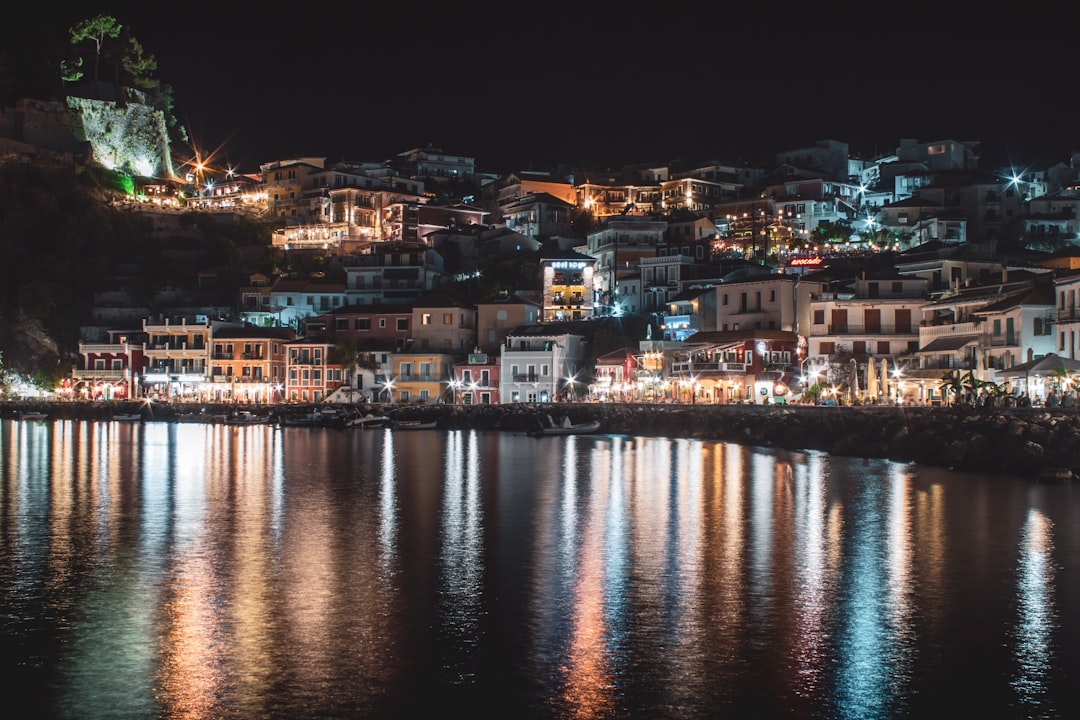
The nearest major city is Thessaloniki, 200 kilometers away. You can take a bus from Thessaloniki to Litochoro, which takes 3-4 hours and costs 15-20 EUR. From Litochoro, you can take a local bus or taxi to the trailheads. A taxi costs 40-60 EUR one way. It is worth it. You will be tired when you get back. The best time to go is July and August. The snow is gone. The trails are clear. The weather is stable. Go in June or September at your own risk. The weather changes fast. One minute it is sunny. The next, you are in a whiteout.
Accommodation in Litochoro ranges from budget hostels at 20-40 EUR per night to mid-range hotels at 60-100 EUR per night. Book early. The mountain draws crowds. If you are camping, there are designated campsites near the Valley of the Muses. A tent site costs 5-10 EUR per person. Bring everything. There is nothing else. You are on your own.
Search accommodation in Litochoro on Booking.com →
Routes & Trail Info
Route 1: The Spilios Agapitos Trail — This is the most popular route. It starts at the Valley of the Muses parking lot. You hike up to Spilios Agapitos Refuge (1,800 meters), then continue to Skolio Refuge (2,050 meters), and finally to Mytikas Peak (2,917 meters). The total distance is 18 kilometers one way. The elevation gain is 1,400 meters. It takes 8-10 hours one way. Difficulty: Experienced. You need good fitness, sturdy boots, and a head for heights. The last 200 meters to Mytikas involve scrambling over rocks. It is not a walk. It is a climb.
Route 2: The Lykaos Trail — This route starts from Lykosoura on the north side. It is less crowded, more rugged, and more beautiful. You hike up to Kokkinos Skalos (2,200 meters), then over to Skolio Refuge, and finally to Mytikas. The total distance is 20 kilometers one way. The elevation gain is 1,600 meters. It takes 10-12 hours one way. Difficulty: Experienced. This route is for those who want to avoid the crowds. The views of the Aegean Sea from the north face are incredible. But the trails are rougher. You need a map and a compass. Or a guide.
Route 3: The Profitis Trail — This is a shorter, easier route for those who just want to see the high peaks without going to the top. You hike from Litochoro to Profitis Ilias (2,500 meters). The distance is 10 kilometers round trip. The elevation gain is 800 meters. It takes 4-5 hours. Difficulty: Intermediate. You get great views of Mytikas and Sigma Peak, but you don't have to climb them. It is a good warm-up.
The Final Ascent
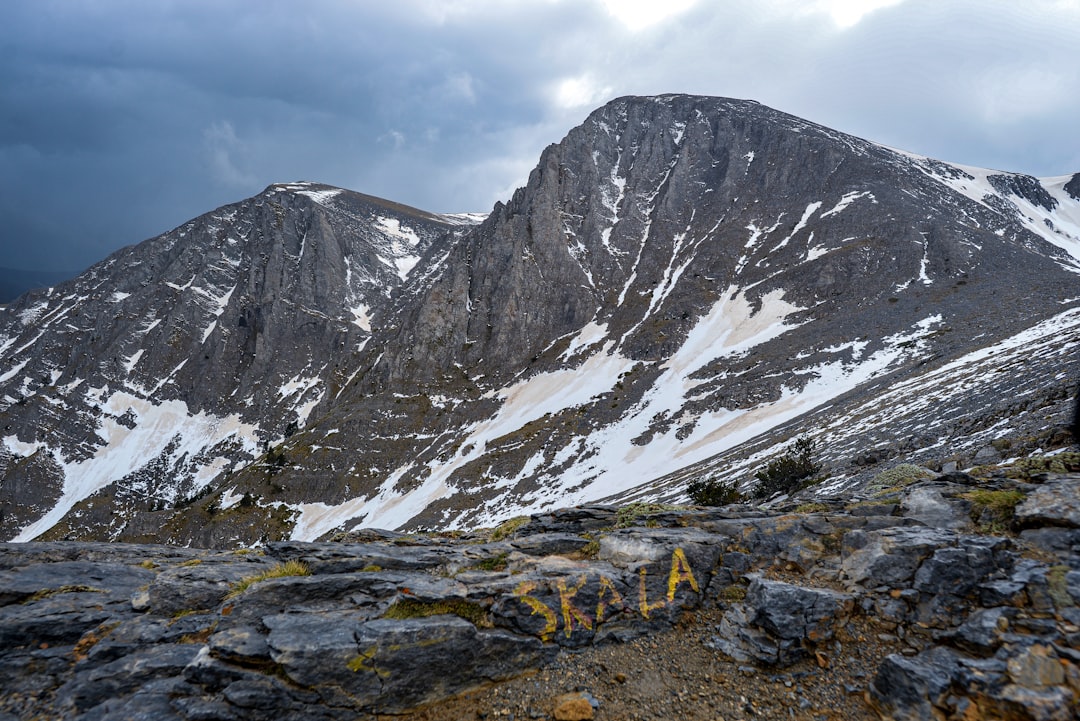
I reached the summit of Mytikas just as the sun was setting. The sky was a bruised purple, bleeding into orange. The wind had stopped. The silence was absolute. I stood on the highest point in Greece, 2,917 meters above sea level, and I felt nothing. No triumph. No pride. Just exhaustion. And then, slowly, it came. A sense of peace. The mountain had taken everything from me — my energy, my comfort, my sanity — and given me this. This moment. This view. The Aegean Sea stretched out to the east, a sheet of blue glass. The Macedonian plain lay below, a patchwork of green and gold. I took a photo. It looked like a postcard. But it wasn't. It was real. It was hard. It was mine.
I sat down on a rock and ate a piece of pitta. It was stale. It was perfect. I watched the stars come out, one by one, like pins being pushed into a dark board. I thought about the gods. I thought about the myths. I thought about the people who had climbed this mountain before me, thousands of years ago, with no maps, no gear, no reason other than to see what was at the top. I understood them then. The mountain is not a challenge. It is a conversation. And if you listen, it will tell you everything you need to know.
When I got back to Litochoro, I was dirty, tired, and happy. I drank a tsipouro. It burned. I smiled. I had been to the top of the world. And I had come back down. That is the trick. That is the secret. You go up. You come down. You live. And you go back.
Comments