


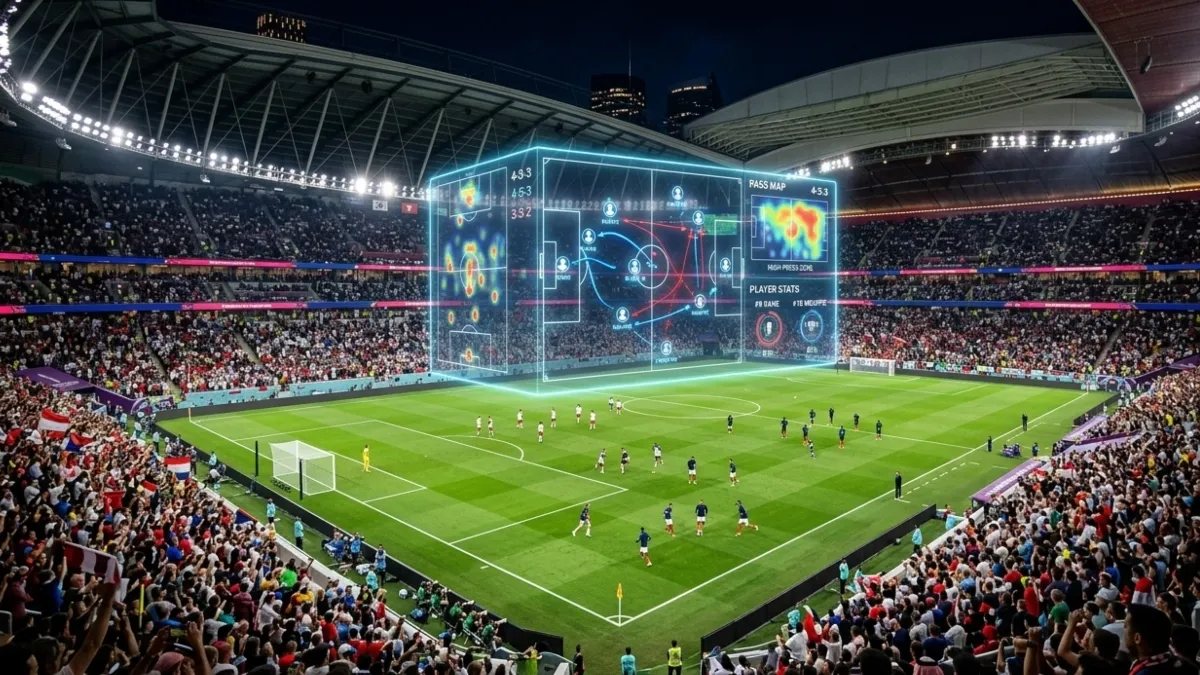
The football world is gearing up for a new era with the 2026 FIFA World Cup, integrating advanced artificial intelligence (AI) systems. For the first time, such technologies will be deployed on a large scale, transforming match strategies, referee decisions, and fan experiences. According to experts, this tournament could signal the dawn of a new age in sports technology.
AI Becomes a New Technical Squad
Teams competing in the 2026 World Cup will have access to sophisticated AI-driven analysis systems. These systems will process millions of data points to provide instant evaluations of player movements, pressing tactics, transition play, and opponent strategies. Technical squads can use these systems to study opponents' game templates through 3D simulations before matches. Players can analyze their strong and weak points with detailed individual performance reports.
The tournament will also see AI-driven referee technologies play a significant role. Three-dimensional models created through digital scanning of players will allow for more precise offside position evaluations. The system will not only make quick decisions but also explain the reasoning behind these decisions to referees, broadcasters, and fans, aiming to reduce VAR controversies.
Stadiums Monitored with "Digital Twin" Technology
The 16 stadiums in the host cities will be tracked using a "digital twin" system, a virtual copy of the actual stadium. Authorities can monitor crowd density, security risks, and on-field operations in real-time. Additionally, players' physical data will be analyzed using wearable technology, enabling real-time monitoring of health and performance.
Data to Drive the Tournament
Experts predict the 2026 World Cup will be one of the peak data production events in sports history. Social media shares, mobile apps, live broadcasting systems, and stadium technologies will generate massive digital data flows. Analysts forecast that the amount of data generated during the tournament will be exponentially higher than previous World Cups, making data analytics one of the most critical elements in football's future.


yapay zeka teknolojileri bu kadar gelişmiş miydi bilemedim, ama bu dünya kupası gerçekten farklı olacak. veri analizi ne kadar önemli olacak, bilemedim. imo, futbolun yeni bir erası başlıyor.