


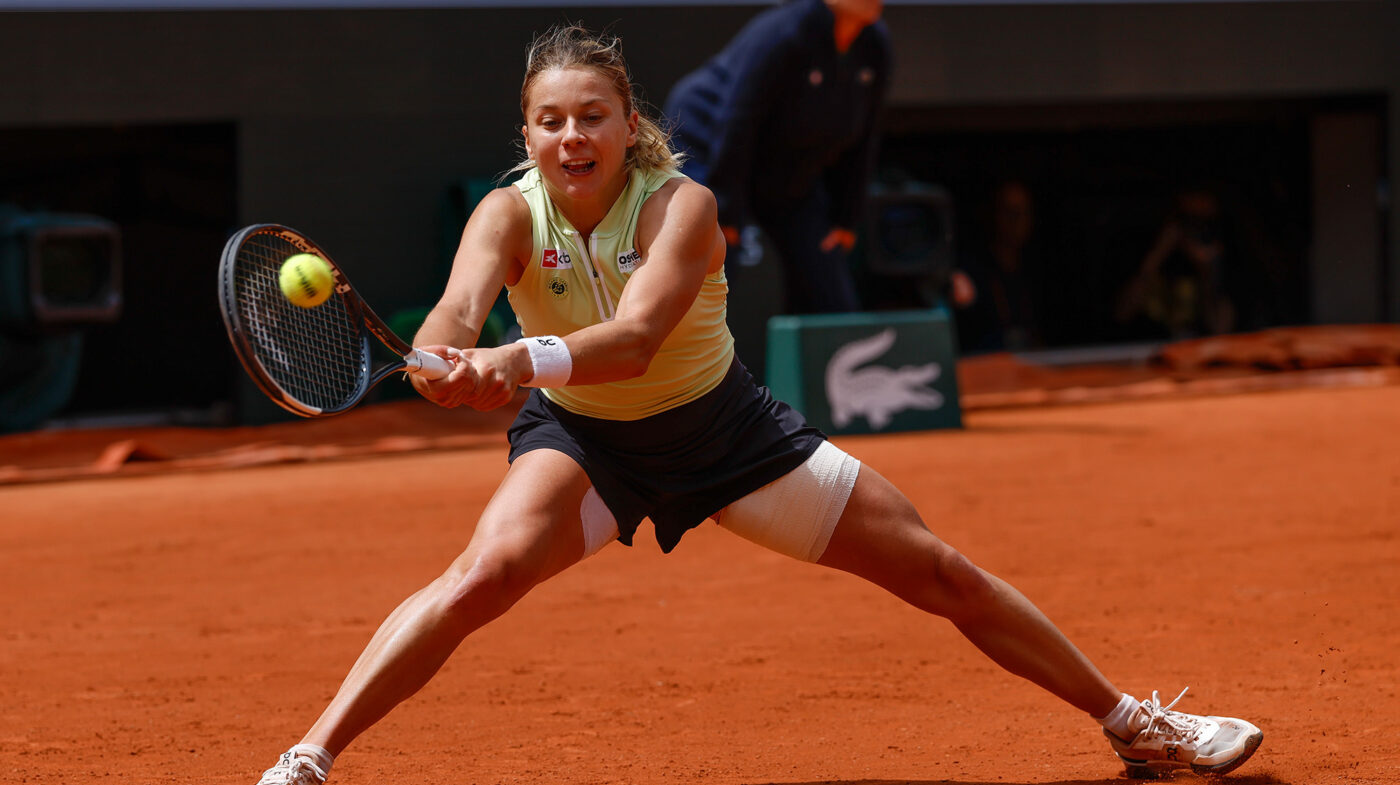
The atmosphere at Roland Garros is thick enough to cut with a knife. We are witnessing the women's final, a showdown that defies all conventional logic. Mirra Andreeva and Maja Chwalinska are locked in a battle for the Suzanne-Lenglen Cup, and the tension is palpable. Andreeva, the seeded powerhouse, has seized control with a ruthless sequence of three consecutive breaks, pushing the score to 2-1 in her favor. The crowd is on its feet, sensing history in the making.
A Clash of Generations and Records
Andreeva is not just playing for points; she is playing for immortality. At 19 years old, the Russian star is the youngest Grand Slam finalist since Coco Gauff in 2022. More shockingly, she is the first player born after 2005 to reach a Grand Slam singles final, a statistic that stands true for both men and women. Her resume is already glistening: victories in Adelaide and Linz this season, plus a record of 17 wins in her first 20 matches on these Parisian courts. Only legends like Chris Evert, Margaret Court, Monica Seles, and Iga Swiatek have matched that early dominance.
The Unlikely Challenger
But do not sleep on Chwalinska. The Polish qualifier, ranked 114th at the start of the tournament, has rewritten the rulebook. She is the first player to reach a Grand Slam final via the qualifying rounds in the Open Era. In the last 40 years, only two other players outside the Top 100 have achieved this feat: Emma Raducanu at the 2021 US Open and Serena Williams at Wimbledon in 2018. Chwalinska is now the third debutant in the Open Era to reach the Roland Garros final, joining Evonne Goolagong and Chris Evert. The winner walks away with 2.8 million euros and the first major title of their career. Every point feels like destiny.

andreeva chiar o domină acum tbh, chwalinska a făcut istorie dar nu cred că o mai poate opri rn... ce ziceți voi?