


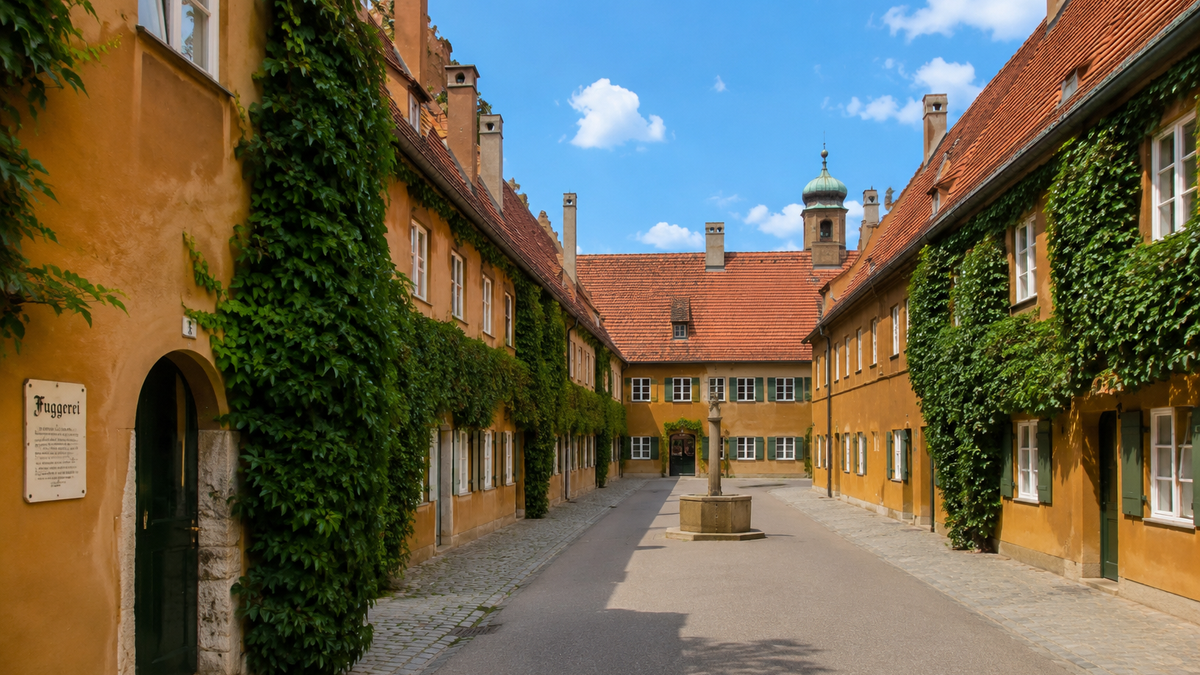
Imagine paying less for an entire year of rent than the cost of a single coffee in Belgrade. In a specific quarter of Augsburg, Germany, this is not a metaphor but a reality that has persisted for over 500 years—under one unusual condition that residents still uphold today.
A Settlement Half a Millennium Old
Fuggerei is the world’s oldest social housing complex. Residents still pay a symbolic rent of just 88 cents per year. This almost unbelievable amount was introduced in 1521 and has not changed since.
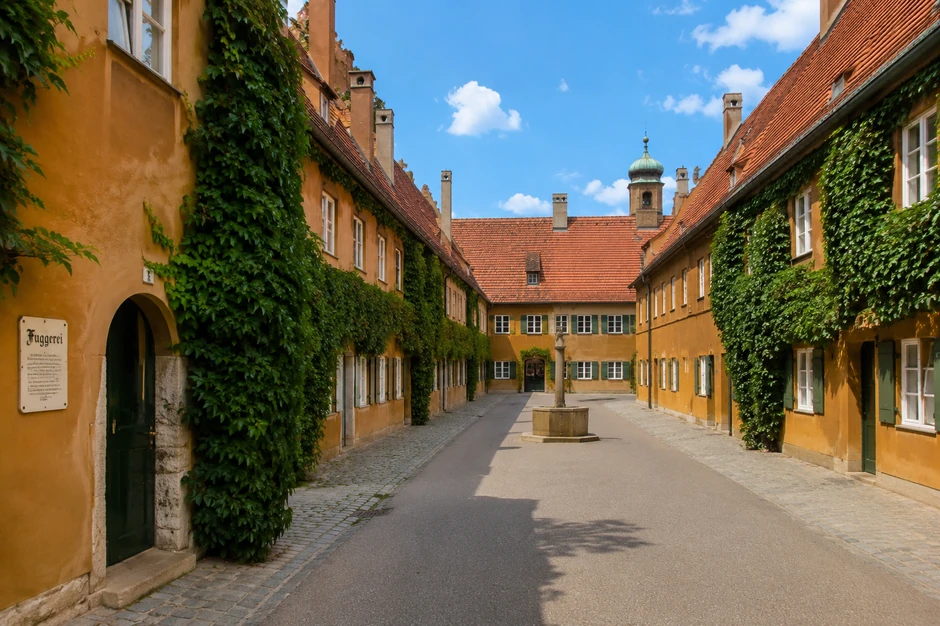
The settlement was founded by Jakob Fugger, also known as "Jakob the Rich," one of the most powerful and wealthiest individuals in 16th-century Europe. His trading and banking network financed emperors and kings, with influence spanning the continent.
Despite his immense wealth, Fugger was deeply religious. He decided to dedicate part of his fortune to humanitarian purposes. Thus, in 1521, he established a settlement for poor but "honest" citizens of Augsburg. Construction began a few years earlier, creating a small, walled "city within a city" by the early 16th century.
Rent Unchanged for 500 Years
Residents of Fuggerei still pay 88 cents annually—a symbolic sum derived from the value of a Rhine gulden in the 16th century. At that time, this amount roughly equaled a worker’s monthly wage. Today, it is less than the price of a coffee.
There is an interesting paradox: visitors now pay an entry fee of around €6.50 to tour the settlement, which is more than a resident pays for seven years of living there.
Rules That Have Not Changed for Centuries
You cannot live in Fuggerei without meeting strict criteria. Candidates must be Catholic, have resided in Augsburg for at least two years, and prove financial need.
Additionally, there is a rule that makes the settlement unique: residents are required to pray three times a day for the soul of the founder, Jakob Fugger, and his family.
A Walled "City Within a City"
Fuggerei remains a fully functional community today. It is surrounded by walls and has its own gates that close every evening, just like in medieval times.
Inside, neatly arranged streets feature nearly identical houses, a small square, and the Church of St. Mark. Today, about 150 to 200 people live there, mostly elderly individuals on low incomes, but also younger residents pushed out of the Augsburg housing market by high rents.
Fuggerei continues to operate as one of the most unusual and long-lasting social experiments in Europe—over 500 years old and still active.


fuggeri zaista jedinstven primer tbh, 88 centi godišnje je apsurdno nisko danas... mislim, moliti se tri puta dnevno za dušu bogataša iz 16. veka je malo čudno ali poštujem tradiciju. da li bi ovo moglo da se primeni i kod nas?