


Thirty-six years ago, the world witnessed chaos at Maksimir Stadium, where a match between Dinamo Zagreb and Red Star Belgrade was never played. On May 13, 1990, the event is often marked as the beginning of aggression against Croatia, with the unrest spreading globally.
The match was scheduled to take place, but tensions had already been running high. Ten days earlier, the first multi-party elections in Croatia resulted in a victory for the Croatian Democratic Union (HDZ) and its leader, Franjo Tuđman. The Red Star Belgrade fans, known as Delije, arrived in Zagreb with the intent of provoking disorder. They began by ransacking the south stand and attacking Dinamo fans. Among the Red Star delegation was Željko Ražnatović Arkan, who would later become notorious for his war crimes.
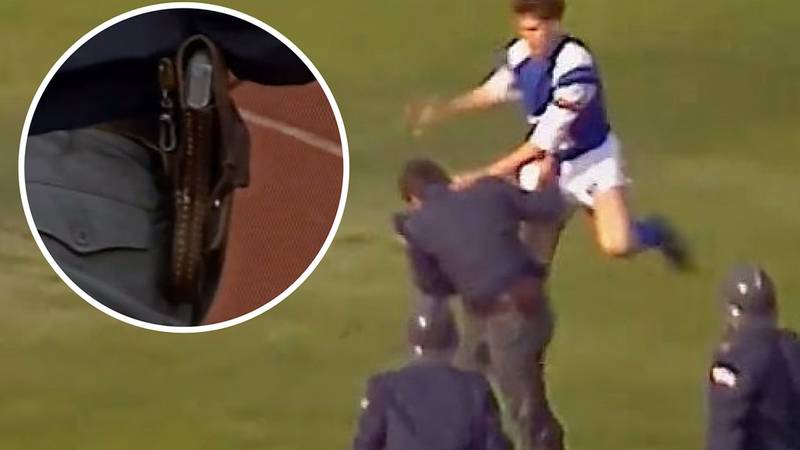
Despite being outnumbered, Croatian fans stood their ground against the Delije, with the regime police doing little to stop the violence. When Delije breached the field, Dinamo fans retaliated. It was at this point that Zvonimir Boban, then a Dinamo player, took matters into his own hands and kicked a police officer, a symbolic act against oppression that resonated around the world.
In a subsequent interview, Boban reflected, "I would have done it again, not as a hero, but as a reaction to injustice." The event marked a turning point in Croatian history, with many who were present that day later becoming fighters in the Croatian War of Independence.
The police, however, only targeted Croatian fans, leaving Red Star fans unharmed. This selective brutality was a stark reminder of the deep-seated conflict and the events that would unfold in the coming years.
Refik Ahmetović, a police officer present that day, later recounted, "They told me to shoot Boban in the back." This admission underscores the extreme measures that some within the regime were willing to take.
The match was eventually rescheduled and played on May 18, 1991, a day before a referendum on Croatian independence. CNN listed this event as one of the five matches that defined world history, highlighting the broader geopolitical context.
The incident remains a contentious topic, with differing narratives. Some Serbian media claim the events were orchestrated by the HDZ to cleanse the police of Serbian personnel. The truth, however, lies in the memories of those who experienced it first-hand, and the impact it had on the formation of the Croatian state.


Boban's stomp was a pivotal moment, a symbol of resistance that echoed far beyond the pitch. But how many of those involved that day knew they were making history? What if it never happened? Would the course of Croatian independence have changed?