


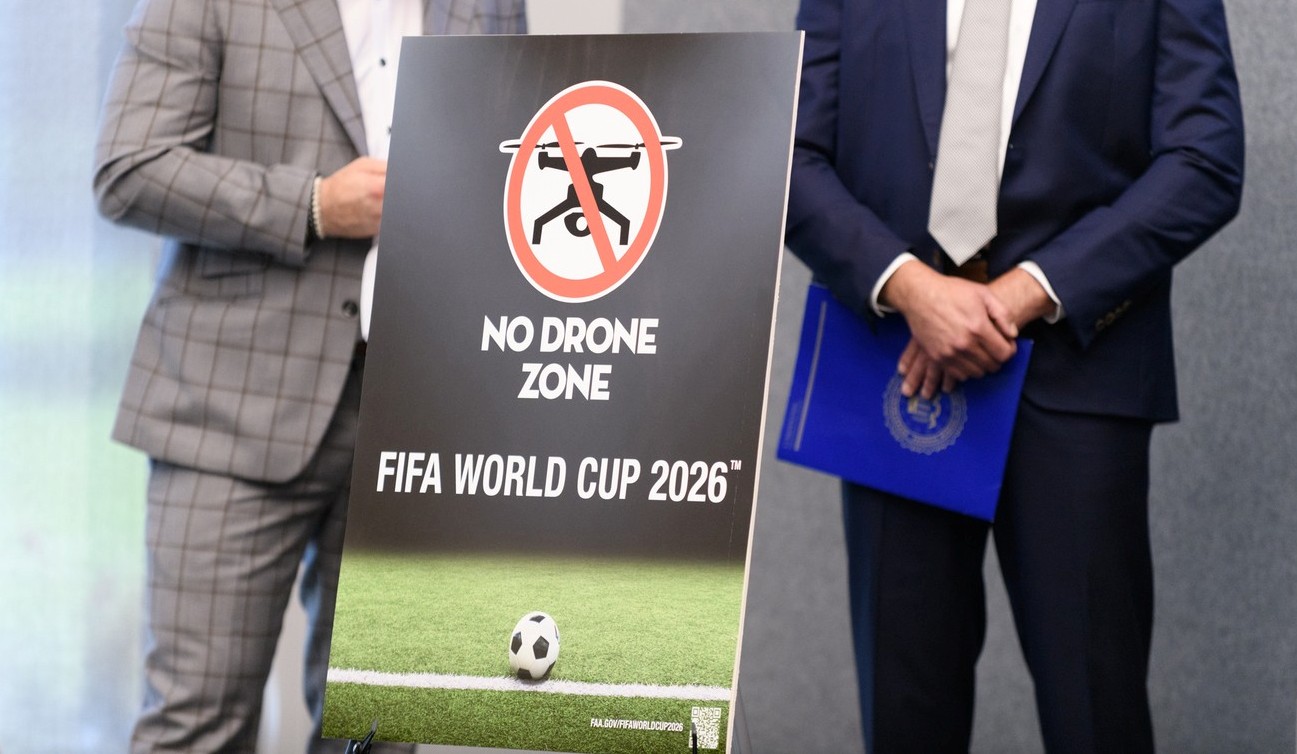
Stadiums Secured, But Threats Persist
All venues for the 2026 FIFA World Cup in the United States have been equipped with anti-drone technology, yet federal officials acknowledge significant vulnerabilities remain. Homeland Security Secretary Markwayne Mullin stated during a House Homeland Security Committee hearing that authorities are still "a little behind" in effectively countering unmanned aerial threats, despite these systems being a top priority for major events.
Mullin emphasized that while massive resources have been poured into offensive drone capabilities, defensive measures lag. "We've invested an enormous amount of resources and money to develop offensive drone capabilities, but when it comes to counter-drone measures, everyone is a little behind," he told lawmakers regarding the agency's budget request. The admission comes as federal and local agencies race to secure the tournament's infrastructure and protect fans.
Recent Breaches Highlight Ongoing Challenges
Despite progress, unauthorized drones frequently penetrate restricted airspace around critical locations. Mullin cited recent high-profile events to illustrate the scale of the problem. During the Miami Grand Prix last month, eight drones breached restricted airspace. Authorities intercepted them, identified operators, and made arrests in some cases. Similarly, at the Masters golf tournament in Augusta, Georgia, in April, officials detected and neutralized 12 drones that violated a temporary flight restriction zone.
These incidents underscore the difficulty of maintaining airspace security for large gatherings. The proliferation of commercial drones has created a persistent challenge for law enforcement. While the anti-drone systems at MetLife Stadium and other World Cup venues represent a major step forward, Mullin warned that the technology is evolving rapidly. Authorities are working to improve detection and interception capabilities daily, but the threat remains substantial. The upcoming tournament will serve as a critical test for these enhanced security measures across the United States.


onesti nu mă surprinde deloc că sunt în urmă lol. dronele sunt peste tot și tehnologia se schimbă prea repede. cred că vor mai fi incidente până la finalul luiie 2026...