


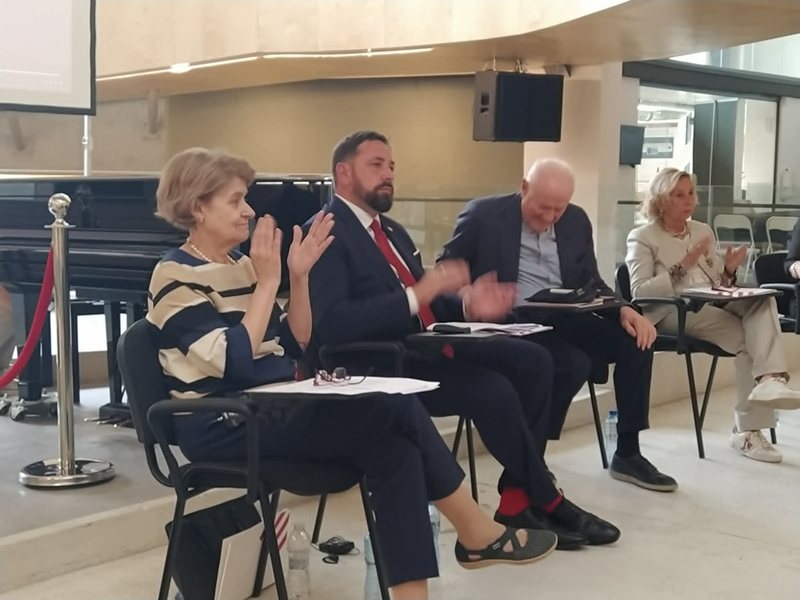
UNESCO's former director, Irina Bokova, has expressed strong support for the inclusion of the Roman mosaics in Plovdiv's Episcopalian Basilica on the World Heritage List. The mosaics have been the subject of extensive research and preservation efforts since their discovery five years ago.
Bokova stated, "The Roman mosaics in Philipopolis have all the qualities to be included in the final list of the World Heritage. They have been studied and preserved in the best possible manner."
The visit to Plovdiv coincided with the fifth anniversary of the discovery of the Episcopalian Basilica and the 70th anniversary of Bulgaria’s membership in UNESCO. Bokova also attended an international event in the city, alongside various diplomats including the ambassadors of Germany, Italy, and Ukraine.
Bokova outlined the steps Plovdiv must take for the final recognition. "Bulgaria needs to prepare the appropriate proposal and submit it to the Cultural Heritage Committee for discussion. This will happen before the start of the next year. An expert mission will come to Plovdiv to write a report, which will be considered along with UNESCO's evaluation in the World Heritage Committee a year later. The committee includes experts from 21 countries who will decide if the mosaics have exceptional universal value."
The Episcopalian Basilica, which has attracted over 200,000 visitors in the past five years, is one of the most emblematic sites in the country. It was studied, restored, and conserved with the financial assistance of the America for Bulgaria Foundation and the Plovdiv Municipality.
"This is an object of great historical value," Bokova noted. She emphasized that Plovdiv is recognized as one of the oldest continuously inhabited cities in Europe, dating back over 7,000 years. The city’s mosaics deserve worldwide recognition.
Bokova highlighted other unique Bulgarian sites, including Boyana Church, Rila Monastery, and Old Nesebar, as well as Thracian sanctuaries, Roman, and medieval remains that form a historical narrative.
Emanuele Zorino, the mayor of Aquileia, Italy, compared the mosaics of their basilica to those in Plovdiv, noting similarities despite the older construction date of the Italian basilica. Both churches feature peacocks as symbols of resurrection and eternal life.
"These objects have potential both culturally and economically. The UNESCO label does more than just label; it makes us more visible," Zorino said. He emphasized that Plovdiv has full support from Aquileia for its UNESCO candidacy.
Elena Kantareva-Decheva, director of "Old Plovdiv" and the restorer of the mosaics, pointed out that the restoration efforts, from 2016 to 2020, involved over 450 volunteers and were completed to international standards.


Comments