


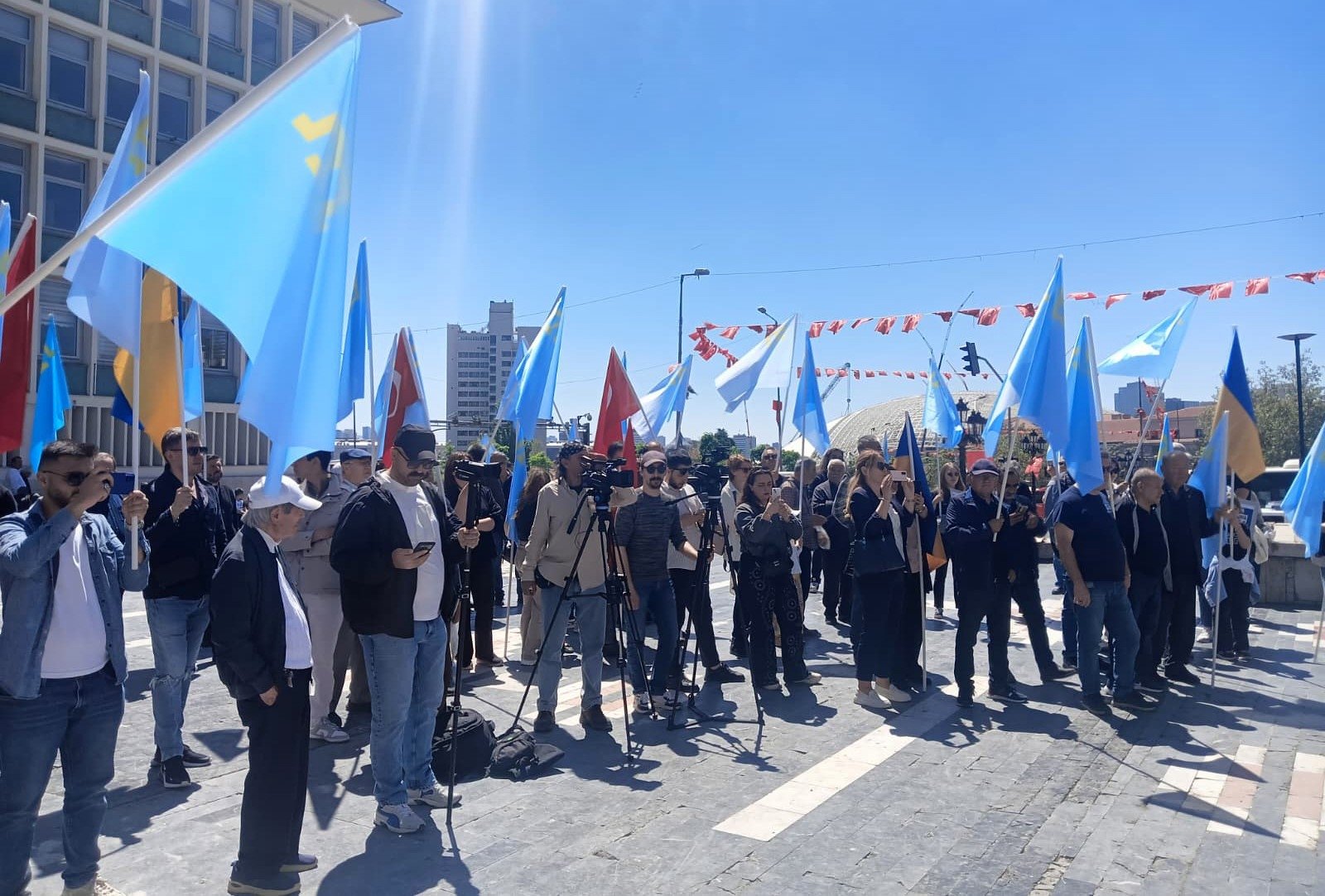
Türkiye on Monday marked the 82nd anniversary of the displacement of the Crimean Tatars and the 162nd anniversary of the Circassian Exile, describing both as profound humanitarian tragedies that continue to shape collective memory and regional politics.
In a written statement, the Turkish Foreign Ministry said hundreds of thousands of Crimean Tatars were forcibly deported from their homeland by Soviet authorities in 1944, with many dying in labor camps or from harsh living conditions during exile.
“The suffering of the Crimean Tatars, the indigenous people of Crimea, has become even heavier following the illegal annexation of the peninsula,” the ministry said, reaffirming Türkiye’s support for the preservation of the Crimean Tatars’ national identity, language, and culture, as well as their security and welfare.
The ministry also marked the anniversary of the Circassian Exile of 1864, calling it “a major humanitarian tragedy” that forced the peoples of the Caucasus to leave their homeland under severe conditions and caused immense suffering and loss throughout the region.
“We share the pain of the Crimean Tatars and the brotherly peoples of the Caucasus and commemorate those who lost their lives with respect and mercy,” the statement added.
Separately, the Embassy of Ukraine in Türkiye hosted a memorial event in Ankara to mark the anniversary of the Crimean Tatar deportation. The ceremony, hosted by the Ukrainian Ambassador to Türkiye Nariman Dzhelyal, was attended by foreign diplomats and guests.
Speaking at the event, Dzhelyal recalled how Soviet soldiers entered Crimean Tatar homes on May 18, 1944, and forcibly deported families over the course of several days. He said the majority of those exiled were women, children, and the elderly.
“This was not relocation or evacuation. This was genocide,” Dzhelyal noted.
He stated that nearly half of the Crimean Tatar population died during the journey or within the first year of exile due to hunger, disease, and inhumane living conditions.
Dzhelyal also accused Soviet authorities of systematically erasing Crimean Tatar identity by renaming villages, closing schools, and confiscating property.
Following Ukraine’s independence, many Crimean Tatar families returned to Crimea, he said, but argued that Russia’s 2014 annexation of the peninsula brought back “the same logic of repression, fear, and colonial violence.”
Dzhelyal said Crimea has since become an area marked by militarization, political repression, and demographic engineering, claiming that between 500,000 and 800,000 Russian citizens have been resettled in the peninsula since 2014.
Reaffirming Kyiv’s position, Dzhelyal said: “Crimea is Ukraine. Crimean Tatars are the indigenous people of Crimea. Their rights to their land, identity, language, self-governance, and future are not negotiable.”
This is a dark and tragic part of Balkan and European history. The suffering of these peoples must never be forgotten. How can we ensure that such atrocities are not repeated in the future?