


Three victims from the Croatian War of Independence have been identified at Zagreb's Medical Faculty. The identified victims are Croatian soldier Zlatko Bataković, a volunteer from the 3rd Guard Brigade, who was captured on November 18, 1991, at Ristić's farm and killed at the age of 26, and Croatian soldier Darko Bilušić, a volunteer from the 204th Brigade of the Croatian Army, who was captured on the same day at VUPIK as an injured soldier and taken to the hangars at Velepromet, where he was killed at the age of 21. The remains of both soldiers were found in a mass grave at Petrovačka Dola near Vukovar.
Also identified was civilian Zorka Jeger, who died on October 1, 1991, when a grenade hit her house in Vukovar, at the age of 68. Her remains were exhumed in July 1998 at the Vukovar Sloga stadium. The family provided DNA samples in early 2026, leading to her identification. The family also received a earring found with the remains.
38 Individuals Identified from Petrovačka Dola
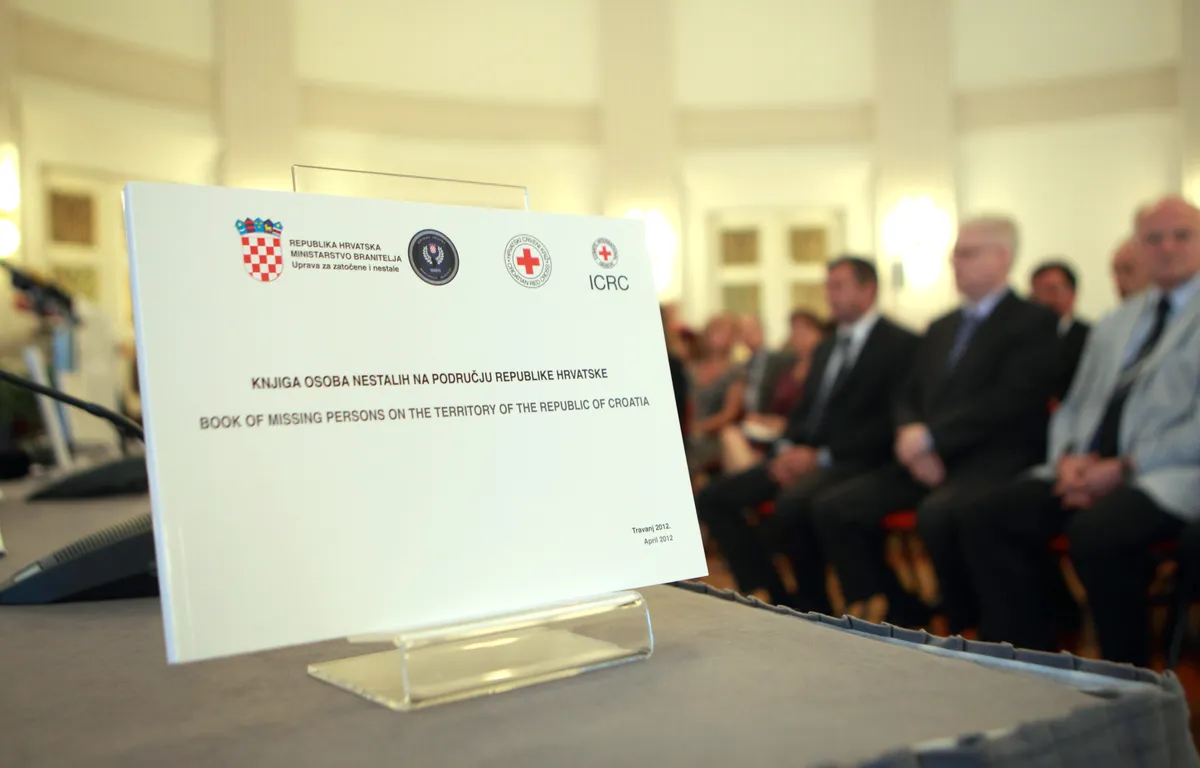
To date, 38 individuals have been identified from the mass grave at Petrovačka Dola – 22 Croatian soldiers and 16 civilians, ranging in age from 21 to 68. The Republic of Croatia continues to search for 1,725 Croatian citizens who are missing from the Croatian War of Independence, including 446 in the Vukovarsko-Srijemska county and 320 in Vukovar.
Minister Medved highlighted the difficulty of the work at Petrovačka Dola, where over 174,000 cubic meters of waste have been excavated and examined over four years. "The lack of information and the passage of time are still our biggest obstacles," Medved said, urging anyone who can help in locating graves and uncovering the truth about the missing to reach out to the Ministry.
In April, the government secured an additional 250,000 euros for modernizing DNA laboratories to increase efficiency and speed up identifications. Medved also announced proposed changes to the Law on Individuals Missing in the Croatian War of Independence, allowing families who do not wish to declare their deceased as missing for emotional reasons to settle inheritance matters without this step. "Finding missing individuals from the Croatian War of Independence remains a sustained priority for the Ministry of Croatian Veterans and the Government of the Republic of Croatia. It is our duty to them and their families," he stated.
Turudić: No Cooperation with Serbia
In response to a question about cooperation with Serbia, Medved said Croatia is "steadfast, responsibly, and decisively" continuing to search for the missing despite the lack of cooperation from Serbia. He noted the government's stance that Serbia cannot close accession talks with the EU and become a member until it meets concrete conditions related to resolving issues from the Croatian War of Independence and the rights of victims.
State Advocate Ivan Turudić emphasized that there is no cooperation with Serbia, stating, "I believe the blame lies on their side." He also highlighted the complexity of excavations, noting that tons of material are excavated to find a single bone fragment.
Medical Faculty Dean Slavko Orešković pointed out that the Institute of Forensic Medicine and Criminalistics, with its DNA laboratory, has conducted 90 to 95 percent of all identifications of victims from the Croatian War of Independence.
"The Institute of Forensic Medicine suffered in the earthquake, but despite that, we have continued to work throughout this time, fully aware of how important identification is to the individuals and their families, to find peace and light a candle," Orešković said.
Medved: Penavine's Initiatives "Worthy of Consideration"
Regarding comments by President of the Homeland War Movement Ivan Penavi, who feels neglected in the coalition, Medved responded that Penavi's initiatives are "worthy of consideration."

Comments