


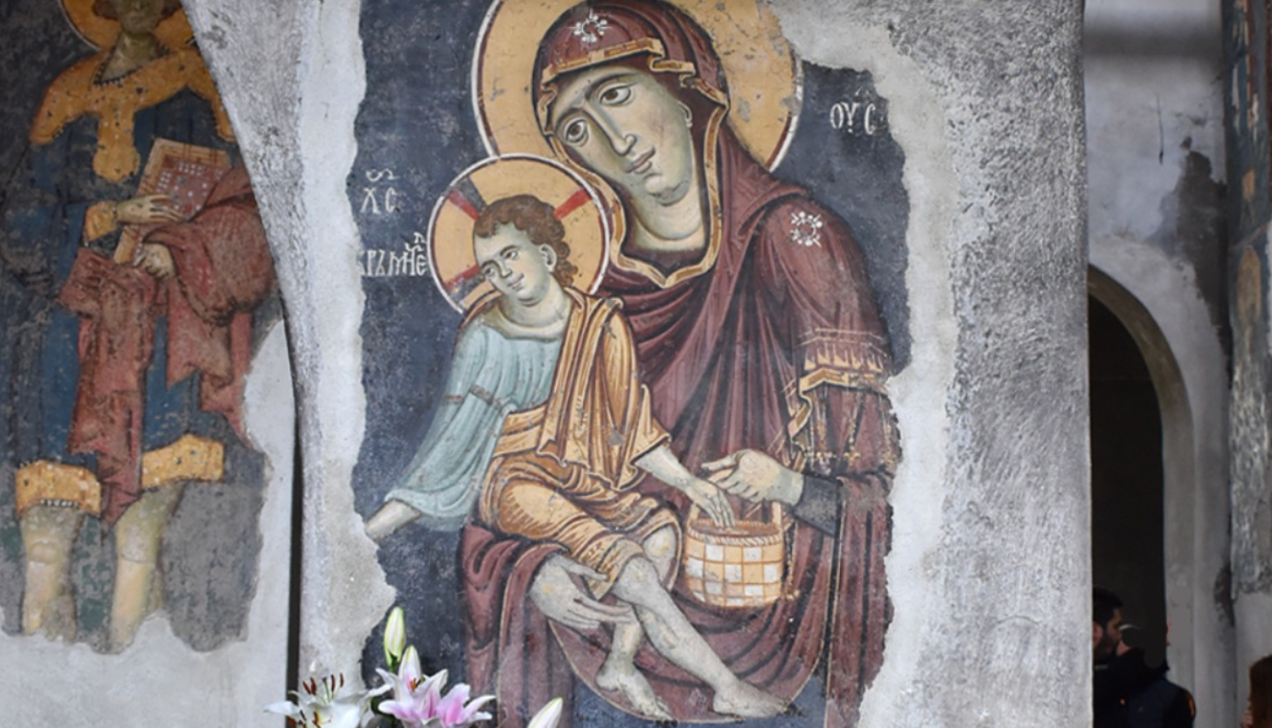
Bogorodica Ljeviška in Prizren is not only one of the most beautiful Serbian medieval churches but also a symbol of suffering, resilience, and spiritual strength for the Serbian people in Kosovo and Metohija. Over the centuries, it has been destroyed, desecrated, converted into a mosque, and set ablaze, yet it has survived, preserving invaluable frescoes and serving as a witness to the time when Prizren was one of the seats of Serbian state and culture.
Hidden among the narrow streets of Prizren, Bogorodica Ljeviška has long attracted attention with its extraordinary beauty and rich history. The name "Ljeviška" likely derives from the part of the town that once stood on the left side of the river Bistrica. Although the Turks later altered the river's course, the church’s name has remained.
King Milutin, one of the greatest Serbian benefactors, renovated the church in 1307, built upon the foundations of an older basilica from the time of Stefan Prvovenčan and an even older Byzantine church from the 10th century. This is why Bogorodica Ljeviška represents a unique blend of Serbian and Byzantine spiritual and artistic traditions. Milutin transformed it into a magnificent five-domed temple, with a porch and bell tower, aiming to make his endowment worthy of the great Orthodox center that Prizren was at the time.
Frescoes from the 13th and 14th centuries hold particular value, including the famous fresco of the Ljeviška Mother of Mercy, discovered in 1x51 almost untouched behind a brick wall. It is considered one of the most beautiful depictions of the Virgin Mary in Serbian-Byzantine art.
The church's fate has been difficult. After the abolition of the Peć Patriarchate in 1766, the Turks converted it into a mosque. The frescoes were defaced and damaged, and a minaret was erected on the bell tower. Still, centuries of misfortune could not hide its beauty.
Bogorodica Ljeviška suffered anew during the March 2004 pogrom when Albanian extremists set the church on fire, severely damaging the frescoes and the interior. The black soot and fire marks remain visible on the church walls to this day.
UNESCO inscribed Bogorodica Ljeviška on the list of endangered world heritage sites in 2006, and part of the frescoes has been restored thanks to international assistance. Still, much of the church bears the scars of its suffering.
Bogorodica Ljeviška stands today as a silent witness to centuries of Serbian history in Kosovo and Metohija. Its walls remember the glory of the Nemanjić dynasty and the sorrow of the pogrom, yet they also show that churches may be wounded but not destroyed. As long as Bogorodica Ljeviška stands, so does the memory of the people who built and defended it through the ages.
Written by: Stefan Stojanović

Bogorodica Ljeviška stands as a testament to the resilience of the Serbian spirit. Every scar on its walls tells a story of defiance and survival. Will it continue to stand as a symbol of hope and resistance, or will it fall to the ravages of time and conflict? A powerful reminder of the past, but can it inspire a better future?