


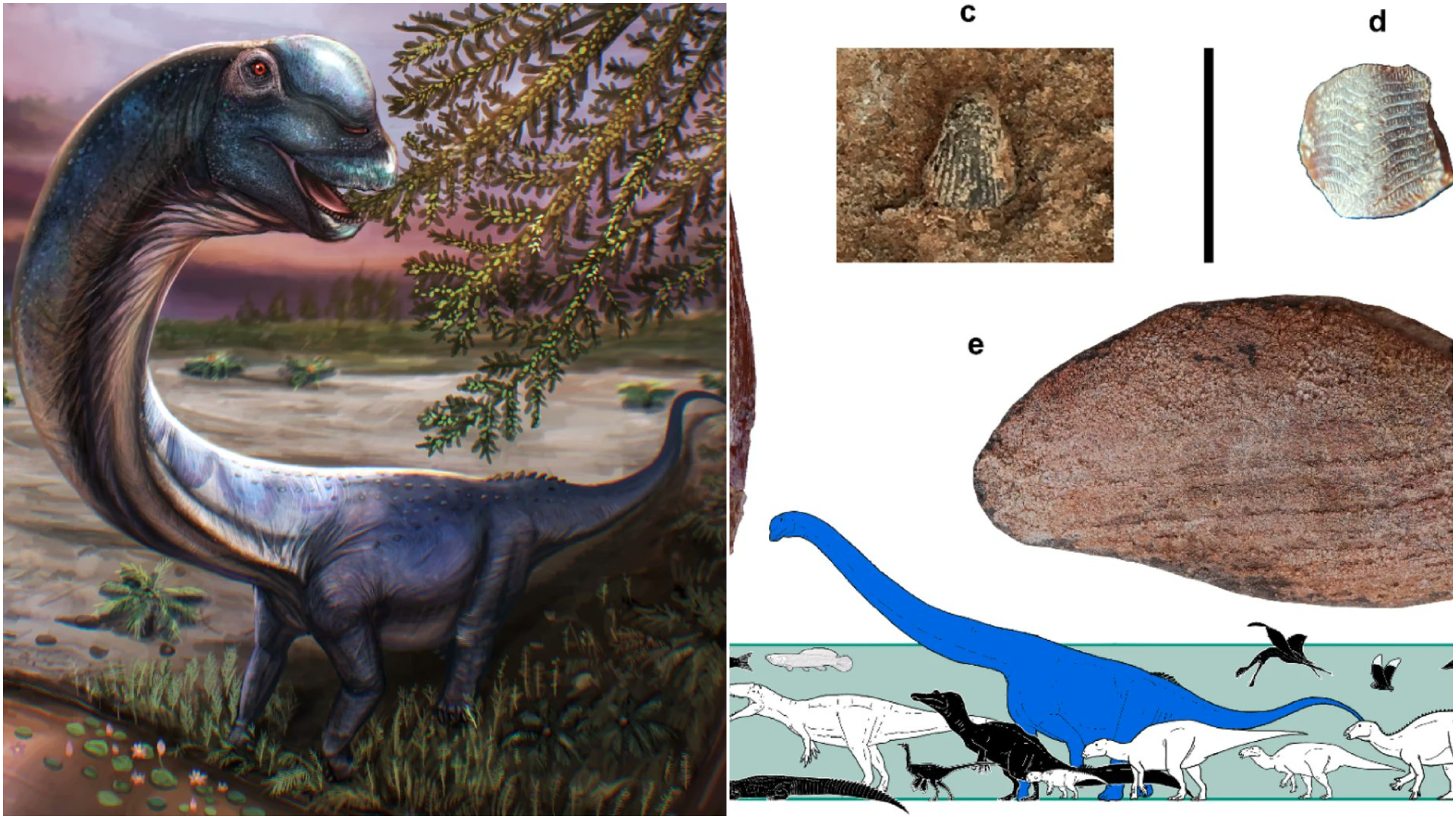
Scientists in Thailand have identified fossils of a new giant long-necked dinosaur species that could be the largest ever discovered in Southeast Asia. The creature, named Nagatitan chaiyaphumensis, lived approximately 113 million years ago, was estimated to be 27 meters long, and weighed up to 28 tons, according to a study published in the journal Scientific Reports.
About 113 million years ago, in a hot and arid region crossed by rivers, in what is now Thailand, lived a colossal herbivore nearly 27 meters long, feeding on the treetops and facing few predators due to its impressive size. This was Nagatitan chaiyaphumensis, the largest known dinosaur from Southeast Asia, reported Reuters.
Researchers discovered skeletal remains of Nagatitan, a member of the sauropod group known for their long necks, long tails, small heads, and four massive column-like legs. The Cretaceous period fossils were first noticed by a local in Chaiyaphum province in northeastern Thailand. Scientists excavated vertebrae, ribs, pelvic bones, and limbs, including a humerus and a front leg bone measuring 1.78 meters over several years.
Based on the dimensions of the humerus and femur, researchers estimated that Nagat-itan weighed between 25 and 28 tons. The skull and teeth were not among the fossils found.



This discovery is a game-changer for paleontology and proves there's still so much we don't know about our planet's history. Who knows what other incredible secrets the earth is hiding?