


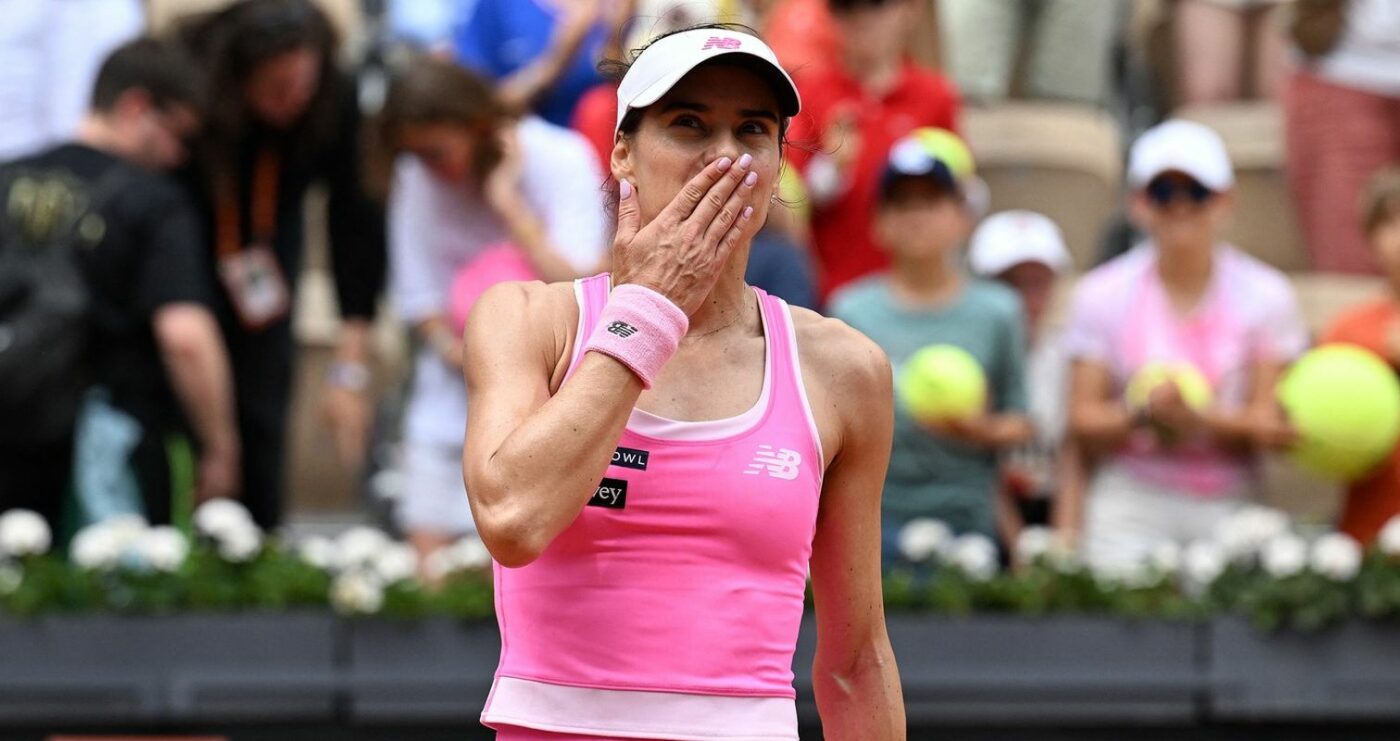
The Mind Behind the Miracle Run
She is 36 years old. She is ranked 18th in the world. And she is standing on the red clay of Roland Garros, staring down the barrel of a quarterfinal clash against 19-year-old sensation Mirra Andreeva on Tuesday, June 2. But Sorana Cîrstea’s greatest victory this fortnight isn’t on the court. It’s in her head. For eight years, the Romanian veteran has worked with Bernadette Martin, an 80-year-old French psychologist who has become the quiet anchor of her team. While the tennis world fixates on serve speeds and backhand angles, Cîrstea credits her miraculous run to the woman who listens to her complaints and reframes her fears.
“You Are a Baby”
The dynamic is unconventional. Martin is not a sports psychologist. She is a traditional therapist, introduced to Cîrstea’s camp through the influential Țiriac family. Their relationship is built on raw honesty. Cîrstea admits to a recurring panic: “I am terrified because I am too old! Too old! Too old!” It is a scream into the void of professional sports, where youth is currency. But Martin’s response cuts through the noise. “Sorana, you are a baby. You haven’t even started living yet,” the octogenarian replies. This perspective shift has been transformative. Cîrstea now accepts a dual reality: she may be aging for tennis, but she is young for life. The fear of irrelevance has been replaced by the joy of chasing a dream she held since age four.
The Puzzle Pieces
On court, Cîrstea appears alone. Off court, she is the center of a tightly knit family unit. Her coach, Adrian Cruciat, and physiotherapist, Andrei Cristofor, handle the physical mechanics. Former coach Marius Comănescu, described as a second father, provides emotional stability. And Martin provides the mental clarity. When Cîrstea faced Xiyu Wang in the round of 16, Martin was there, a silent presence in the stands. This is not just a support staff; it is a ecosystem. Cîrstea rejects the narrative that older players cling to tennis because they lack a personal life. “I have a life,” she insists. “I am so happy with my life that I am capable of pursuing my career and enjoying it.” This holistic approach has turned a veteran’s struggle into a veteran’s triumph. As she prepares for Andreeva, Cîrstea is not fighting to stay relevant. She is fighting to prove that experience, backed by the right mind, can still shock the young kings and queens of the sport.

sincer nu m-aș fi așteptat ca un psiholog obișnuit să facă atâta diferență pentru sorana tbh. Bernadette e o legendă mică ngl. o să o bat pe Andreeva? we’ll see...