


A Ruler Who Chose Faith Over Power
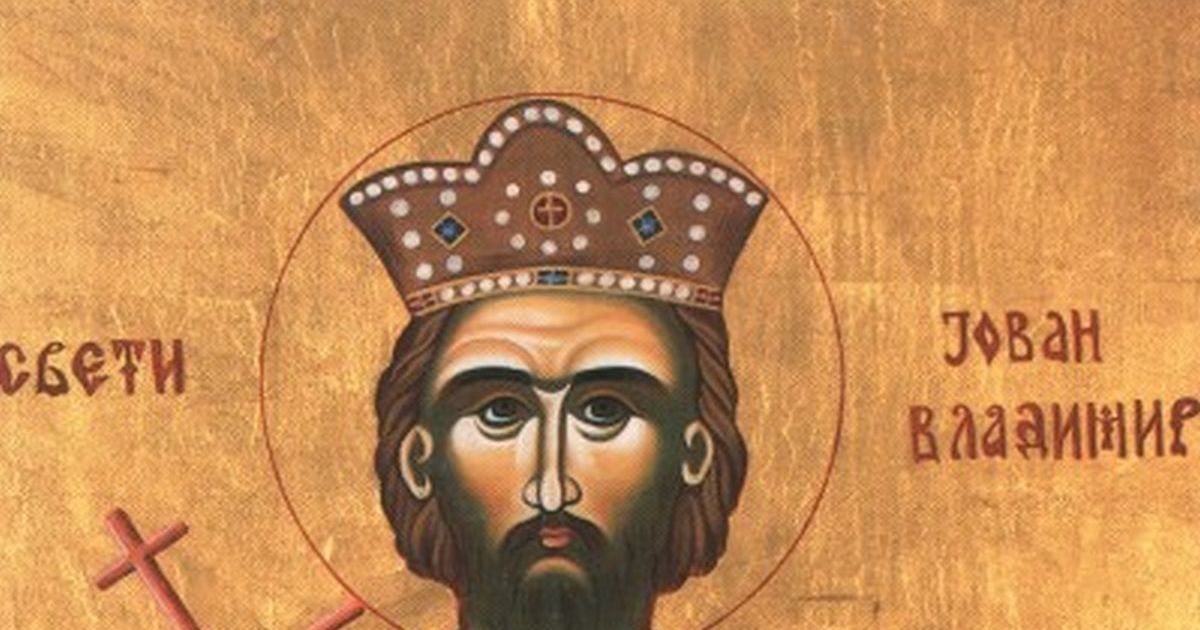
Today marks a significant day in the liturgical calendar for the Serbian Orthodox Church and its faithful, as they commemorate Saint John Vladimir. Revered as a martyr and one of the earliest saints of the region, his life story bridges the gap between medieval history and enduring folk tradition. Born into the princely family of Zahumlje around the year 1000, he ascended to rule the region of Duklja, governing until his death in 1016.
His reign unfolded against a backdrop of intense geopolitical conflict between the Byzantine Empire and the Bulgarian Empire of Tsar Samuel. Although John Vladimir initially aligned himself with Byzantium, he could not withstand the military might of Tsar Samuel, who conquered Duklja and imprisoned the young ruler in Ohrid.
From Prisoner to Vassal King
According to the "Chronicle of the Priest of Duklja," John Vladimir’s fortunes changed dramatically while in captivity. He reportedly won the heart of Theodora Kosara, the daughter of Tsar Samuel. Through her influence, Samuel arranged their marriage, leading to John Vladimir’s release. He was restored to power, albeit as a vassal, and granted additional territories to govern.
Historical accounts describe him as a ruler who prioritized peace and religious devotion over expansionist ambitions. He sought stability for his people amidst the chaos of regional wars.
Martyrdom and a Shared Heritage
Peace did not last. Following the death of Tsar Samuel and subsequent shifts in power, John Vladimir was betrayed and executed in 1016 on the orders of John Vladislav. Tradition holds that he was killed by deception outside a church in Prespa, where he was initially buried.
His journey as a saint continued long after his death. His relics were moved several times across the Balkans—from Prespa to Duklja, then to Durrës, and later to a monastery near Elbasan. Today, his remains rest in the Mother Teresa Cathedral in Tirana.
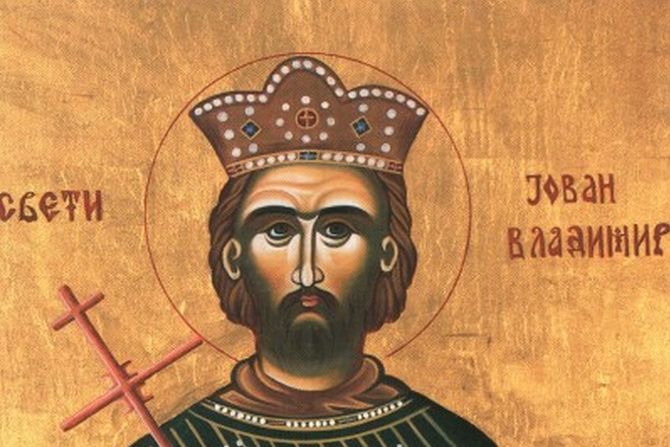
This shared reverence creates a unique cultural bridge. While he is considered the first Serbian saint and the patron of the city of Bar, Albanians also deeply venerate him. A notable relic, the cross he held during his execution, remains in the care of a family in a village near Bar and is carried in annual processions up Mount Rumija. On icons, he is depicted as a crowned ruler, often holding his own severed head and a cross, symbolizing his ultimate sacrifice for faith.

jovan vladimir kult i dalje živi u albaniji i srbiji, što je zanimljivo. mnogi ne znaju da su mošti u tirani. da li ćemo ikada videti zajedničku proslavu na duži način?