


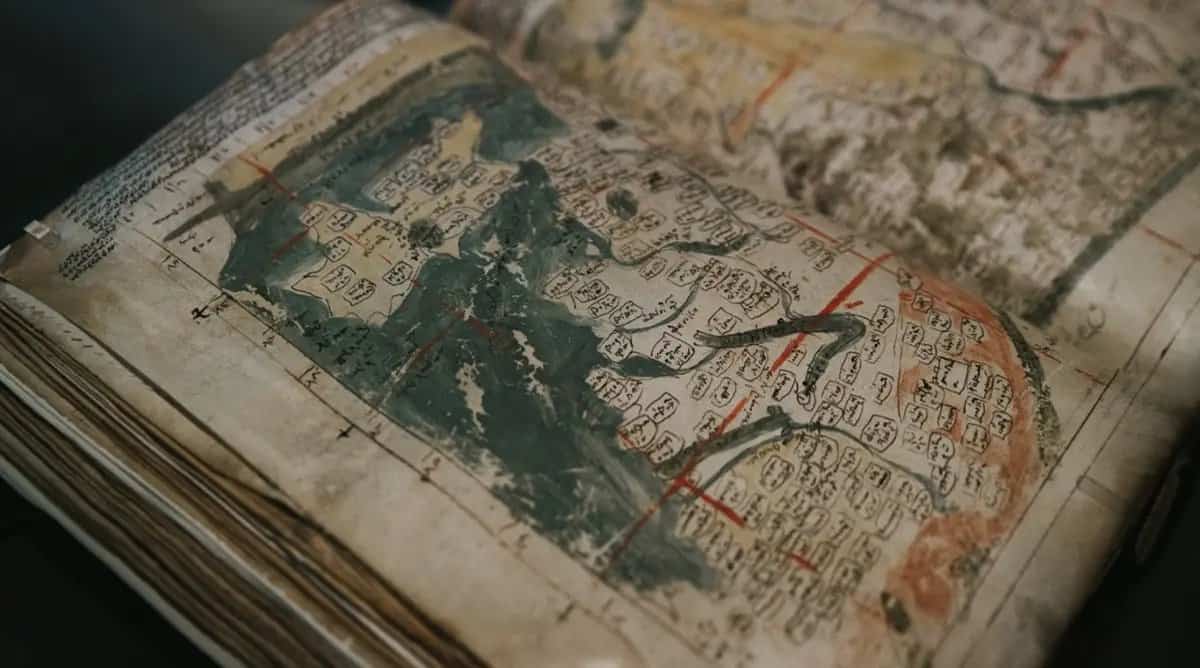
A Treasure from Mount Athos Captivates Nicosia
The Vatopedi Monastery Codex 655, widely regarded as one of the most precious manuscripts on Mount Athos, has become the centerpiece of a cultural phenomenon in Cyprus. The rare 13th-century document, featuring ancient geographical maps and classical texts, has drawn unprecedented crowds to an exhibition in Nicosia. Due to overwhelming public interest, organizers have extended the showcase until early 2026, defying its original June closing date.
The exhibition, curated by Yiannis Toumazis, Director of the Bank of Cyprus Cultural Foundation and Cyprus' first Deputy Minister of Culture, alongside Dimitra Ignatiou, aims to weave together the island's complex history. "By focusing on time, place, and people, relationships emerge," Toumazis noted. "These narratives highlight aspects of Cyprus' history and contemporary reality that have shaped a unified island identity."
Ancient Maps and Lost Knowledge
The Codex 655 comprises 296 parchment leaves and stands as one of the few surviving secular manuscripts from the monastic libraries of Mount Athos. It contains works attributed to Claudius Ptolemy, the renowned Greek philosopher and geographer who worked in Alexandria during the second century AD. The manuscript preserves Ptolemy's Geographical Synopsis, Strabo's Geographica, and the Chrestomathy from the Geographical. Many of these texts are copies of earlier manuscripts whose originals have been lost to time, making the Codex a vital link to ancient scholarship.
Archaeologist Dimitris Liakos from the Department of Antiquities of Halkidiki and Mount Athos highlighted the manuscript's cartographic significance. "The most impressive element is the maps from the eighth book of the Geographical Synopsis," Liakos explained. "Each depicts one or more countries from the known world of the second century AD."
The collection features a world map of the Oikoumene—the inhabited world as understood by antiquity—alongside ten maps of Europe, four of Africa, and twelve of Asia. These illustrations offer a rare window into how scholars mapped the globe nearly two millennia ago, providing context for the geographical understanding that influenced centuries of exploration.
Cultural Heritage and Public Engagement
The exhibition's success was anticipated by President Nikos Christodoulides during the opening ceremony, where he predicted strong public demand for such a significant cultural event. The extension into 2026 allows more residents and tourists to experience the connection between Cypriot heritage and the broader Byzantine world.
Held at the Bank of Cyprus Cultural Foundation, the exhibition pairs the Codex with a diverse collection of artifacts, artworks, and historical documents. This combination allows visitors to explore not just the manuscript itself, but the wider cultural currents that have defined the island over the centuries. The event underscores the enduring appeal of tangible history, bridging the gap between academic preservation and public engagement.

vatopedi codex is wild tbh ancient maps rn... didn't know cyprus had this vibe