


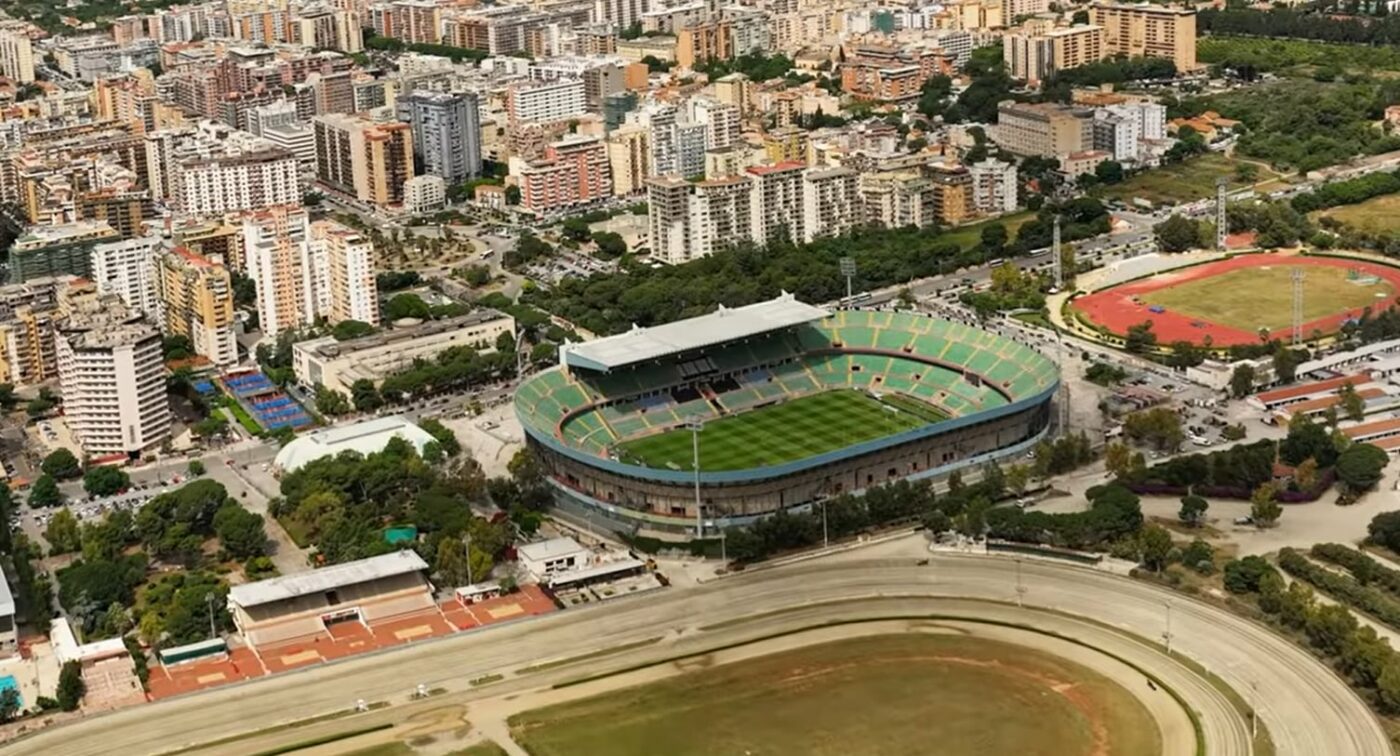
The new stadium in Palermo is set to become a true jewel, with an estimated cost of €300 million. The financing model is a public-private partnership, with over half of the funds coming from FC Palermo. This financial support for the renovation of Stadio Renzo Barbera marks a significant step towards the city's bid to host matches at the Euro 2032 tournament, noted stadiumdb.com.
Stadio Renzo Barbera, the home of FC Palermo, will undergo extensive renovations. The new stadium, which will be the centerpiece of a broader urban regeneration project, is expected to be a true jewel, valued at around €300 million. Over half of the funding for the project, carried out by Populos, comes from the football club, with the rest covered by public institutions (regional, municipal, and governmental).
According to Domus, the project aims to preserve the historical legacy of the 1948 stadium designed by Giovan Battista Santangelo, while also introducing modern elements to enhance the visitor experience and integrate the stadium into urban life.
In addition to functional modernizations, the stadium will feature new covered stands closer to the pitch, hospitality zones, services, and multifunctional spaces. A new adjacent building will house FC Palermo’s club headquarters, with administrative offices, a museum, and fan and guest areas, consolidating the new stadium’s role as a community hub.
The stadium will also be open outside the competitive season, serving as a venue for events unrelated to football. The financial support from authorities for the project marks a significant step for Palermo, which is aiming to enter the race to host Euro 2032 matches.
The project was designed to meet the strict requirements of UEFA and maintain technical standards for major international competitions. The structure was also conceived to accelerate construction, minimize pressure on public finances, and reduce future operational costs.
Special attention was given to environmental sustainability, from photovoltaic systems to low-resource consumption technologies and rainwater harvesting strategies to reduce environmental impact and increase energy self-sufficiency. Sustainable mobility and green spaces were also considered to mitigate the environmental impact.
The grand project includes a new stadium with a view of the river, along with a public park, enhancing the city's landscape.


Comments