


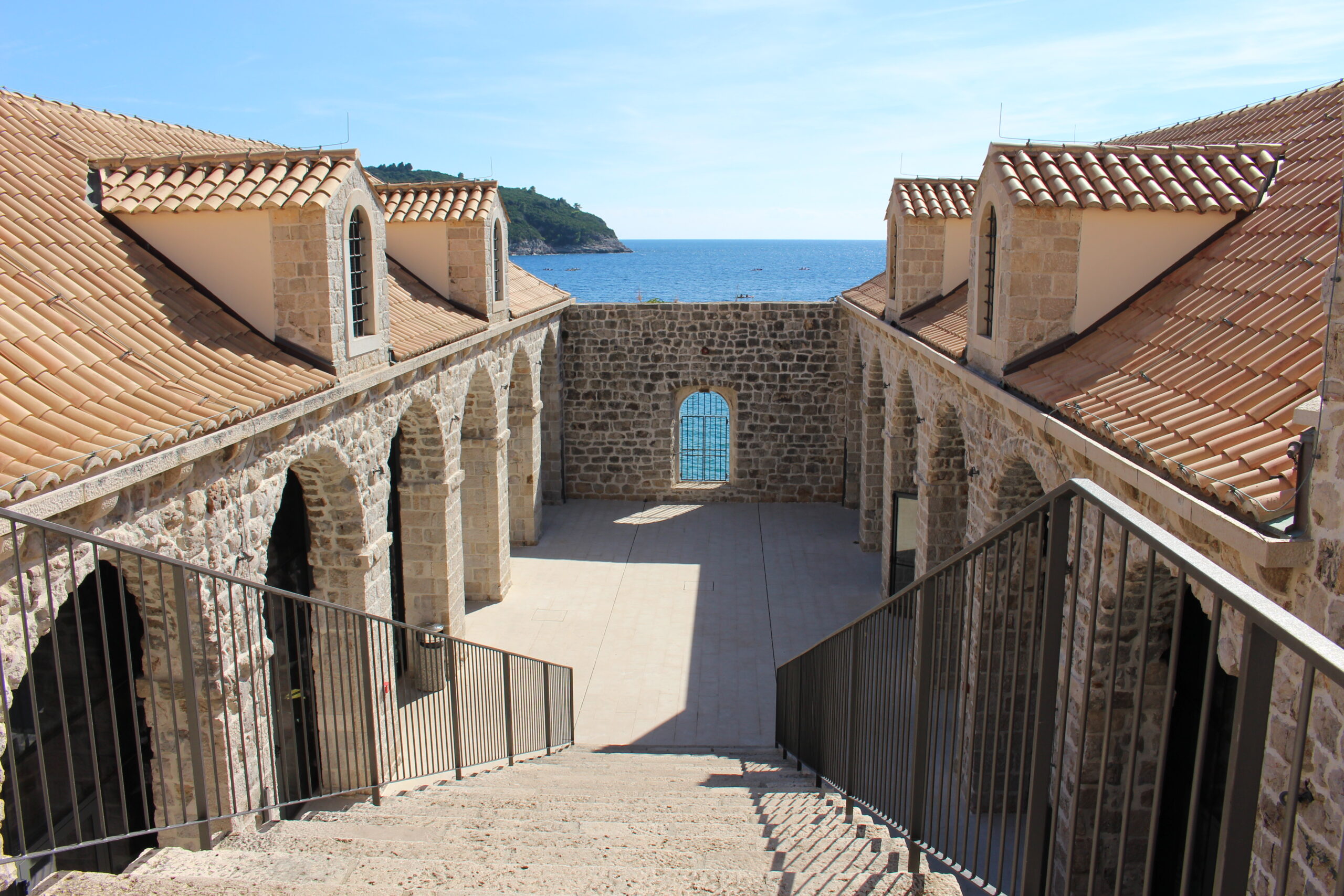
May 21, 2026 – Lazareti. This is perhaps the best symbol of how innovative Dubrovnik has always been, as the former quarantine fortress that once housed the infectious is now a beloved cultural hub.
Just outside Dubrovnik’s famous old city, where the city walls meet the sea near Ploče Gate, lies one of the most important yet often overlooked historical complexes in the entire region, Lazareti.
From Quarantine to Culture
Today, as Putni kofer writes, it’s a lively cultural and events space. But for centuries, it was something else entirely. Lazareti was once a tightly controlled quarantine station designed to protect one of Europe’s most powerful maritime republics from deadly infectious disease. They remain one of the best-preserved examples of early public health infrastructure anywhere in the Mediterranean.
Dubrovnik was one of the first cities in all of Europe to introduce organized quarantine measures as early as the 14th century, following devastating outbreaks of the Black Death. By 1377, the Republic of Ragusa had already introduced formal isolation rules requiring travelers from potentially infected regions to wait outside the city before entry. Later on, this system was expanded into dedicated quarantine zones on nearby islands before being moved closer to the city for efficiency and trade control.
The Quarantine Complex
The impressive Lazareti complex was constructed between the late 16th and early 17th centuries as trade volume through Dubrovnik increased. Located strategically at the entrance to the city’s main harbor and trade routes, the complex functioned as a controlled entry point for merchants, sailors, and goods arriving from across the Mediterranean and beyond. Travelers were required to remain in isolation for a set period, often up to 40 days, before being granted permission to enter the city freely.
Goods were also stored there, closely inspected and aired out under strict supervision to prevent contamination. Architecturally speaking, Lazareti were designed with both control and containment in mind. The complex consists of a series of long stone halls, internal courtyards, and enclosed spaces surrounded by thick walls. Movement was carefully structured, with separate areas for people, goods, and supervision. At the time, this system represented one of the most advanced and organized public health protections in Europe.
Historical records show that Dubrov’s quarantine system was considered highly sophisticated for its era. At a time when epidemics could wipe out entire populations, the Republic of Ragusa developed structured health regulations that balanced trade with strict disease prevention. This allowed Dubrovnik to remain a major commercial hub while reducing the risk of outbreaks spreading into the city.
Over time, as modern medicine and new health systems emerged, Lazareti gradually lost their original function. By the 19th century, the quarantine system was no longer needed, and the complex was repurposed for storage and later abandoned in its original role. In the modern era, however, the site has been revived. Today, Lazareti host exhibitions, concerts, cultural organizations, creative workshops, and nightlife events, transforming the former quarantine halls into a major cultural hub for Dubrovnik.
What makes the entire Lazareti complex so utterly unique is not only the architecture itself, but the sense that the original purpose has been reimagined and repurposed into a thriving cultural space that celebrates the city’s history and its innovative spirit.



Comments