


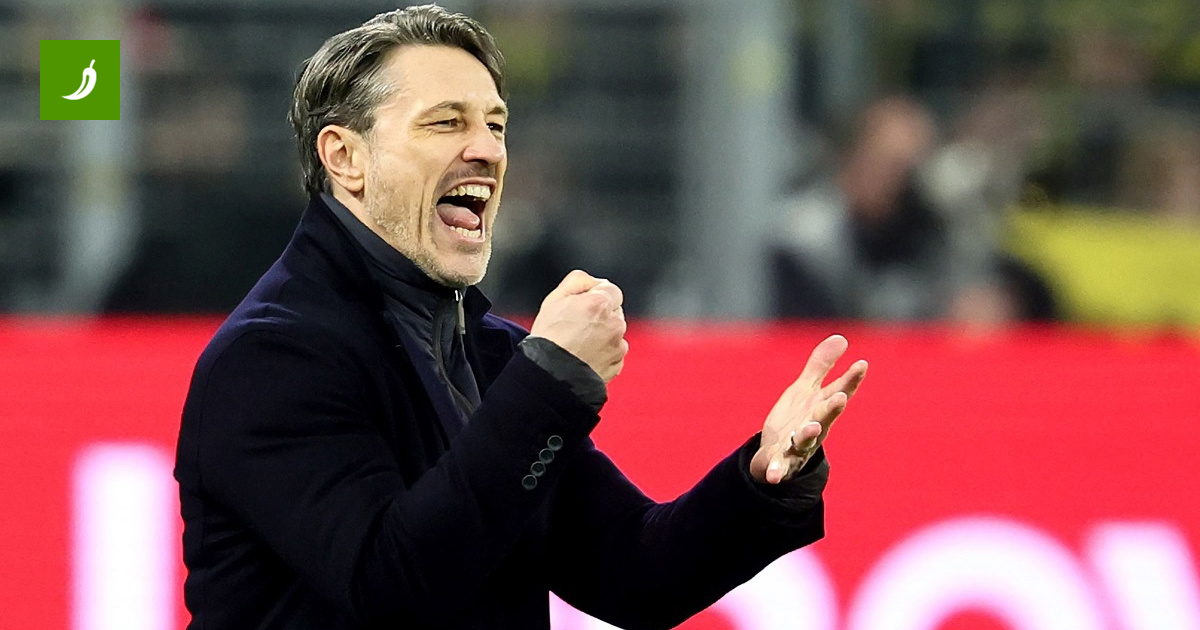
Despite finishing second in the Bundesliga, Borussia Dortmund's season under Niko Kovač has revealed significant weaknesses. The club’s achievements do not necessarily reflect a substantial improvement over the past two years. While Dortmund secured the second position and had the best defense in the league, their European performance was disappointing, exiting early in the Champions League and losing in the German Cup’s round of 16.
Kontext and Realistic Expectations
In the broader context, this is the third-best result for Dortmund in the Bundesliga in eleven years and the best in the last seven. However, in eight of those eleven seasons, Dortmund scored more goals. Without considering two poorer seasons, Dortmund has been second five times, third twice, and fourth once in the remaining eight seasons. This data suggests that second place is where Dortmund, as the second most powerful club in Germany, should be. Anything below that would not meet expectations.
Is Kovač’s Foundation Solid Enough?
Securing second place for the sixth time since 2015, Dortmund has returned to a position that matches its ambitions, and Kovač deserves credit for this achievement. At 54, Kovač has set up the best defense Dortmund has seen in a decade, equaling the record set by Thomas Tuchel's team in 2015/16, with a remarkable record of 43 wins, 16 losses, and 13 draws in 72 competitive matches. Kovač has stabilized the defense, instilled a fighting spirit in the team, and maintained high attacking efficiency. However, the question remains whether this foundation is solid enough to support the vision of a "new BVB" as envisioned by the executive director Carsten Cramer.
The Vision for the 'New BVB' and Kovač's Challenge
The plan for Borussia Dortmund is clear: under Kovač, the club aims to build an identity that has not been evident before. The goal is to attack with more courage and vision, connect lines with renewed flair, and establish greater control over opponents through ball possession. Young and promising talents have been and will continue to be brought in to infuse the game with vitality and fluidity, and to potentially generate significant transfer revenue in the future.
This sounds great on paper, and fans eagerly await Book’s first transfer window. However, after analyzing the last 72 matches, an intriguing question arises: can Kovač, who is expected to receive a second extension to his contract, truly meet these expectations? To succeed, he might need to rethink his pragmatic, defensive approach with a tactical style that often stifles fluid play. So far, he has not managed to improve the unflairful and predictable style of the team.
Obvious Weaknesses Against Strong Rivals
This is why the club’s leadership now seeks the next phase of development. Kovač’s Dortmund must address these weaknesses to achieve long-term success.


Kovač needs to shake things up and bring back that flair! Is he the right man to lead Dortmund to a brighter future, or is it time for a new vision? #DortmundGoals