


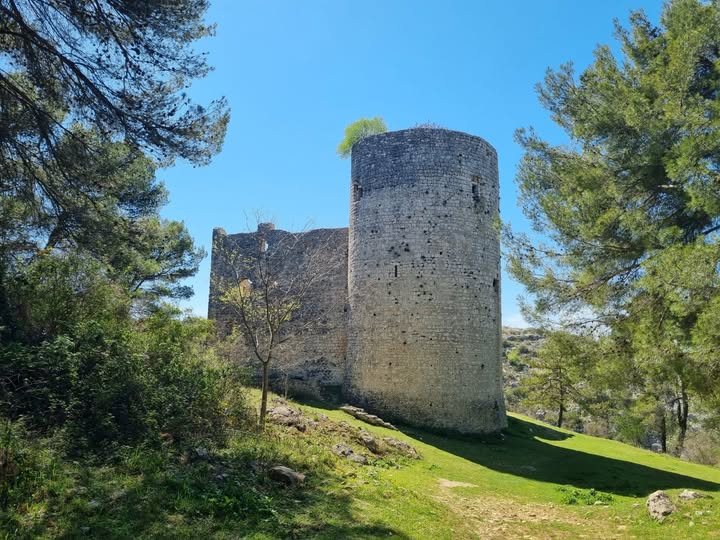
A Forgotten Gem in the Dalmatian Hinterland
Children exploring the crumbling walls of an abandoned fortress is a common sight across Croatia, but the discovery made by a group of schoolchildren near Benkovac stands apart. On a raised plateau overlooking the Kličevica River canyon, the ruins of Kličevica Fortress have long served as a playground for local youth. However, four decades ago, these accidental explorers uncovered a military relic that would rewrite local history: a 500-year-old bronze cannon linked directly to Leonardo da Vinci.
Benkovac is the largest municipality in Dalmatia by area, covering 514.5 square kilometers. Located in the Ravni Kotari region, this vast territory includes numerous rural settlements, expansive fields, and hilly terrain. While Split often dominates discussions of Dalmatian cities, Benkovac’s administrative reach makes it the region’s largest by land. Today, visitors are increasingly drawn to villages like Raštević, where the imposing silhouette of Kličevica Fortress rises from the landscape.
The "Fantasy" Castle of Zadar
Constructed in the 15th century, likely by the noble Kurjaković family of the Gusić clan, Kličevica Fortress is built from rough-hewn stone. Its defensive walls and towers remain partially intact, allowing the original layout—including the entrance and courtyard—to be clearly traced. The fortress sits in a dramatic, almost cinematic setting, earning it the nickname of a Dalmatian "fantasy" castle. It played a crucial role in controlling land routes between the interior and the coast during centuries of conflict with the Ottoman Empire.
The true surprise, however, lies beneath the stones. The cannon found here is a triple-barreled weapon, a rare design confirmed to match a sketch by da Vinci. This discovery challenges the assumption that such advanced artillery was confined to Italian workshops, highlighting the reach of Renaissance military engineering into the Balkans.
Da Vinci’s Design in the Balkans
The connection to the Renaissance master is documented in the Codex Atlanticus, housed in Milan’s Ambrosiana Library. Created between 1478 and 1519, this collection includes sketches of various weapons. One drawing depicts a triple-barreled cannon mounted on a wheeled wooden base, designed for mobility and field use. Experts have compared this illustration to the Kličevica artifact, noting the identical arrangement of barrels and mobile construction.
A modern replica based on da Vinci’s sketch resides in the Leonardo da Vinci Museum of Science and Technology in Milan. The original, however, remains a unique piece of history. It is considered the only surviving example of its kind in the world. The discovery by schoolchildren not only preserved a national treasure but also provided tangible proof of da Vinci’s influence on military technology far beyond Italy.
For travelers interested in medieval history and Renaissance engineering, the region offers a compelling blend of natural beauty and archaeological wonder. The fortress overlooks the deep canyon of the Kličevica River, providing a stark reminder of the strategic importance of this hinterland location.



didn't expect fenerbahce or benkovac to have da vinci links lol. 500 years old and kids just found it playing? wild.