


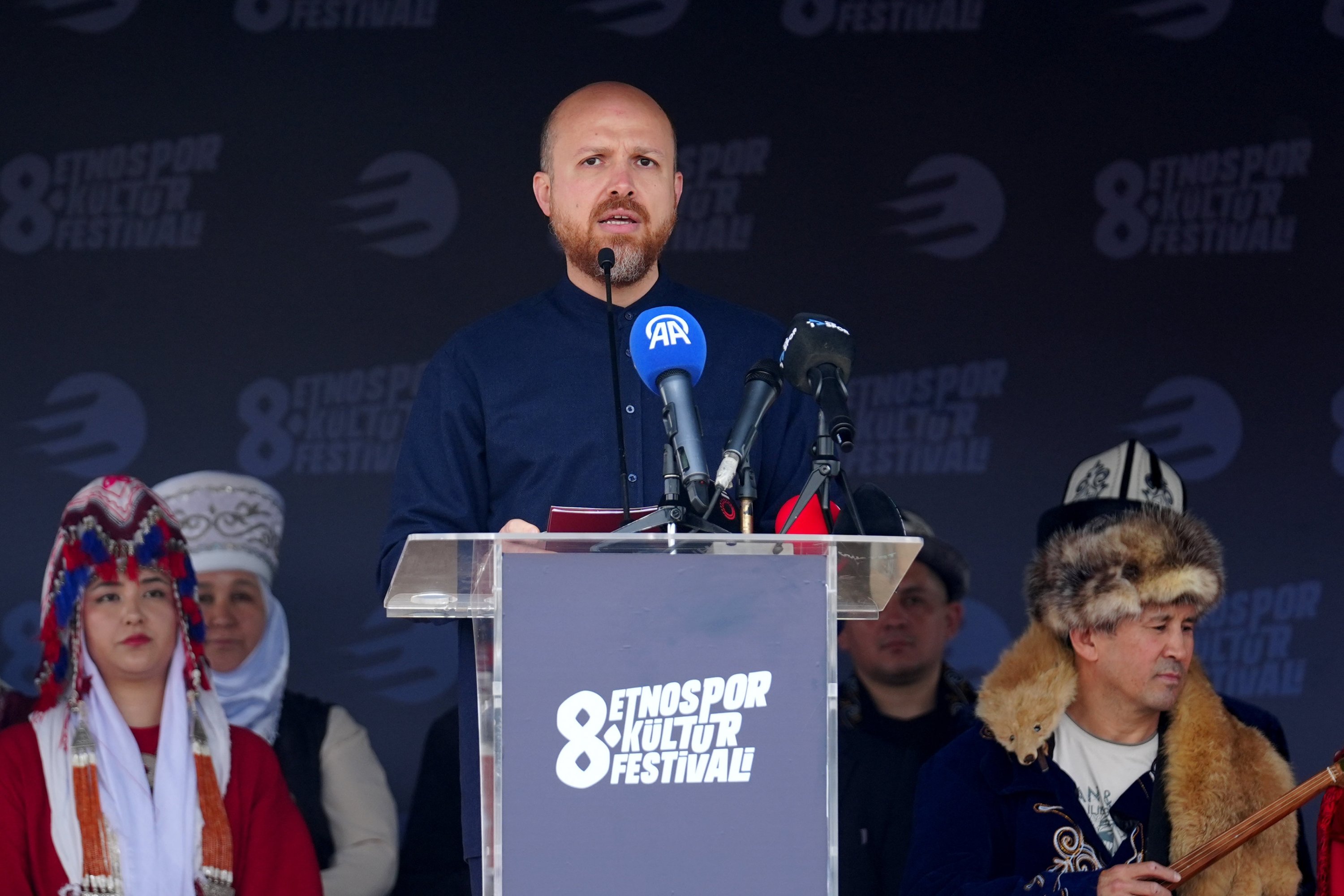
The 8th Ethnosport Culture Festival opened in Istanbul on Thursday at the Atatürk Airport National Garden, launching a four-day international gathering that places traditional sports, cultural heritage, and cross-cultural exchange at the center of a vast public program running through May 24.
Organized by the World Ethnosport Union (WEU), the festival has evolved into a major cultural platform aimed at preserving and revitalizing traditional games and heritage practices that are increasingly overshadowed by modern, commercial sport systems.
This year’s edition reinforces Istanbul’s position as a meeting point between regions and traditions stretching from Central Asia to Europe, East Asia, and North Africa.
Opening Ceremony
The opening ceremony brought together senior Turkish officials, including WEU President Bilal Erdoğan, Health Minister Kemal Memişoğlu, Culture and Tourism Minister Mehmet Nuri Ersoy, Youth and Sports Minister Osman Aşkın Bak, and Istanbul Governor Davut Gül, underscoring the state-level backing behind the event and its expanding cultural footprint.
Ceremonial elements opened the festival with a staged performance in front of the Han Tent area, where students performed the Gülbank tradition, followed by a mehter band performance from the Istanbul Historical Turkish Music Ensemble. The sequence blended ritual, music, and symbolic heritage presentation, setting a formal tone before the start of competitions and exhibitions.
Themes and Values
Bilal Erdoğan said this year’s theme, “The world is here,” reflects the presence of athletes, artists, and cultural representatives from a wide range of countries, including Japan, Kazakhstan, Azerbaijan, Lithuania, Russia, and Kyrgyzstan. He emphasized that the festival is designed as a shared cultural space where traditional sports and games act as a bridge between generations, with children positioned at the center of participation and learning.
He also described the festival as a “family structure” where cultural diversity is brought together in a shared environment rather than separated by geography.
Kemal Memişoğlu focused on the health and social dimensions of traditional sports, highlighting disciplines such as archery, oil wrestling, javelin, and horseback games. He said these activities build discipline, coordination, courage, and endurance while also serving as a response to what he described as one of the most pressing modern health issues, physical inactivity.
Mehmet Nuri Ersoy described culture as a continuous link between past and future, stating that this year’s festival is built around four core principles: peace, solidarity, love, and tradition. He said these values are intended to shape not only the festival experience but also broader social awareness.
Ersoy also pointed to social responsibility initiatives within the festival grounds, including programs led with civil society groups. These include efforts to highlight humanitarian concerns in conflict-affected regions, with specific attention drawn to crises affecting civilians in places such as Gaza.
Osman Aşkın Bak emphasized Türkiye’s growing investment in sports infrastructure and its commitment to fostering a vibrant sports culture.
This festival is more than just a sports event; it's a celebration of cultural heritage. But with so many conflicting interests in the region, can we really use sports to bridge divides? Or is it just a temporary illusion of unity?