


The Golden Era of Romanian Club Football
Romanian club football reached its international peak during the 1980s, a decade defined by tactical discipline and unexpected European triumphs. The foundation was laid in 1983 when Universitatea Craiova guided the domestic game forward by reaching the UEFA Cup semifinals, drawing 0-0 away and 1-1 at home against Benfica. The following year, Dinamo București advanced to the European Cup semifinals before falling to Liverpool on aggregate. Steaua București cemented this golden period by winning the European Cup in 1986 and the European Super Cup in 1987, proving Eastern European sides could compete on the continent’s biggest stage.
By 1989, the trajectory shifted. After a hard-fought semifinal run that saw them eliminate Benfica, Steaua București reached their second European Cup final in four years. The stage was set in Barcelona on 24 May 1989, where they faced an AC Milan side coached by Arrigo Sacchi. The match ended 4-0 to the Italians, a result that underscored the evolving physical and tactical demands of modern European football.
A Physical and Tactical Masterclass
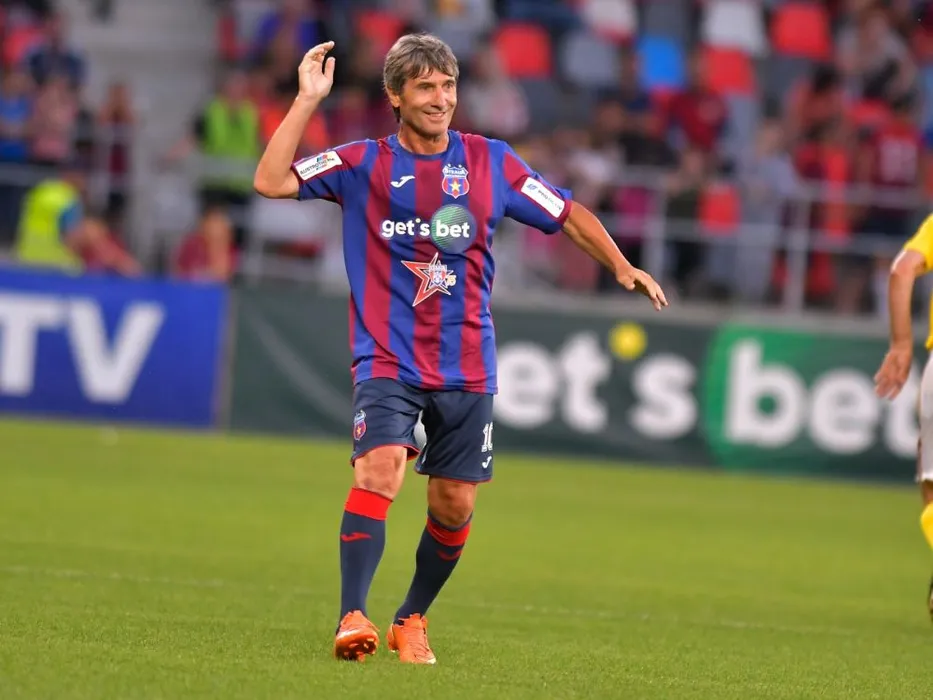
Former Steaua defender Iosif Rotariu, who started in that final, recently reflected on the match three decades later. He acknowledged that 1989 remained his finest professional season at club level, yet admitted his side was outmatched on the pitch. Steaua had undergone significant squad changes, losing veteran goalkeeper Helmuth Duckadam and defender Theodor Bumbescu’s longtime partner, while integrating talents like Gheorghe Hagi, Dan Petrescu, and Tudorel Stoica. Despite this blend of experience and youth, the midfield was quickly overrun.
Rotariu highlighted Milan’s relentless physicality, noting that the Italian side had just dismantled Real Madrid 5-0 in the return leg of the semifinals. He described how the Dutch trio of Ruud Gullit, Frank Rijkaard, and Marco van Basten operated as unstoppable forces, backed by a defensive partnership of Franco Baresi and Paolo Maldini that rarely conceded space. Steaua managed to hold firm for roughly eighteen minutes before the first goal, but the intensity and atmosphere quickly shifted momentum. Rotariu recalled fans wearing Gullit wigs in the stands, a psychological edge that complemented Milan’s tactical precision.
Legends Remember the Final
Looking back, Rotariu emphasized that even with Ilie Dumitrescu in the lineup, the outcome likely would not have changed. He singled out Van Basten as the most formidable striker he ever faced, estimating that the Dutch forward would command a transfer fee exceeding 120 million euros in today’s market. The 1989 final remains a defining moment for Romanian football, illustrating both the heights of the domestic game and the steep learning curve required to sustain success against Europe’s elite. For players like Rotariu, the memory is not one of regret, but of respect for a match that highlighted the rapid evolution of the sport. Eastern European clubs of that era relied heavily on compact defensive structures, a style that struggled against Milan’s relentless pressing and coordinated movement. The result marked a shift in how Balkan sides approached continental competitions, emphasizing the need for greater athletic conditioning and transitional speed.
Comments