


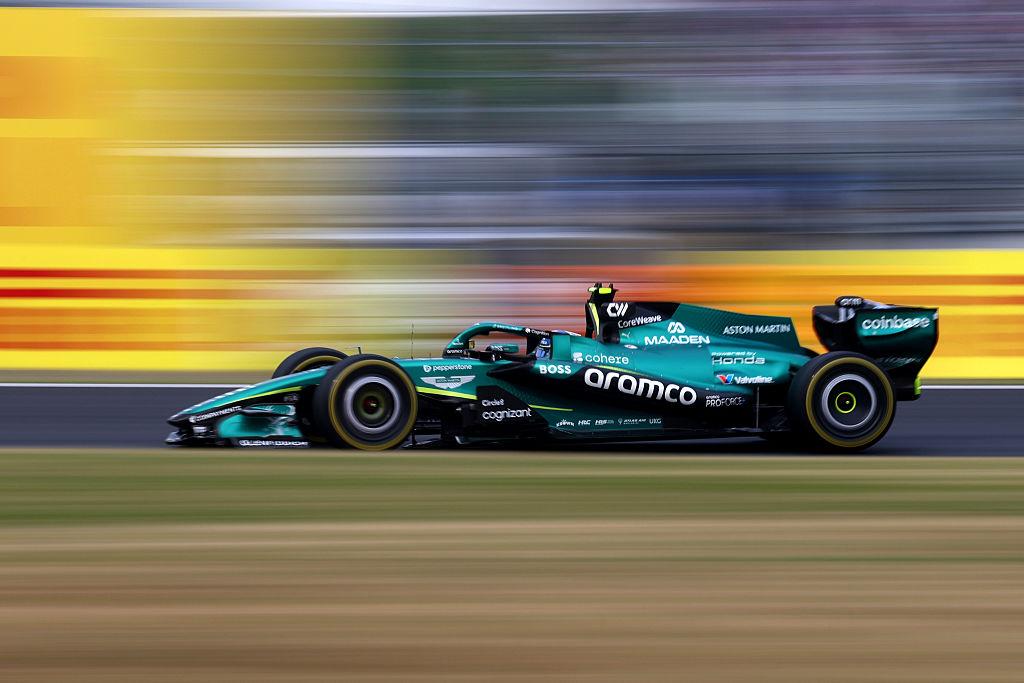
The Japanese giant Honda has reported its first annual loss in 70 years, recording a deficit of $2.68 billion for the year 2025. This financial downturn raises questions about the impact on Honda's involvement in Formula 1, where their partnership with Aston Martin has seen a poor start. The results are the worst since 1957, when the company's shares first went public. The losses are worse than those incurred during the height of the coronavirus pandemic.
Honda's official stance is that these financial results will not affect Honda Racing Corporation (HRC) or their Formula 1 project. Toshihiro Mibe, Honda's Chief Executive Officer, explained that the results are primarily due to significant investments in electric vehicles and the company's strategy for developing electric mobility.
However, these investments have not yet yielded returns, especially in the United States. Honda has begun to limit its activities in this area, including halting a $11 billion project in Canada for the production of electric vehicles and batteries. The company also abandoned plans to achieve a level of electric vehicle penetration where one-fifth of its sales would be electric cars by 2030 and the goal of offering only electric vehicles by 2040.
The financial situation may have interesting implications for Honda's Formula 1 strategy. Until now, Audi and Honda have been the leading suppliers of power units that are heavily focused on electrification in the world championship. They have consistently emphasized that this is directly linked to their mass production efforts.
Following the fiasco with the new technical regulations for the 2026 season, Formula 1 CEO Stefano Domenicali acknowledged that the world championship could see changes in the direction of electrification.



This is a major blow for Honda and the entire F1 community. Can they still lead the electrification push, or will this setback force them to rethink their strategy? The future of F1's electric revolution is hanging in the balance!