


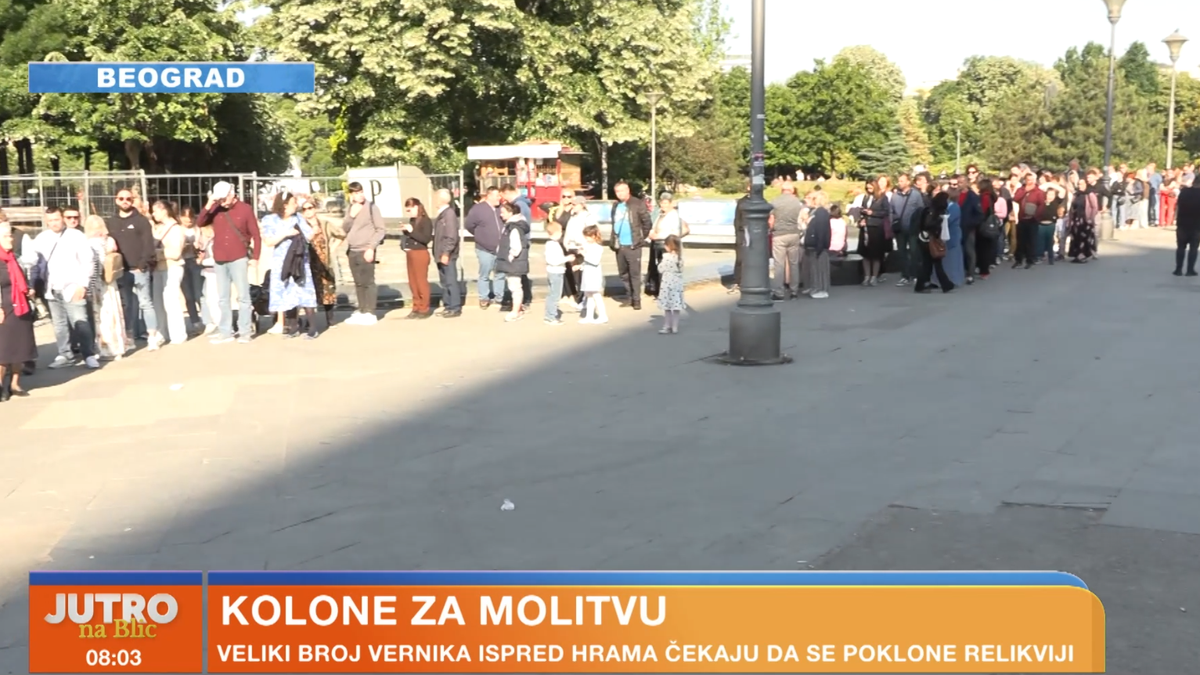
The Holy Belt of the Most Holy Theotokos, one of the most venerated relics in Eastern Orthodoxy, has drawn massive crowds to Belgrade since arriving from Mount Athos four days ago. The sacred artifact is currently on display for public veneration inside the Temple of Saint Sava and will remain accessible to pilgrims until 29 May. Originally housed at the Vatopedi Monastery, the relic has triggered a wave of religious tourism across the region, with believers traveling from across Serbia, Republika Srpska, and the diaspora to witness it.
Early Mornings and Extended Queues
Devotees have been lining up since dawn, with morning reports showing queues stretching from the temple grounds past Karadjordjevo Park and down to International Brigades Street. Many arrived before sunrise to secure a place, while others drove hundreds of kilometres specifically for the visit. The atmosphere around the site has remained orderly and reverent. Families waited patiently, viewing the occasion as a rare spiritual opportunity. Novica Vasković, who travelled from Novi Bečej with his wife and grandson, noted that the pilgrimage felt like a major life event. He expressed hope that the relic would bring relief to those facing personal hardships. His young grandson, though tired from the long wait, maintained a quiet patience alongside his grandparents.
Visitors from abroad have also joined the crowds. Ksenija, who flew in from Vancouver, described the experience as an unmeasurable spiritual joy. Gordana Živković from Novi Beograd, who joined the line at 05:40, shared similar sentiments, emphasizing her belief in the relic’s power to assist both individuals and the wider community. A woman from Banja Luka explained that the journey was undertaken solely to pay respects, adding that she carries hope for better times ahead.
Historical Reverence and Regional Impact
The Holy Belt holds a unique place in Orthodox tradition. Believers often refer to it as a piece of heaven, citing centuries of accounts regarding miraculous healings and spiritual comfort. Its temporary relocation to Serbia has amplified religious tourism in the capital, drawing attention to the intersection of faith, culture, and regional mobility. The event underscores the enduring influence of Mount Athos monasteries across the Balkans, where shared liturgical heritage continues to unite communities across borders. Local authorities have monitored crowd flow to ensure safety, while volunteers assist elderly visitors and coordinate entry times.
Display Schedule and Visitor Expectations
The relic will remain on view until 29 May, with organizers anticipating thousands of additional visitors over the coming weeks. Peak hours typically occur early in the morning and late afternoon, prompting recommendations for pilgrims to arrive before dawn or after midday to avoid the longest waits. The extended exhibition provides a structured opportunity for regional and international believers to participate in a centuries-old tradition, reinforcing Belgrade’s role as a key destination for Orthodox cultural travel.


Comments