


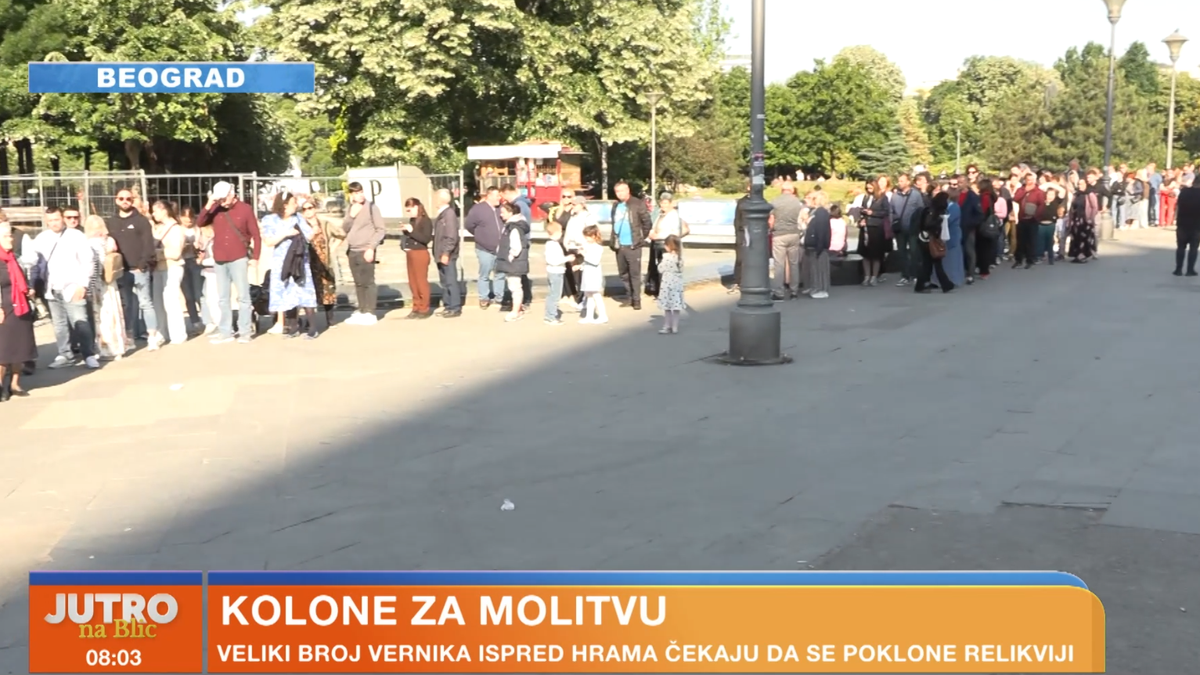
The Holy Belt of the Theotokos, widely regarded as one of the most venerated relics in Eastern Orthodox Christianity, has drawn unprecedented crowds to central Belgrade. The sacred artifact arrived at the Temple of Saint Sava on Vračar hill four days ago, transported directly from the Vatopedi Monastery on Mount Athos. Church authorities have confirmed the relic will remain on public display until 29 May, offering thousands of believers the opportunity to pay their respects.
Since its arrival, the area surrounding the cathedral has transformed into a quiet pilgrimage route. Long queues stretch from Karađorđev Park all the way to Internacionalnih brigada Street. Many faithful arrived before dawn, bracing for early morning waits. While some traveled from neighboring Serbian municipalities, others made the journey from Republika Srpska, and a handful flew in from Canadian diaspora communities. The atmosphere remains orderly and reverent, with pilgrims waiting patiently for a chance to approach the relic.
Devotion, Healing, and Regional Unity
Within Orthodox tradition, the belt is often referred to as a piece of heaven. Centuries of oral testimony and written accounts associate it with miraculous healings and spiritual comfort. For many attendees, the visit is deeply personal. Novica Vasković, who traveled from Novi Bečej with his wife and grandson, arrived around 05:15. He described the pilgrimage as a major life event, expressing hope that the relic would bring relief from personal hardships and broader societal challenges.
The pilgrimage has also bridged geographic divides. A visitor from Banja Luka explained that the journey was undertaken solely to witness the relic, hoping it would usher in better times. Ksenija, arriving from Vancouver, emphasized the immeasurable spiritual joy of being present. Gordana Živković, who has waited since 05:40, echoed similar sentiments, linking her personal faith to a broader hope for the Serbian people.
Pilgrimage Tourism and Cultural Significance
Relic processions of this scale are rare in modern Serbia and often spark a blend of religious observance and cultural tourism. Local hospitality networks see increased demand during such events, as visitors from across the region seek accommodation and guided access. The extended display period ensures steady foot traffic through late spring, reinforcing Belgrade’s role as a major Orthodox pilgrimage destination alongside historic sites in Greece, Romania, and Bulgaria.
Church officials anticipate thousands more visitors before the May deadline. The event underscores the enduring power of sacred artifacts to unite dispersed communities, drawing believers across borders in a shared expression of faith and cultural heritage.


Comments