


Resilience in the Arena
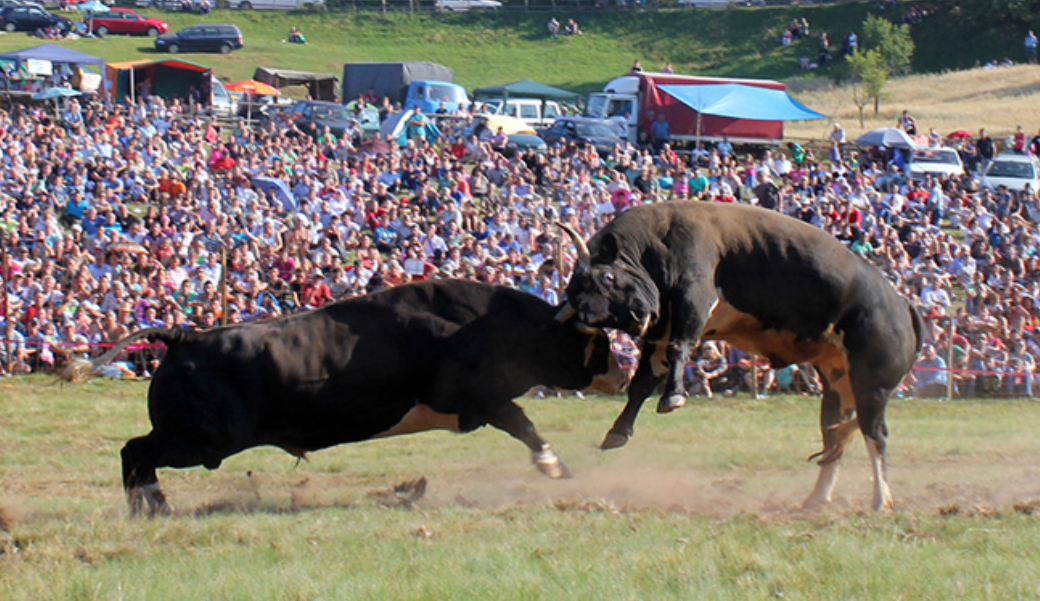
The Grmeč mountain region hosts one of the most iconic folk celebrations in the Balkans. For more than two centuries, the Grmečka Korida has drawn thousands of visitors eager to witness a spectacle that transcends mere sport. Held traditionally the first Sunday after Ilinden, this festival is a profound symbol of endurance for the Serb communities of the Krajina region. It is not just about bulls; it is about survival, memory, and the unbreakable spirit of a people who have weathered historical storms.
The roots of this tradition run deep, though written records only trace it back to the early 20th century. The famous short story "Jablan" by Petar Kočić immortalized the bullfights, using the raw power of the animals to reflect the pride, strength, and stubborn character of the local Krajina man. Kočić’s work cemented the event’s place in the cultural psyche, linking the physical contest to the soul of the community.
From War to Revival
Until 1992, the fights took place on Međeđe Brdo near Sanica. The outbreak of war shattered this continuity, forcing many Serbs to flee their ancestral homes. For years, the silence of the arena seemed permanent. However, the tradition refused to die. In 1996, the Korida was resurrected on Oštra Luka municipality’s Popović Hill, where it continues to thrive today. This relocation was more than logistical; it was an act of reclaiming identity in a changed landscape.
The competition itself is rigorous, divided into two weight categories: bulls between 500 and 800 kilograms, and those over 800 kilograms. For the owners, victory is a matter of immense honor and social standing. While cash prizes are awarded, the true reward is the recognition from the thousands of spectators who gather to witness the clash. These are not just animals; they are extensions of their owners’ legacy.
A Living Monument to Identity
What sets the Grmečka Korida apart is its broader cultural tapestry. The day is filled with folk assemblies, musical performances, and family reunions. Visitors travel from across the Republika Srpska, Serbia, and the wider diaspora to reconnect with their roots. For many, it is a pilgrimage back to their heritage, a chance to preserve memories of a homeland that may no longer exist in its original form.
Today, the Korida stands as a living monument to tradition. It proves that cultural rituals can outlast conflict and displacement. The strength of the event lies not in the aggression of the bulls, but in its ability to unite people around a shared history and identity.

hvala bogu da se opet okupljamo za ovo. fenerbahce i ovakve stvari su jedini pravi sport u balkanu tbh. da li ce biti ove godine?