


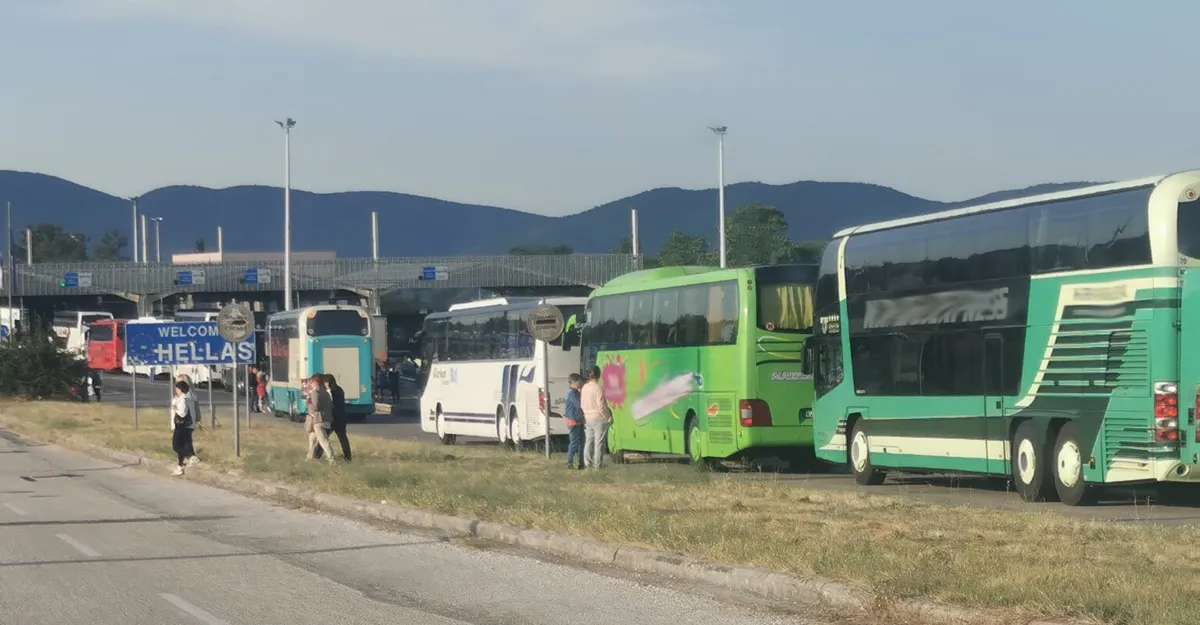
The Border Experience: EES System in Action
The start of the summer season brings a mix of excitement and uncertainty for travelers heading from the Balkans to the Greek coast. This year, the primary concern for many tourists is the new Entry/Exit System (EES), which requires passport scanning, fingerprinting, and facial recognition for non-EU citizens. Stories of multi-hour delays have circulated widely, creating anxiety among families planning their holidays.
Our test drive on June 1st aimed to verify these claims. For private vehicles, the process was remarkably efficient. The entire procedure for our car took less than two minutes. Officers scanned documents, captured biometric data, and waved us through. Minor delays occurred only when cars carried multiple passengers, including elderly individuals or young children who required extra time to settle during the biometric capture. On average, private car traffic moved quickly and smoothly.
The picture changed drastically just a few hundred meters away. The bus lane was gridlocked. We counted over thirty tourist coaches queued up, with drivers reporting wait times exceeding four hours. The bottleneck is clear: processing dozens of passengers from a single bus significantly slows the throughput compared to small private vehicles. Greek authorities have acknowledged this strain and hinted at temporarily suspending certain biometric procedures during peak congestion to prevent total border collapse.
Yet, the frustration of the queue fades quickly. We spoke with Serbian tourists on the beach who had endured that four-hour wait. Their verdict? The moment their feet touched the water, the stress evaporated. The sea is worth the wait.
Thessaloniki Bypass and Road Conditions
Another perennial topic for drivers heading to Halkidiki is the ongoing construction around the Thessaloniki bypass, often referred to locally as the "Flyover." Work remains incomplete, with machinery still visible on several sections. Social media often paints a grim picture of gridlock, but our experience differed significantly.
Despite the unfinished infrastructure, traffic flow was surprisingly good. We encountered no major standstills or significant time losses. The road from the border to the peninsula was navigated much faster than anticipated, proving that while construction is present, it does not currently cripple travel times.
Sea Temperatures and Early Season Costs
After the border checks and the drive, the real reward awaits: the beach. The sea conditions this year are exceptional. Late May brought unusually high air temperatures, which rapidly heated the shallow coastal waters. By early June, the water felt warm and inviting, resembling mid-June conditions rather than the typically chilly start of the season. Regular visitors noted this as the warmest early-season water they had experienced in years.
Regarding costs, restaurant prices remain stable for the region, though early-season discounts are less common than in previous years. Accommodation booking is essential, as many hotels are already operating at high capacity. For those planning a trip, securing lodging in advance is the best strategy to avoid premium last-minute rates.



halkidiki su sıcaklığı bu sene gerçekten farklı imo, mayıs sonu inanılmazdı. ama o otobüs kuyruğu kabus gibi, 4 saat mi beklemişler ngl. arabayla gitmek tek çözüm sanki...