


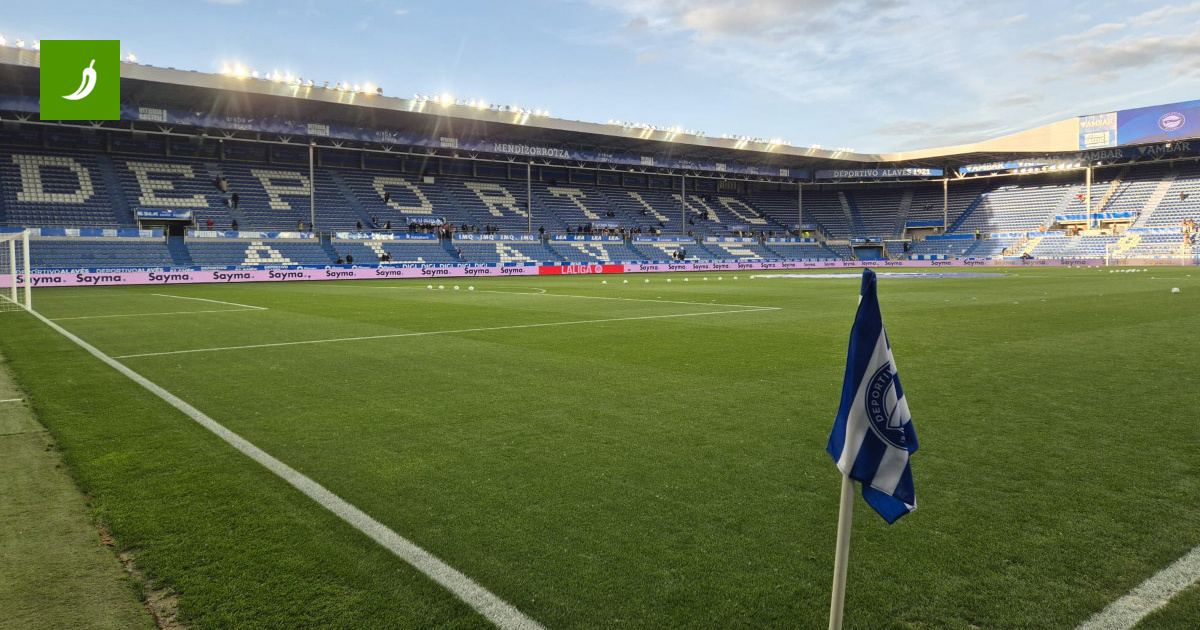
One of the most intense battles for survival in Europe is taking place in Spain, but thanks to a remarkable finish to the season, Deportivo Alaves has emerged victorious. In the past few weeks, Alaves secured victories over Barcelona and Oviedo. This success is likely to inspire Istra, a Croatian Premier League club, which is also under the ownership of the Baskonia-Alaves group.
A Visit to Vitoria-Gasteiz
The headquarters of the Baskonia-Alaves group is located in Vitoria-Gasteiz, a city of 250,000 inhabitants in the province of Alava (or Araba in Basque), part of the Basque Country. Last week, we visited Vitoria-Gasteiz to understand how the Baskonia-Alaves group operates. They assert that such a system represents the future of sports club management.
The story began in 2011 in a slightly unusual way. While football clubs typically establish their own basketball teams, Grupo Baskonia, the owner of the basketball club Baskonia, took over Deportivo Alaves, a club that was struggling with debts and competing in the third division. Under new management, Alaves has become a stable Premier League club, competing in La Liga for the tenth time in the last eleven seasons. The club is particularly proud of this achievement given its geographic location, surrounded by numerous successful clubs in the Basque region and its vicinity.
"It's hard to compete with Real Sociedad, Athletic Bilbao, Osasuna, and Eibar. Burgos and Santander are also close. Alava is the smallest region in our country to have a Premier League team, so it's not easy for us," Alberto Ausin Langer, the head of communications for the Baskonia-Alaves group, told us.
Not only is Alava the smallest region with a La Liga team, but Vitoria-Gasteiz can also boast an achievement shared with only three of the largest cities in the country. Only Madrid, Barcelona, Valencia, and Vitoria have a club that competes in La Liga and another in the EuroLeague.
A Different Approach
Given that they cannot compete financially with rivals like Real Sociedad and Athletic Bilbao, Alaves has found an alternative solution: to outshine them internationally while simultaneously strengthening its commercial base beyond football. After taking over, the group focused on expanding into the international market, leading to the acquisition of Istra, after previously collaborating with Rudeš for a year.
After nearly a decade of collaboration, the results are evident. Istra has become a solid Premier League team, and ten players have been exchanged between Istra and Alaves. While Istra has profited more from this partnership from the player perspective, Alaves has also recently acquired a valuable asset. Finnish defender Ville Koski (24), who spent two years with Istra, was a key player in Alaves' recent victories over Barcelona and Oviedo.
An international project like this requires strong infrastructure, which is evident in Vitoria-Gasteiz. The Mendizorrotza stadium, with a capacity of nearly 20,000, left us impressed with its atmosphere. The Buesa Arena, with a capacity of 15,500, was once the largest basketball arena in the entire country, until the new Roig Arena in Valencia overtook it by just 100 seats.
However, what impressed us most were the accompanying facilities defined by the term Ondare, meaning "legacy." The modern sports center BAKH, for example, is a testament to this legacy.


Comments