


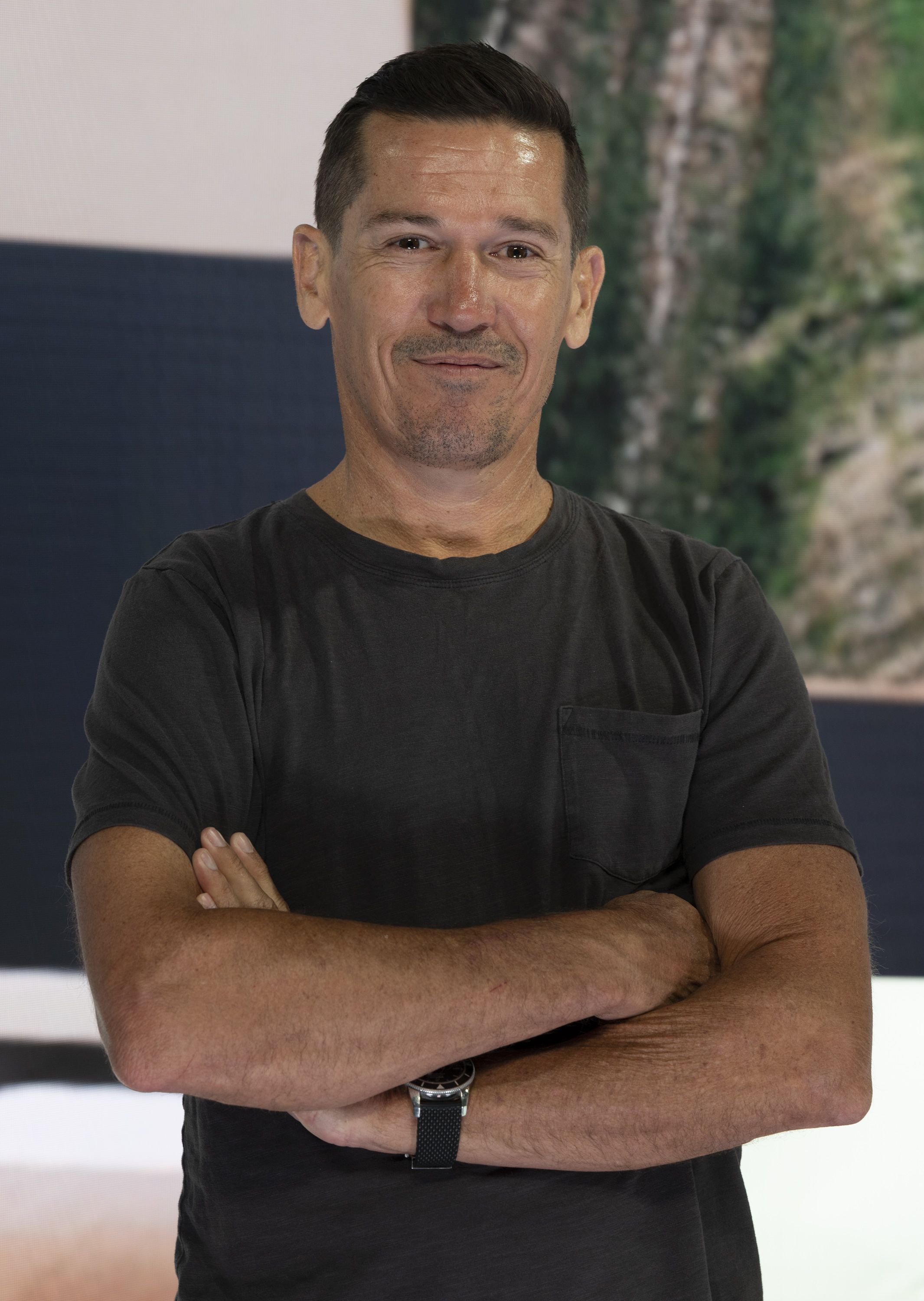
Eurosport Expert Robbie Mcewen Excited About Bulgaria Hosting Giro d'Italia
Eurosport expert Robbie Mcewen shared his expectations for the Giro d'Italia during the WBD press conference, where Sportal.bg was the sole Bulgarian media presence. The Italian cycling tour can be watched live in Bulgarian with expert commentary from Luboslav Venkov, Zhitomir Penakov, Danail Petrov, and Simion Kichukov on Eurosport and HBO Max, where the stages will also be available on-demand post-broadcast.
- With the absence of João Almeida, Richard Carapaz, and Mikel Landa, does the Giro lose some of its competitive advantage?
- It loses something, especially with Almeida's absence, the biggest loss for me. He could have been a true contender to Jonas Vingegaard. Without him, Vingegaard becomes a huge favorite unless something goes wrong. But the positive is that this creates a gripping battle for the podium and the top five positions. Below Vingegaard is a large group of competitors at a similar level. I see Giulio Biroli as the strongest of the rest - he could be a likely podium contender - but the competitors following him are incredibly evenly matched: Adam Yates, Jay Haydn, Tymen Arensman, Ben O'Connor, Michael Storer, Geraint Thomas, and I'm very curious to see how Igan Bernal performs, given his recent recovery and improving form.
- Compared to previous editions, this Giro seems to have fewer emblematic climbs. How does this reflect on the competition?
- At first glance, it has fewer famous climbs and fewer mountain stages, but the ones included are exceptionally difficult. Instead of one or two obvious 'queen' stages, there are four that could claim that title. This should create a more dynamic competition. Some stages will favor breakaways and fights for the general classification, while others could completely reorder the rankings. Even with fewer legendary climbs, we still have the Jaffa pass, Blockhaus, and several climbs that haven't been used in decades or ever. Climbs become emblematic due to how cyclists compete on them, and we may discover new ones that deserve to return.
- Stage 10 has a 42-kilometer flat time trial. Does this effectively end the general classification hopes of pure sprinters or can the brutal final week in the Dolomites compensate?
- Pure sprinters have improved significantly in time trials, even on flat ones. Over 42 km, they will still lose time but not in catastrophic quantities. And the mountain stages that follow offer many opportunities to get that time back if they are strong enough. I like that there is only one time trial — 42 km is almost too long, but it gives cyclists who rely on TT to gain time before the high mountains. The route feels well-balanced: everyone gets a chance to use their strengths.
- Stage 7 from Formia to Blockhaus is 244 km — a true throwback. How does this distance psychologically affect cyclists and is it in favor of pure sprinters or diesel engines?
- Experienced cyclists in long stages — diesel engines — might fare better, although almost no one in the modern peloton has participated in such long stages. Wout Poels is one of the few who remembers them. It will be brutal. Some cyclists prefer long stages because explosive short bursts don't suit them. Others will hate it. The distance could either scare everyone to conservatism or create an epic day that sets the tone for the competition. I think Vingegaard will aim for this stage to take control of the Giro. Over 244 km, the differences will be greater than if they were 150 km.
- What do you expect from the sprint stages and how do you evaluate Jonathan Milan?
- Initially, I thought there were nine flat stages that felt like the era of Chirollini and Peataki. But upon closer inspection, a few aren't true sprint stages. Regardless, sprinters have good chances. Milan is the obvious favorite — his record in the Giro and performance in Grand Tours speak for themselves. He's had some injuries and losses this year, but without Jasper Philipsen, Tim Merlier, or Olav Kooij, he stands out. Tobias Lund Andersen, Paul Manai, and Caden Groves are the main contenders. Milan sometimes struggles in the mountains but recovers well. The sprint base isn't huge, but Milan is the man everyone will talk about, especially in Italy.
- We've seen Vingegaard and Pogacar working on their sprints. What do you think about general classification competitors competing in sprints?
- They've realized how important bonus seconds are. They have to sprint not only at stage finishes but for intermediate bonuses, especially in the Tour. Even pure sprinters rarely finish alone — they usually need to win one or two rivals. So they train for that punch. Pogacar can do anything, which is his advantage over Jonas. But in this Giro, I don't think Vingegaard will have to sprint much — he'll cause damage at the mountain finishes and in time trials.
- What are Jay Vine's chances for the general classification if he avoids catastrophes?
- This is always the big question for Jay. But I'd like to see him attempt the general classification. He's incredibly consistent in breakaways and mountain stages, and in a 42-kilometer time trial, he could even beat Vingegaard or Filippo Ganna, especially at the start of a Grand Tour. He's never been the protected leader in the general classification — there's always been Almeida or someone else in front of him. With Almeida, Isaac del Toro, and Pogacar absent, this is a perfect chance for the UAE to fully support him.
- Who has the best chance to win the points classification — Milan or Manai?
- Manai performs better in difficult stages, but those stages often lead to breakaways, making it harder to win points. Milan will build a large lead in pure sprints. Manai needs to win the more challenging sprint days to stay close. Groves can also contest — he climbs well and is faster than Manai in flat sprints. Tobias Lund Andersen is another who performs well in tough terrain. But Milan starts with the advantage.
- What do you think about the Giro starting in Bulgaria? Does it help develop cycling in smaller nations?
- I like it. It does have an economic aspect, but it's also a great way to expand cycling in non-traditional countries. Bulgaria can discover the passion of the Giro. It's logistically difficult, but the Giro has started in Belgium, the Netherlands — all over Europe. I'm excited to see how Bulgaria will embrace it.
- People here think Vingegaard will win easily. Do you agree?
- They're right to see him as a favorite. He's participated in seven or eight Grand Tours and never finished outside the top two, except when his teammate beat him. Only Pogacar truly beat him. But the race still has to be run — from Bulgaria to the Coliseum is over 3,300 km.
- Teams are already using improved data and analysis for their approach. How much can this improve decision-making?
- In cycling, even 1% gains — or less — matter. When summed, they become significant. Small decisions during stages can decide the final outcome. Teams that move "F1-style" in their analysis are doing the right thing.
- Which young competitors do you see as future Grand Tour winners?
- Isaac del Toro — he should have won last year's Giro. I'd love to hear what was said in the team car that day. Paul Seixas is the big name everyone is talking about, and he's on his way to his first Tour. Biroli is progressing steadily. Florian Leu already showed much. Cycling is getting younger — cyclists identify early, train professionally before they even reach junior ranks. There's a whole wave of young talent coming through.
- What do you particularly like about Jonathan Milan as a sprinter and where can he improve?
- His enormous power — when he launches, it looks like he's breaking the wheel. His understanding with Simone Consoni works brilliantly despite their size difference. His weakness is the same as all sprinters: survival in tough mountain days. But he can't sacrifice speed to climb better. Where he can improve is aerodynamics and efficiency. His sprint is wild and not very smooth. If he maintains the same power but becomes more aerodynamic, he'll be even more dangerous.
- Can Red Bull–Bora–Hansgrohe succeed with two leaders, Hindley and Biroli?
- Yes. They complement each other well. Hindley won the Giro and finished second. With Vingegaard as the categorical favorite, things simplify — the goal is to follow him for as long as possible. Later in the race, the route will decide who is stronger, but I don't see a conflict for leadership between them.

Comments